
 A SCHOLARLY BOOK REPOSITORY
206 start with P start with P
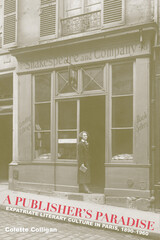
From 1890 to 1960, some of Anglo-America's most heated cultural contests over books, sex, and censorship were staged not at home, but abroad in the City of Light. Paris, with its extraordinary liberties of expression, became a special place for interrogating the margins of sexual culture and literary censorship, and a wide variety of English language “dirty books” circulated through loose expatriate publishing and distribution networks.
A Publisher's Paradise explores the political and literary dynamics that gave rise to this expatriate cultural flourishing, which included everything from Victorian pornography to the most daring and controversial modernist classics. Colette Colligan tracks the British and French politicians and diplomats who policed Paris editions of banned books and uncovers offshore networks of publishers, booksellers, authors, and readers. She looks closely at the stories the “dirty books” told about this publishing haven and the smut peddlers and literary giants it brought together in transnational cultural formations. The book profiles an eclectic group of expatriates living and publishing in Paris, from relatively obscure figures such as Charles Carrington, whose list included both The Picture of Dorian Gray and the pornographic novel Randiana, to bookshop owner Sylvia Beach, famous for publishing James Joyce's Ulysses in 1922.
A Publisher's Paradise is a compelling exploration of the little-known history of foreign pornography in Paris and the central role it played in turning the city into a modernist outpost for literary and sexual vanguardism, a reputation that still lingers today in our cultural myths of midnight in Paris.
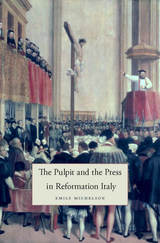
Italian preachers during the Reformation era found themselves in the trenches of a more desperate war than anything they had ever imagined. This war—the splintering of western Christendom into conflicting sects—was physically but also spiritually violent. In an era of tremendous religious convolution, fluidity, and danger, preachers of all kinds spoke from the pulpit daily, weekly, or seasonally to confront the hottest controversies of their time. Preachers also turned to the printing press in unprecedented numbers to spread their messages.
Emily Michelson challenges the stereotype that Protestants succeeded in converting Catholics through superior preaching and printing. Catholic preachers were not simply reactionary and uncreative mouthpieces of a monolithic church. Rather, they deftly and imaginatively grappled with the question of how to preserve the orthodoxy of their flock and maintain the authority of the Roman church while also confronting new, undeniable lay demands for inclusion and participation.
These sermons—almost unknown in English until now—tell a new story of the Reformation that credits preachers with keeping Italy Catholic when the region’s religious future seemed uncertain, and with fashioning the post-Reformation Catholicism that thrived into the modern era. By deploying the pulpit, pen, and printing press, preachers in Italy created a new religious culture that would survive in an unprecedented atmosphere of competition and religious choice.
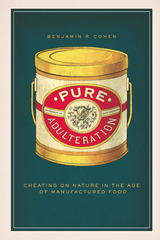
In the latter nineteenth century, extraordinary changes in food and agriculture gave rise to new tensions in the ways people understood, obtained, trusted, and ate their food. This was the Era of Adulteration, and its concerns have carried forward to today: How could you tell the food you bought was the food you thought you bought? Could something manufactured still be pure? Is it okay to manipulate nature far enough to produce new foods but not so far that you question its safety and health? How do you know where the line is? And who decides?
In Pure Adulteration, Benjamin R. Cohen uses the pure food crusades to provide a captivating window onto the origins of manufactured foods and the perceived problems they wrought. Cohen follows farmers, manufacturers, grocers, hucksters, housewives, politicians, and scientific analysts as they struggled to demarcate and patrol the ever-contingent, always contested border between purity and adulteration, and as, at the end of the nineteenth century, the very notion of a pure food changed.
In the end, there is (and was) no natural, prehuman distinction between pure and adulterated to uncover and enforce; we have to decide. Today’s world is different from that of our nineteenth-century forebears in many ways, but the challenge of policing the difference between acceptable and unacceptable practices remains central to daily decisions about the foods we eat, how we produce them, and what choices we make when buying them.

Patience Games: A Seminar on the 'Benefit of Christ' invites readers into the unpredictable world of scholarly discovery, where interpretation is not a straight path but a labyrinth of dialogue revision. At the heart of this book is a seminar held forty years ago at the University of Bologna, where students wrestled with The Beneficio di Cristo, the incendiary sixteenth-century text that questioned Church authority and championed salvation through grace alone. This is not a neatly packaged historical study, however—it is an unfiltered look at the errors and insights that emerge in the collective process of reading and debating a text.
Through shifting hypotheses and the sheer unpredictability of research, Patience Games dismantles the illusion of scholarship as a sterile pursuit, revealing instead a messy, deeply human endeavor. Blending sharp analysis with wit and self-irony, the book makes a compelling case for the continued importance of slow reading—even in an age where knowledge is just a click away.

The intellectual resistance to totalitarian regimes can take many forms. This remarkable volume portrays one such story of resistance in Romania during the reign of Ceauşescu: that of Constantin Noica, one of the country’s foremost intellectuals.
Noica was an original thinker belonging to the remarkable intellectual generation of important figures such as Mircea Eliade, E. M. Cioran and Eugene Ionescu, but he chose to stay in Romania after the communist takeover when many others fled. Harassed and jailed for six years, Noica retreated to the mountains and gathered around him some brilliant young minds and future talent to challenge and nurture them in a time when communism denied them the materials of true intellectual importance.
This group of students withdrew to Noica’s retreat for intensive philosophical sessions to debate the works of Kant, Plato, Heidegger and discuss humanistic values. The author of this volume Liiceanu, himself a brilliant philosopher, was Noica’s closest disciple and during every meeting he noted every conversation in a diary which came to be known as The Păltiniş Diary. These conversations were secretly published and quickly devoured by intellectuals in Romania who were prepared to sacrifice part of their food provisions to acquire the book. The Păltiniş Diary sold out within a matter of days and because of Secret Police censorship, was not published again in Romania until 1991 by which time Noica had died and the group had disbanded to help with the reconstruction of post-Ceauşescu Romania.
The Păltiniş Diary is a wonderful homage to an intellectual master and to the power of intellect and freedom. The book will be of interest to philosophers, non-philosophers alike, and to anyone who seeks to grasp the true meaning of survival under totalitarian conditions.
READERS
Browse our collection.
PUBLISHERS
See BiblioVault's publisher services.
STUDENT SERVICES
Files for college accessibility offices.
RECENTLY PUBLISHED


UChicago Accessibility Resources
home | accessibility | search | about | contact us
BiblioVault ® 2001 - 2026
The University of Chicago Press