
 A SCHOLARLY BOOK REPOSITORY
21 start with P start with P

Painting the Maya Universe is the first publication to present a definitive translation of the hieroglyphic texts painted on these objects. With many glyphs deciphered here for the first time, this analysis reveals much about how these vessels were perceived and used by the Maya, their owners’ names, and, in several cases, the names of the artists who created them. This information is combined with archaeological and other data, including nuclear chemical analyses, to correlate painting styles with specific Maya sites.
Published in conjunction with Duke University Museum of Art and an exhibition touring the United States, Painting the Maya Universe presents an astonishing visual record as well as a monumental scholarly achievement. With photographs by Justin Kerr, the foremost photographer of pre-Columbian art, it includes over 90 unique full-color rollout photographs, each showing the entire surface of an object in a single frame. The book also addresses the questions and controversy regarding the loss of information that occurs when objects are removed from their archaeological context to become part of public and private collections.
Painting the Maya Universe will energize discussion of Maya pottery, hieroglyphic texts, and iconography. Its photographs, a lasting resource on this great painting tradition, will stimulate and delight the eye. It is a breakthrough in art history and Latin American scholarship that will enrich general readers and scholars alike.
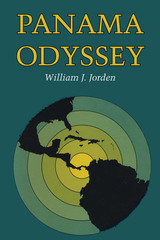
The Panama Canal Treaties of 1977 were the most significant foreign policy achievement of the Carter administration. Most Latin American nations had regarded the 1903 treaty and its later minor modifications as vestiges of "American colonialism" and obstacles to any long-term, stable relationship with the United States. Hence, at a time when conflicts were mushrooming in Central America, the significance of the new Panama treaties cannot be overestimated.
Former Ambassador to Panama William J. Jorden has provided the definitive account of the long and often contentious negotiations that produced those treaties. It is a vividly written reconstruction of the complicated process that began in 1964 and ended with ratification of the new pacts in 1978. Based on his personal involvement behind the scenes in the White House (1972–1974) and in the United States Embassy in Panama (1974–1978), Jorden has produced a unique living history. Access to documents and the personalities of both governments and, equally important, Jorden's personal recollections of participants on both sides make this historical study an incomparable document of U. S. foreign relations.
Beyond the singular story of the treaties themselves—and how diplomats negotiate in the modern world—is the rare description of how the United States deals with a major foreign policy problem. How does a superpower cope with a tiny nation that happens to occupy a strategically critical position? And how does the U. S. Senate face up to its constitutionally assigned power to "advise and consent"? Once treaties are approved, does the House of Representatives help or hinder? Panama Odyssey also deals with another crucial element in the shaping of policy—public opinion: how is it informed or led astray?
In sum, this is a history, a handbook on diplomacy, a course in government, and a revelation of foreign policy in action, all based on a fascinating and controversial episode in the U. S. experience.

Focusing on the causes that generated nineteenth-century predatory militarism, including political illegitimacy and US support, Guevara Mann analyzes the so-called professionalization of the armed forces — institutionalized militarism — and the polices developed by the 1968-89 military regime.
The author cautions that although Panamanian Defense Forces were abolished after the US invasion of December 1989, and although the state’s security apparatus has been placed under civilian direction, Panama’s stability remains threatened. Lack of legitimacy — the characteristic which informs military involvement in politics — still persists, and militarism could well reappear if the Panamanian polity fails to achieve legitimacy.
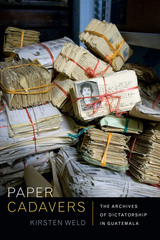
The unearthing of the archives renewed fierce debates about history, memory, and justice. In Paper Cadavers, Weld explores Guatemala's struggles to manage this avalanche of evidence of past war crimes, providing a firsthand look at how postwar justice activists worked to reconfigure terror archives into implements of social change. Tracing the history of the police files as they were transformed from weapons of counterinsurgency into tools for post-conflict reckoning, Weld sheds light on the country's fraught transition from war to an uneasy peace, reflecting on how societies forget and remember political violence.

In the 1860s and 1870s, Buenos Aires was hit by a series of dramatic cholera and yellow fever epidemics that decimated its population and inspired extensive debates on urban space among its elites. The book takes readers into three intriguing spaces—the slaughterhouses, the tenements, and the park of Palermo—which found themselves at the center of the discussions about the causes of epidemic disease. The banning of industrial slaughterhouses from the city, reform of tenement houses, and construction of a major park promised to tackle the problem of disease while giving rise to new visions of the city. By analyzing the discussion on these spaces, the book illuminates critical spatial junctures at the crossroads of both local and global forces and reconstructs the interconnection between elite imaginaries and the production of space. Park, Tenement, Slaughterhouse reveals that the history of epidemic diseases can tell us a great deal about urban space, the relationships between different social classes in cities, and the articulations of global and local forces.
Drawing on testimonies from contra collaborators and ex-combatants, as well as pro-Sandinista peasants, this book presents a dynamic account of the growing divisions between peasants from the area of Quilalí who took up arms in defense of revolutionary programs and ideals such as land reform and equality and those who opposed the FSLN.
Peasants in Arms details the role of local elites in organizing the first anti-Sandinista uprising in 1980 and their subsequent rise to positions of field command in the contras. Lynn Horton explores the internal factors that led a majority of peasants to turn against the revolution and the ways in which the military draft, and family and community pressures reinforced conflict and undermined mid-decade FSLN policy shifts that attempted to win back peasant support.

In 1875, after being acquitted for the murder of his wife’s lover, Eadweard Muybridge spent a year photographing along the Central American Pacific Coast, particularly in Guatemala and Panamá. Upon his return to California in 1876, he published a very limited number of albums of the photographs (11 are known), each of which was unique in size and scope. In 2007, photographer Byron Wolfe (born 1967) tracked down and cataloged every known Muybridge Central American photograph. Then, with cultural geographer Scott Brady, he traveled to many of Muybridge’s sites to rephotograph them. Through photographic collage, interpretive rephotography, illustrations and essays, this book examines an exceptionally rare series by Muybridge. Also included is a catalogue of every known Muybridge Central American picture.
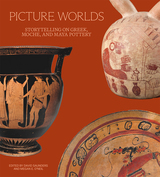
Satyrs and sphinxes, violent legumes, and a dancing maize deity figure in the stories painted on the pottery produced by the ancient Greek, Moche, and Maya cultures, respectively. Picture Worlds is the first book to examine the elaborately decorated terracotta vessels of these three distinct civilizations. Although the cultures were separated by space and time, they all employed pottery as a way to tell stories, explain the world, and illustrate core myths and beliefs. Each of these painted pots is a picture world. But why did these communities reach for pottery as a primary method of visual communication? How were the vessels produced and used? In this book, experts offer introductions to the civilizations, exploring these foundational questions and examining the painted imagery. Readers will be rewarded with a better understanding of each of these ancient societies, fascinating insights into their cultural commonalities and differences, and fresh perspectives on image making and storytelling, practices that remain vibrant to this day.
This volume is published to accompany an exhibition on view at the J. Paul Getty Museum at the Getty Villa from April 10 to July 29, 2024, and at the Michael C. Carlos Museum at Emory University from September 14 to December 15, 2024.
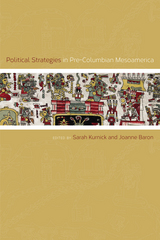
Political authority contains an inherent contradiction. Rulers must reinforce social inequality and bolster their own unique position at the top of the sociopolitical hierarchy, yet simultaneously emphasize social similarities and the commonalities shared by all. Political Strategies in Pre-Columbian Mesoamerica explores the different and complex ways that those who exercised authority in the region confronted this contradiction.
New data from a variety of well-known scholars in Mesoamerican archaeology reveal the creation, perpetuation, and contestation of politically authoritative relationships between rulers and subjects and between nobles and commoners. The contributions span the geographic breadth and temporal extent of pre-Columbian Mesoamerica—from Preclassic Oaxaca to the Classic Petén region of Guatemala to the Postclassic Michoacán—and the contributors weave together archaeological, epigraphic, and ethnohistoric data.
Grappling with the questions of how those exercising authority convince others to follow and why individuals often choose to recognize and comply with authority, Political Strategies in Pre-Columbian Mesoamerica discusses why the study of political authority is both timely and significant, reviews how scholars have historically understood the operation of political authority, and proposes a new analytical framework to understand how rulers rule.
Contributors include Sarah B. Barber, Joanne Baron, Christopher S. Beekman, Jeffrey Brzezinski, Bryce Davenport, Charles Golden, Takeshi Inomata, Arthur A. Joyce, Sarah Kurnick, Carlo J. Lucido, Simon Martin, Tatsuya Murakami, Helen Perlstein Pollard, and Víctor Salazar Chávez.
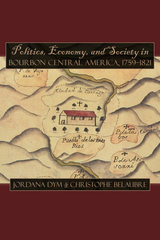
These reforms profoundly changed aspects of Central America's politics and society; however, these essays reveal that changes in the region were shaped both internally and externally and that they weakened the region's ties to metropolitan Spain as often as they reinforced them. Contributors focus on specific policy changes and their consequences as well as transformations throughout the region for which no direct Bourbon inspiration appears to be responsible. Together they demonstrate that whether or not the Crown achieved its primary goals of centralization and control, its policies nevertheless provided opportunities for evident, often subtle, and occasionally unintentional shifts in the colonial government's relationship to its constituent populations. Contributors include Christophe Belaubre, Michel Bertrand, Jordana Dym, Jorge H. González, Timothy Hawkins, Sajid Alfredo Herrera, Gustavo Palma, Eugenia Rodriguez, Doug Tompson, and Stephen Webre.
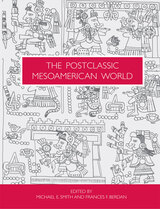
Edited by Michael E. Smith and Frances F. Berdan
Anthropology and Archaeology
The past two decades have seen an explosion of research on Postclassic Mesoamerican societies. In this ambitious new volume, the editors and contributors seek to present a complete picture of the middle and late Postclassic period (ca. AD 1100-1500) employing a new theoretical framework.
Mesoamerican societies after the collapse of the great city-states of Tula and Chichen Itza stand out from earlier societies in a number of ways. They had larger regional populations, smaller polities, a higher volume of long-distance trade, greater diversity of trade goods, a more commercialized economy, and new standardized forms of pictorial writing and iconography. The emerging archaeological record reveals larger quantities of imported goods in Postclassic contexts, and ethnohistoric accounts describe marketplaces, professional merchants, and the use of money throughout Mesoamerica by the time of the Spanish conquest. The integration of this commercial economy with new forms of visual communication produced a dynamic world system that reached every corner of Mesoamerica.
Thirty-six focused articles by twelve authors describe and analyze the complexity of Postclassic Mesoamerica. After an initial theoretical section, chapters are organized by key themes: polities, economic networks, information networks, case studies, and comparisons. Covering a region from western Mexico to Yucatan and the southwestern Maya highlands, this volume should be in the library of anyone with a serious interest in ancient Mexico.
In his thorough examination, Beasley-Murray undoes the dominant narrative of hegemonic projects and counterhegemonic resistance, of civilization and subalternity, to reveal instead a history of failed contracts and unpredicted insurgencies.
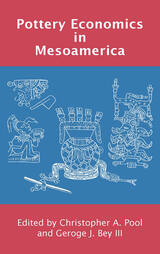
Nine chapters written by some of the most well known and respected scholars in the field offer readers an in-depth look at key advances from the past fifteen years. These scholars examine ethnoarchaeological studies and the Preclassic/Formative, Classic, and Postclassic periods and cover geographic areas from eastern to central Mesoamerica. In a series of case studies, contributors address a range of new and developing theories and methods for inferring the technological, organizational, and social dimensions of pottery economics, and draw on a range of sociopolitical examples. Specific topics include the impacts and costs of innovations, the role of the producer in technological choices, the outcomes when errors in vessel formation are tolerated or rectified, the often undocumented multiple lives and uses of ceramic pieces, and the difficulties associated with locating and documenting ceramic production areas in tropical lowlands.
A compelling collection that clearly integrates and synthesizes a wide array of data, this book is the definitive text on pottery economics in Mesoamerica and an important contribution to the fields of anthropology, archaeology, ancient history, and the economics of pre-industrial societies.
CONTENTS
Acknowledgments
1 . Conceptual Issues in Mesoamerican Pottery Economics
Christopher A. Pool and George J. Bey III
2 . An Ethnoarchaeological Perspective on Local Ceramic Production and Distribution in the Maya Highlands
Michael Deal
3 . Why Was the Potter’s Wheel Rejected? Social Choice and Technological Change in Ticul, Yucatán, Mexico
Dean E. Arnold, Jill Huttar Wilson, and Alvaro L. Nieves
4 . Ceramic Production at La Joya, Veracruz: Early Formative Techno Logics and Error Loads
Philip J. Arnold III
5 . Blanco Levantado: A New World Amphora
George J. Bey III
6 . Pottery Production and Distribution in the Gulf Lowlands of Mesoamerica
Barbara L. Stark
7 . Household Production and the Regional Economy in Ancient Oaxaca: Classic Period Perspectives from Hilltop El Palmillo and Valley-Floor Ejutla
Gary M. Feinman and Linda M. Nicholas
8 . Pottery Production and Exchange in the Petexbatun Polity, Petén, Guatemala
Antonia E. Foias and Ronald L. Bishop
9 . Aztec Otumba, AD 1200--1600: Patterns of the Production, Distribution, and Consumption of Ceramic Products
Thomas H. Charlton, Cynthia L. Otis Charlton, Deborah L. Nichols, and Hector Neff
References Cited
About the Contributors
Index
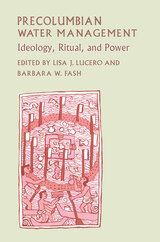
Precolumbian Water Management examines water management from both economic and symbolic perspectives. Water management facilities, settlement patterns, shrines, and water-related imagery associated with civic-ceremonial and residential architecture provide evidence that water systems pervade all aspects of ancient society. Through analysis of such data, the contributors seek to combine an understanding of imagery and the religious aspects of water with its functional components, thereby presenting a unified perspective of how water was conceived, used, and represented in ancient greater Mesoamerica. The collection boasts broad chronological and geographical coverage—from the irrigation networks of Teotihuacan to the use of ritual water technology at Casas Grandes—that shows how procurement and storage systems were adapted to local conditions.
The articles consider the mechanisms that were used to build upon the sacredness of water to enhance political authority through time and space and show that water was not merely an essential natural resource but an important spiritual one as well, and that its manipulation was socially far more complex than might appear at first glance. As these papers reveal, an understanding of materials associated with water can contribute much to the ways that archaeologists study ancient cultural systems. Precolumbian Water Management underscores the importance of water management research and the need to include it in archaeological projects of all types.
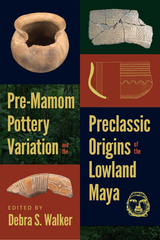
Analyzing ceramics found at sites in Belize, Petén (Guatemala), and Mexico, the contributors provide evidence that the pre-Mamom expansion of pottery resulted from increased dependence on maize agriculture, exploitation of limestone caprock, and greater reliance on a preexisting system of long-distance exchange. The chapters describe the individual experiences of new potting communities at various sites across the region. They are supplemented by appendixes presenting key chronological data as well as the principal types and varieties of pre-Mamom ceramic complexes across the various spheres: Xe, Eb, Swasey, Cunil, and Ek.
A significant amount of new material has been excavated in the last decade, changing what is known about the early Middle Preclassic period and making Pre-Mamom Pottery Variation and the Preclassic Origins of the Lowland Maya a first read of the early ceramic prehistory of the Maya lowlands. It will be a valuable resource for students and scholars interested in the archaeology of the Maya lowlands, Mesoamerican social complexity, and ceramic technology.
Contributors: E. Wyllys Andrews V, Jaime Awe, George J. Bey III, Ronald L. Bishop, Michael G. Callaghan, Ryan H. Collins, Kaitlin Crow, Sara Dzul Góngora, Jerald Ek, Tomás Gallareta Negrón, Bernard Hermes, Takeshi Inomata, Betsy M. Kohut, Laura J. Kosakowsky, Wieslaw Koszkul, Jon Lohse, Michael Love, Nina Neivens, Terry Powis, Duncan C. Pring, Kathryn Reese-Taylor, Prudence M. Rice, Robert M. Rosenswig, Kerry L. Sagebiel, Donald A. Slater, Katherine E. South, Lauren A. Sullivan, Travis Stanton, Juan Luis Velásquez Muñoz, Debra S. Walker, Michal Wasilewski, Jaroslaw Źrałka

Examines the role of digital technologies in the lives of Kaqchikel Maya women whose husbands work abroad.
Anthropologist Meghan Farley Webb’s ethnography, Public Loves, Private Troubles, uses the lens of cellphones and other digital technologies to unpack marriage, love, sexuality, and family issues of Kaqchikel Maya women who remain in Guatemala while their husbands are part of the transnational migration workforce. Indigenous intimacy has been underexplored in ethnographic literature, and this is among the first books to focus on information technology's impact on intimacy and family in the Maya area. Overall, Webb shows how Maya women are empowered with their more autonomous lives when the husbands are absent but also are constrained by social media monitoring of their activities.
To begin, Webb surveys the Tecpán highland setting and civil war and migration history. She discusses how neoliberal policies are manifested in the financial and emotional stress of having to leave for the United States for economic opportunities. Chapter 1 characterizes the lives of Maya women in Guatemala who “endure” while their husbands are working abroad. Webb describes how marriage, family, and even the Catholic Church shape how the women see themselves and their situations. Chapter 2 delves into the history and use of technologies, such as cellphones and WhatsApp, and how they affect communication in these transnational households. Insight is given to the family and personhood. Chapter 3 focuses on the prominent use of the Facebook platform. Men use the app to conduct extramarital affairs, but the app is also used by couples as a way to express a public performance of devotion and a happy family. Chapter 4 focuses on the surveillance, including malicious gossip, that Kaqchikel women are subjected to especially from their mothers-in-law, who live nearby or in the same household. The narrative culminates in a discussion of how many wives are happier and more empowered without the men at home, yet they still can experience uncertainty, loneliness, and depression.
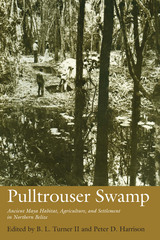
Among Mesoamericanists, the agricultural basis of the ancient Maya civilization of the Yucatan Peninsula has been an important topic of research—and controversy. Interest in the agricultural system of the Maya greatly increased as new discoveries showed that the lowland Maya were not limited to slash-and-burn technology, as had been previously believed, but used a variety of more sophisticated agricultural techniques and practices, including terracing, raised fields, and, perhaps, irrigation. Because of the nature of the data and because this form of agricultural technology had been key to explanations of state formation elsewhere in Mesoamerica, raised-field agriculture became a particular focus of investigation.
Pulltrouser Swamp conclusively demonstrates the existence of hydraulic, raised-field agriculture in the Maya lowlands between 150 B.C. and A.D. 850. It presents the findings of the University of Oklahoma's Pulltrouser SwampProject, an NSF-supported interdisciplinary study that combined the talents of archaeologists, anthropologists, geographers, paleobotanists, biologists, and zoologists to investigate the remains of the Maya agricultural system in the swampy region of northern Belize.
By examining soils, fossil pollen and other plant remains, gastropods, relic settlements, ceramics, lithics, and other important evidence, the Pulltrouser Swamp team has clearly demonstrated that the features under investigation are relics of Maya-made raised and channelized fields and associated canals. Other data suggest the nature of the swamps in which the fields were constructed, the tools used for construction and cultivation, the possible crops cultivated, and at least one type of settlement near the fields, with its chronology. This verification of raised fields provides dramatic evidence of a large and probably organized workforce engaged in sophisticated and complex agricultural technology. As record of this evidence, Pulltrouser Swamp is a work of seminal importance for all students and scholars of New World prehistory.
READERS
Browse our collection.
PUBLISHERS
See BiblioVault's publisher services.
STUDENT SERVICES
Files for college accessibility offices.
RECENTLY PUBLISHED




UChicago Accessibility Resources
home | accessibility | search | about | contact us
BiblioVault ® 2001 - 2026
The University of Chicago Press