
 A SCHOLARLY BOOK REPOSITORY
4 start with P start with P

Uncovering the intricate cultural threads that inform our dietary practices
Paranatures in Culinary Culture embarks on a gastronomic odyssey, redefining foods we thought we knew and revealing the extraordinary stories of ordinary ingredients and the cultural forces shaping our diets. The book begins with a simple premise: to eat is to assimilate the outer world into the inner body, both physically and mentally. But what happens when this assimilation process goes awry? Thomas R. Parker reveals how culinary staples are not only elements of identity formation but also instruments of cultural disruption when their true nature emerges and challenges our preconceptions.
Parker explores how certain foods—bread, oysters, pigs, cheese, and wine—can both create and destabilize narratives, unsettle assimilation, and decenter Western culinary traditions. Taking inspiration from architectural historian David Gissen’s concept of “subnature” and Michel Serres’s idea of the “parasite,” Parker develops the concept of paranatures: flavors, foods, and practices considered unpalatable by different societies at different times. He reveals how certain ordinary foods live parallel paranatural lives, addressing larger issues of colonial and postcolonial food theory and challenging long-held notions that cuisine was meant to uphold.
Serving up a rich blend of history, culture, and gastronomy, Parker leads readers to perceive food as an adventure, inviting them to taste the untamed side of nature. He offers a thought-provoking invitation to reconceptualize the roles and narratives we assign to the natural world and its produce, allowing us to see food, nature, and ourselves in new ways.
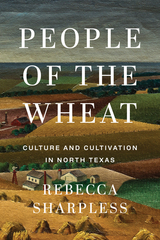
How wheat growing, milling, and baking shaped the people and culture of North Texas.
In the national imaginary, America’s amber fields of grain lie in the country’s center, but for more than a century, they also grew across one pocket of the South: North Texas. From the 1840s to the 1970s, the state's agriculture, dominated in lore by cotton in the east and livestock in the open range, was heavily invested in the cultivation, processing, sale, and consumption of wheat. Recalling a forgotten history, Rebecca Sharpless shows how the rhythms of the wheat harvest—and the evolution of the milling, distribution, and baking industries—governed daily life in what is now known as the Dallas–Fort Worth Metroplex.
In the 1840s, Anglo settlers discovered that grain flourished in North Texas and quickly built an economy that included wheat in fields, mills, and kitchens. After the Civil War, hand labor gave way to mechanization, greatly increasing production. Commercial bakeries churned out novel confections, and big cities were built on the bounty of the countryside. In the second half of the twentieth century, as production moved northward, industrial milling and baking declined, but home baking boomed, flour advertising supported regional music, and wheat fortunes financed the region’s cultural life. Sharpless covers 150 years of wheat’s very human history and shows how the labor that cultivated it, the sustenance it provided, and the prosperity it generated left an indelible mark on the people and institutions of Texas.
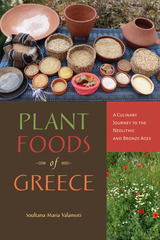
"This comprehensive, definitive volume, the result of 25 years of research on food archaeology, archaeobotany, and ethnobotany in Greece, surpasses other works on this topic, whether regional in focus or encompassing the whole world, for its detail, clarity, and assemblage of data sources. Highly recommended." —CHOICE
In Plant Foods of Greece, Greek archaeologist Soultana Maria Valamoti takes readers on a culinary journey, reconstructing the plant foods and culinary practices of Neolithic and Bronze Age Greece. For more than thirty years, she has been analyzing a large body of archaeobotanical data that was retrieved from nearly twenty sites in mainland Greece and the Greek islands, with an additional analysis of other sites as referenced by published colleagues. Plant foods were the main ingredients of daily meals in prehistoric Greece and most likely of special dishes prepared for feasts and rituals.
Valamoti’s approach allows an exploration of culinary variability through time. The thousands of charred seeds identified from occupation debris correspond to minuscule time capsules. She is able to document changes from the cooking of the first farmers to the sophisticated cuisines of the elites who inhabited palaces in the first cities of Europe in the south of Greece during the Late Bronze Age. Along the way, she explains the complex processes for the addition of new ingredients (such as millet and olives), condiments, sweet tastes, and complex recipes. Valamoti also addresses regional variability and diversity as well as detailing experimentation and research using occasional input from ancient written sources.
Comprehensive and synthetic coverage encompasses bread/cereals, pulses, oils, fruit and nuts, fermented brews, healing foods, cooking, and identity. In addition, Valamoti offers insight into engaging in public archaeology and provides recipes that incorporate ancient plant ingredients and connect prehistory to the present in a critical way. A definitive source for a range of food scientists and scholars, it will also appeal to foodies.

A case study on how twentieth-century urban capitalism created a new food system for Mombasa’s working class. In the early twentieth century, East Africans lived primarily in rural areas, cultivating most of the food they consumed. By the start of the twenty-first century, though, millions of people lived in cities, where they purchased their food from markets and eateries. This transformation reflects broader historical shifts in food production, preparation, and consumption throughout the world from a rural subsistence model to a commercial system. Preparing the Modern Meal explores this economic revolution in Mombasa, Kenya, and examines the experiences of those who migrated from rural settings to an Indian Ocean town where they became dependent on the capitalist market for their daily meals. The change to a commercial food system reshaped the culinary culture of East Africa. In rural communities, diets were diverse and varied with the seasons. Conversely, Mombasa’s commercial supply chains, which steadily delivered staples like maize meal, wheat flour, tea, and meat, led to a more uniform urban cuisine that remained consistent throughout the year. Urbanization also altered gender roles in cooking. In rural households women prepared the food, but in Mombasa many workers lived in all-male housing and had to cook for themselves. Some even took up cooking as a profession, thus expanding the role of men in the culinary domain. In addition to these themes, Preparing the Modern Meal reviews the emergence of new businesses, particularly those of street food vendors who provided affordable meals in residential neighborhoods and to nearby workplaces. However, these makeshift eateries often clashed with the vision for commerce in a modern city held by municipal officials, who often sought to eliminate these businesses through fines, arrests, and demolition campaigns. Through the lens of food, this book explores the conflicts between elite ideas about urban modernity and the actual ways that poor communities made their lives work in an unequal city.
READERS
Browse our collection.
PUBLISHERS
See BiblioVault's publisher services.
STUDENT SERVICES
Files for college accessibility offices.
RECENTLY PUBLISHED






UChicago Accessibility Resources
home | accessibility | search | about | contact us
BiblioVault ® 2001 - 2026
The University of Chicago Press