
 A SCHOLARLY BOOK REPOSITORY
46 start with P start with P
Barbara Geddes is Professor of Political Science at the University of California, Los Angeles.
Contributors. Uli Beisel, Didier Fassin, P. Wenzel Geissler, Rene Gerrets, Ann Kelly, Guillaume Lachenal, John Manton, Lotte Meinert, Vinh-Kim Nguyen, Branwyn Poleykett, Susan Reynolds Whyte

Hamilton vividly captures the parenting approaches of mothers and fathers from all walks of life—from a CFO for a Fortune 500 company to a waitress at a roadside diner. As she shows, parents are guided by different visions of the ideal college experience, built around classed notions of women’s work/family plans and the ideal age to “grow up.” Some are intensively involved and hold adulthood at bay to cultivate specific traits: professional helicopters, for instance, help develop the skills and credentials that will advance their daughters’ careers, while pink helicopters emphasize appearance, charm, and social ties in the hopes that women will secure a wealthy mate. In sharp contrast, bystander parents—whose influence is often limited by economic concerns—are relegated to the sidelines of their daughter’s lives. Finally, paramedic parents—who can come from a wide range of class backgrounds—sit in the middle, intervening in emergencies but otherwise valuing self-sufficiency above all.
Analyzing the effects of each of these approaches with clarity and depth, Hamilton ultimately argues that successfully navigating many colleges and universities without involved parents is nearly impossible, and that schools themselves are increasingly dependent on active parents for a wide array of tasks, with intended and unintended consequences. Altogether, Parenting to a Degree offers an incisive look into the new—and sometimes problematic—relationship between students, parents, and universities.


Gordon also explores the role of other policies and practices in sustaining segregation. Enforcement of private racial restrictions was held unconstitutional in 1948, and such agreements were prohibited outright in 1968. But their premises and assumptions, and the segregation they had accomplished, were accommodated by local zoning and federal housing policies. Explicit racial restrictions were replaced by the deceptive business practices of real estate agents and developers, who characterized certain neighborhoods as white and desirable and others as black and undesirable, thereby hiding segregation behind the promotion of sound property investments, safe neighborhoods, and good schools. These practices were in turn replaced by local zoning, which systematically protected white neighborhoods while targeting “blighted” black neighborhoods for commercial and industrial redevelopment, and by a tangle of federal policies that reliably deferred to local and private interests with deep investments in local segregation. Private race restriction was thus a key element in the original segregation of American cities and a source of durable inequalities in housing wealth, housing opportunity, and economic mobility.
Patchwork Apartheid exhaustively documents the history of private restriction in urban settings and demonstrates its crucial role in the ideas and assumptions that have sustained racial segregation in the United States into the twenty-first century.


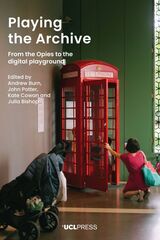
Playing the Archive: From the Opies to the Digital Playground revisits the trailblazing work of Iona and Peter Opie, who documented children’s playground games, rhymes, and traditions in mid-20th century Britain, and brings their research into the digital age. Through a major new study, this book explores how children’s play has evolved, drawing on fresh ethnographic research, digital storytelling, and interactive media to compare past and present-day playground cultures.
By making the Opie Archive publicly accessible and involving children through digital interfaces, the project opens up new ways of understanding play as a dynamic, ever-changing practice. The chapters offer novel theoretical insights into the shifting landscapes of play, considering the role of archives and digital media in shaping children’s cultural expressions. Playing the Archive questions stereotypes about childhood in the digital era, positioning children as active creators of their own play cultures.
The contributors offer methodologies, techniques, and suggestions for research that move beyond decontextualized guides to grapple with the messiness of research-in-process, as well as design, development, and expansion. Serviss and Jamieson’s model of RAD writing studies research is transcontextual and based on hybridized or mixed methods. Among these methods are citation context analysis, research-aloud protocols, textual and genre analysis, surveys, interviews, and focus groups, with an emphasis on process and knowledge as contingent. Chapters report on research projects at different stages and across institution types—from pilot to multi-site, from community college to research university—focusing on the methods and artifacts employed.
A rich mosaic of research about research, Points of Departure advances knowledge about student writing and serves as a guide for both new and experienced researchers in writing studies.
Contributors: Crystal Benedicks, Katt Blackwell-Starnes, Lee-Ann Kastman Breuch, Kristi Murray Costello, Anne Diekema, Rebecca Moore Howard, Sandra Jamieson, Elizabeth Kleinfeld, Brian N. Larson, Karen J. Lunsford, M. Whitney Olsen, Tricia Serviss, Janice R. Walker
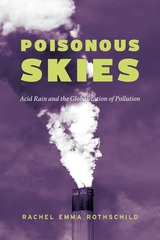
The identification of acid rain in the 1960s changed scientific and popular understanding of fossil fuel pollution’s potential to cause regional—and even global—environmental harms. It showed scientists that the problem of fossil fuel pollution was one that crossed borders—it could travel across vast stretches of the earth’s atmosphere to impact ecosystems around the world. This unprecedented transnational reach prompted governments, for the first time, to confront the need to cooperate on pollution policies, transforming environmental science and diplomacy. Studies of acid rain and other pollutants brought about a reimagining of how to investigate the natural world as a complete entity, and the responses of policy makers, scientists, and the public set the stage for how societies have approached other prominent environmental dangers on a global scale, most notably climate change.
Grounded in archival research spanning eight countries and five languages, as well as interviews with leading scientists from both government and industry, Poisonous Skies is the first book to examine the history of acid rain in an international context. By delving deep into our environmental past, Rothschild hopes to inform its future, showing us how much is at stake for the natural world as well as what we risk—and have already risked—by not acting.
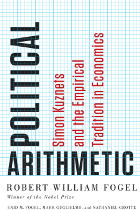
With Political Arithmetic, Nobel Prize–winning economist Robert Fogel and his collaborators tell the story of economist Simon Kuznets, the founding of the National Bureau of Economic Research, and the creation of the concept of GNP, which for the first time enabled us to measure the performance of entire economies. The book weaves together the many strands of political and economic thought and historical pressures that together created the demand for more detailed economic thinking—Progressive-era hopes for activist government, the production demands of World War I, Herbert Hoover’s interest in business cycles as President Harding’s commerce secretary, and the catastrophic economic failures of the Great Depression—and shows how, through trial and error, measurement and analysis, economists such as Kuznets rose to the occasion and in the process built a discipline whose knowledge could be put to practical use in everyday decision-making.
The product of a lifetime of studying the workings of economies and skillfully employing the tools of economics, Political Arithmetic is simultaneously a history of a key period of economic thought and a testament to the power of applied ideas.

Any student, academic or practitioner wanting to succeed in development studies, radical or mainstream, must understand the World Bank's role and the evolution of its thinking and activities. The Political Economy of Development provides tools for gaining this understanding and applies them across a range of topics.
The research, practice and scholarship of development are always set against the backdrop of the World Bank, whose formidable presence shapes both development practice and thinking. This book brings together academics that specialise in different subject areas of development and reviews their findings in the context of the World Bank as knowledge bank, policy-maker and financial institution. The volume offers a compelling contribution to our understanding of development studies and of development itself.
The Political Economy of Development is an invaluable critical resource for students, policy-makers and activists in development studies.

In Political Learning in Adulthood, social scientists for the first time examine the changes in political outlook and behavior that take place during the adult years, providing an invaluable overview of the problems, theories, and methodological approaches that characterize the field of political socialization. They consider which political values remain constant and which are subject to change, and they explore the ways in which both ordinary and extraordinary life events affect adults' political worldviews. Among specific topics considered are the effects of age and aging, the relation between participation in the work force and the development and expression of political views, continuity and change in the wake of revolutionary social and political movements, and the effects of such traumatic and life-threatening situations as war and terrorist activity.

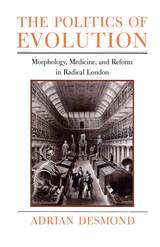
"The Politics of Evolution is intellectual dynamite, and certainly one of the most important books in the history of science published during the past decade."—Jim Secord, Times Literary Supplement
"One of those rare books that not only stakes out new territory but demands a radical overhaul of conventional wisdom."—John Hedley Brooke, Times Higher Education Supplement
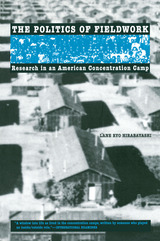
In addressing these questions, author Lane Hirabayashi examines the case of the late Dr. Tamie Tsuchiyama. At the time an advanced doctoral student in anthropology, Tsuchiyama was hired in 1942 to conduct ethnographic fieldwork for the University of California at Berkeley's Japanese American Evacuation and Resettlement Study. Drawing from personal letters, ethnographic fieldnotes, reports, interviews, and other archival sources, The Politics of Fieldwork describes Tsuchiyama's experiences as a researcher at Poston, Arizona—a.k.a. the Colorado River Relocation Center. The book relates the daily life, fieldwork methodology, and politics of the residents and researchers at the Poston camp, as well as providing insight into the pressures that led to Tsuchiyama's ultimate resignation, in protest, from the JERS project in 1945.
Facilitating the critical analysis of Tsuchiyama's role in the JERS research are questions regarding the relationships between Japanese American research and the nature of "colonial science" that merit discussion in contemporary field research. A multidisciplinary synthesis of anthropological, historical, and ethnic studies perspectives, The Politics of Fieldwork is rich with lessons about the ethics and politics of ethnographic fieldwork.
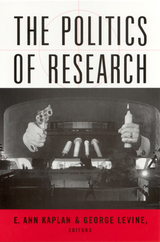
Although it ended up as only one among a host of federal research policymaking agencies, the National Science Foundation was originally conceived as central to the federal research policymaking system. Kleinman’s historical examination of the National Science Foundation exposes the sociological and political workings of the system, particularly the way in which a small group of elite scientists shaped the policymaking process and defined the foundation’s structure and future. Beginning with Vannevar Bush’s 1945 manifesto The Endless Frontier, Kleinman explores elite and populist visions for a postwar research policy agency and shows how the structure of the American state led to the establishment of a fragmented and uncoordinated system for federal research policymaking. His book concludes with an analysis of recent efforts to reorient research policy and to remake federal policymaking institutions in light of the current "crisis" of economic competitiveness.
A particularly timely study, Politics on the Endless Frontier will be of interest to historians and sociologists of science and technology and to science policy analysts.

Seized by the War Department in 1944 for the bomb project, the Runnymede Playhouse was transformed into a polonium processing facility, providing a critical radioactive ingredient for the bomb initiator—the mechanism that triggered a chain reaction. With the help of a Soviet spy working undercover at the site, it was also key to the Soviet Union’s atomic bomb program.
The work was directed by industrial chemist Charles Allen Thomas who had been chosen by J. Robert Oppenheimer and General Leslie Groves to coordinate Manhattan Project chemistry and metallurgy. As one of the nation’s first science administrators, Thomas was responsible for choreographing the plutonium work at Los Alamos and the Project’s key laboratories. The elegant glass-roofed building belonged to his wife’s family.
Weaving Manhattan Project history with the life and work of the scientist, industrial leader and singing-showman Thomas, Polonium in the Playhouse offers a fascinating look at the vast and complicated program that changed world history and introduces the men and women who raced against time to build the initiator for the bomb.
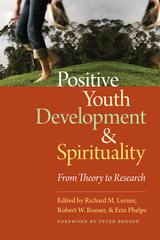
<p>Bringing together a never-before-assembled network of biologists, psychologists, and sociologists, <em>Positive Youth Development and Spirituality</em> scientifically examines how spirituality and its cultivation may affect the positive development of adolescents. </p>
<p>Chapters provide groundbreaking new discussions of conceptual, theoretical, definitional, and methodological issues that need to be addressed when exploring the relationships between spirituality and development. Throughout the book, contributors recommend ways in which the research on the spirituality/positive youth development connection may be integral in building the larger field of spiritual development as a legitimate and active domain of developmental science. This volume, which is sure to be seen as a seminal contribution to a field in need of theoretical underpinnings, will be of interest to scholars and scientists in the fields of biology and the social and behavioral sciences.</p>
<p>Contributors include: Mona Abo-Zena, Jeffrey Jensen Arnnett, Peter L. Benson, Marina Umaschi Bers, Aerika Brittian, William Damon, Angela M. DeSilva, Jacquelynne S. Eccles, David Henry Feldman, Simon Gächter, Elena L. Grigorenko, Sonia S. Isaac, Lene Arnett Jensen, Carl N. Johnson, Linda Juang, Pamela Ebstyne King, Richard M. Lerner, Jennifer Menon, Na'ilah Sued Nasir, Guerda Nicolas, Toma´š Paus, Stephen C. Peck, Erin Phelps, Alan P. Poey, Robert W. Roeser, W. George Scarlett, Lonnie R. Sherrod, Gabriel S. Spiewak, Chris Starmer, Moin Syed, Janice L. Templeton, Heather L. Urry, and Richard Wilkinson.</p>

In this handbook based on over twenty years of teaching and practice at the intersection of museums, anthropology, and Indigenous peoples, Jennifer A. Shannon covers both the theoretical (i.e., exploring the idea of objects as kin) and the pragmatic (i.e., guidelines for how to design and budget collaborative projects). She advocates for fundamental change in how anthropological research design and practice are done within and beyond the museum and how leadership and staff view the very purpose of the museum. She also demonstrates how collaborative museum anthropology can be a model for the fields of anthropology, public scholarship, and social science research more broadly.
Posterity Is Now is a starting point, a “companion to practice,” written in accessible language and equally relevant for use in university classrooms, by qualitative researchers, and by practitioners in museums and cultural centers.
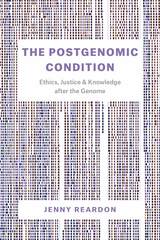
Drawing on more than a decade of research—in molecular biology labs, commercial startups, governmental agencies, and civic spaces—Reardon demonstrates how the extensive efforts to transform genomics from high tech informatics practiced by a few to meaningful knowledge beneficial to all exposed the limits of long-cherished liberal modes of knowing and governing life. Those in the American South challenged the value of being included in genomics when no hospital served their community. Ethicists and lawyers charged with overseeing Scottish DNA and data questioned how to develop a system of ownership for these resources when their capacity to create things of value—new personalized treatments—remained largely unrealized. Molecular biologists who pioneered genomics asked whether their practices of thinking could survive the deluge of data produced by the growing power of sequencing machines. While the media is filled with grand visions of precision medicine, The Postgenomic Condition shares these actual challenges of the scientists, entrepreneurs, policy makers, bioethicists, lawyers, and patient advocates who sought to leverage liberal democratic practices to render genomic data a new source of meaning and value for interpreting and caring for life. It brings into rich empirical focus the resulting hard on-the-ground questions about how to know and live on a depleted but data-rich, interconnected yet fractured planet, where technoscience garners significant resources, but deeper questions of knowledge and justice urgently demand attention.

If knowledge is power, then John Hird has opened the doors for anyone interested in public policymaking and policy analysis on the state level. A beginning question might be: does politics put gasoline or sugar in the tank? More specifically, in a highly partisan political environment, is nonpartisan expertise useful to policymaking? Do policy analysts play a meaningful role in decision making? Does policy expertise promote democratic decision making? Does it vest power in an unelected and unaccountable elite, or does it become co-opted by political actors and circumstances? Is it used to make substantive changes or just for window-dressing?
In a unique comparative focus on state policy, Power, Knowledge, and Politics dissects the nature of the policy institutions that policymakers establish and analyzes the connection between policy research and how it is actually used in decision making. Hird probes the effects of politics and political institutions—parties, state political culture and dynamics, legislative and gubernatorial staffing, partisan think tanks, interest groups—on the nature and conduct of nonpartisan policy analysis. Through a comparative examination of institutions and testing theories of the use of policy analysis, Hird draws conclusions that are more useful than those derived from single cases.
Hird examines nonpartisan policy research organizations established by and operating in U.S. state legislatures—one of the most intense of political environments—to determine whether and how nonpartisan policy research can survive in that harsh climate. By first detailing how nonpartisan policy analysis organizations came to be and what they do, and then determining what state legislators want from them, he presents a rigorous statistical analysis of those agencies in all 50 states and from a survey of 800 state legislators. This thoroughly comprehensive look at policymaking at the state level concludes that nonpartisan policy analysis institutions can play an important role—as long as they remain scrupulously nonpartisan.
Werner Troesken looks at the history of the United States with a focus on three diseases—smallpox, typhoid fever, and yellow fever—to show how constitutional rules and provisions that promoted individual liberty and economic prosperity also influenced, for good and for bad, the country’s ability to eradicate infectious disease. Ranging from federalism under the Commerce Clause to the Contract Clause and the Fourteenth Amendment, Troesken argues persuasively that many institutions intended to promote desirable political or economic outcomes also hindered the provision of public health. We are unhealthy, in other words, at least in part because our political and legal institutions function well. Offering a compelling new perspective, The Pox of Liberty challenges many traditional claims that infectious diseases are inexorable forces in human history, beyond the control of individual actors or the state, revealing them instead to be the result of public and private choices.

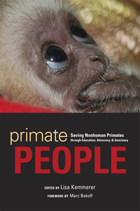
In the last 30 years the bushmeat trade has led to the slaughter of nearly 90 percent of West Africa’s bonobos, perhaps our closest relatives, and has recently driven Miss Waldron’s red colobus monkey to extinction. Earth was once rich with primates, but every species—except one—is now extinct or endangered because of one primate—Homo sapiens. How have our economic and cultural practices pushed our cousins toward destruction? Would we care more about their fate if we knew something of their individual lives and sufferings? Would we help them if we understood how our choices threaten their existence? This anthology helps to answer these questions.
The first section of Primate People introduces forces that threaten nonhuman primates, such as the entertainment and “pet” industries, the bushmeat trade, habitat destruction, and logging. The second section exposes the exploitation of primates in research facilities, including the painful memories of an undercover agent, and suggests models of more enlightened scientific methods. The final section tells the stories of those who lobby for change, educate communities, and tenderly care for our displaced cousins in sanctuaries.
Sometimes shocking and disturbing, sometimes poignant and encouraging, Primate People always draws the reader into the lives of nonhuman primates. Activists around the world reveal the antics and pleasures of monkeys, the tendencies and idiosyncrasies of chimpanzees, and the sufferings and fears of macaques. Charming, difficult, sensitive—these testimonies demonstrate that nonhuman primates and human beings are, indeed, closely related. Woven into the anthology’s lucid narratives are the stories of how we harm and create the conditions that endanger primates, and what we can and must do to prevent their ongoing suffering and fast-approaching extinction.

Rooted in Johnson’s small-town origins and passion for civic engagement, this narrative offers unique insights into the path to university leadership and the key decisions leaders face. It is an invaluable resource for aspiring and current academic leaders seeking guidance in navigating the complexities of higher education.


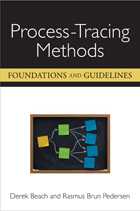
Process-tracing in social science is a method for studying causal mechanisms linking causes with outcomes. This enables the researcher to make strong inferences about how a cause (or set of causes) contributes to producing an outcome. Derek Beach and Rasmus Brun Pedersen introduce a refined definition of process-tracing, differentiating it into three distinct variants and explaining the applications and limitations of each. The authors develop the underlying logic of process-tracing, including how one should understand causal mechanisms and how Bayesian logic enables strong within-case inferences. They provide instructions for identifying the variant of process-tracing most appropriate for the research question at hand and a set of guidelines for each stage of the research process.
Project Management for Researchers tackles the how, what, and why of project management. It offers step-by-step guidance on choosing tools and developing a personalized system that will help the reader manage and organize their research so that steps and decisions are documented for accountability and reproducibility. Readers will find worksheets they can adapt to their own needs, priorities, and research as well as practical tips on issues ranging from emails to scheduling. Suitable for work across methods, experience levels, and disciplines and adaptable for those working alone, with others, or as team managers, this book will guide readers between various research stages–from planning, to execution, to adjustment of research projects big and small.
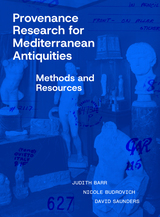
The first of its kind, this book is an accessible, comprehensive primer of methods and resources for researching the provenance of Mediterranean (Greek, Roman, and Etruscan) antiquities. In addition to outlining effective strategies for documentation and investigation, the volume features an annotated guide to key archives, databases, and twentieth-century dealers to facilitate a broad spectrum of research endeavors. Building upon a decade-long review of the Getty Museum’s antiquities collection, it draws together instructive case studies, legal perspectives, and practical experience to provide an efficient reference for museum professionals, scholars, collectors, and students. The authors aim to emphasize the need for diligent provenance research and to shorten the learning curve for such projects.
The free online edition of this open-access publication is available at getty.edu/publications/provenance-research and includes zoomable illustrations. Also available are free PDF and EPUB downloads of the book.
Five chapters show how differing psychobiographical approaches can illuminate the lives of Richard Nixon, Nathaniel Hawthorne, Eleanor Marx (Karl Marx’s youngest daughter), author and feminist Vera Brittain, psychologist Henry Murray, and Sigmund Freud (whose peculiar relationship to Leonardo da Vinci shaped and distorted the first psychobiography every written). Two chapters concentrate on the analysis of life histories collected from contemporary American adults at mid-life crises, and the remaining three chapters provide bold new conceptual and methodological perspectives from which to view the study of individual lives and life stories.
This landmark volume promises to make a major contribution to the growing literature on biography and personality.
Contributors. Irving E. Alexander, James William Anderson, Leslie A. Carlson, Rae Carlson, Alan C. Elms, Carol Franz, Lynne Layton, Dan P. McAdams, Richard L. Ochberg, George C. Rosenwald, William McKinley Runyan, Abigail G. Stewart, Jacquelyn Wiersma, David G. Winter
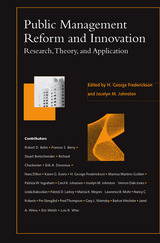
Leading scholars present the most complete, as well as the most advanced, treatment of public management reform and innovation available
The subject of reform in the public sector is not new; indeed, its latest rubric, reinventing government, has become good politics. Still, as the contributors ask in this volume, is good politics necessarily good government?Given the growing desire to reinvent government, there are hard questions to be asked: Is the private sector market model suitable and effective when applied to reforming public and governmental organizations? What are the major political forces affecting reform efforts in public management? How is public management reform accomplished in a constitutional democratic government? How do the values of responsiveness, professionalism, and managerial excellence shape current public management reforms? In this volume, editors H. George Frederickson and Jocelyn M. Johnston bring together scholars with a shared interest in empirical research to confront head-on the toughest questions public managers face in their efforts to meet the demands of reform and innovation.
Throughout the book, the authors consider the bureaucratic resistance that results when downsizing and reinvention are undertaken simultaneously, the dilemma public managers face when elected executives set a reform agenda that runs counter to the law, and the mistaken belief that improved management can remedy flawed policy.
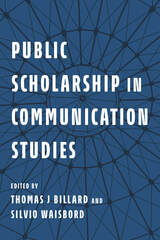
Thomas J Billard and Silvio Waisbord curate essays from a wide range of specialties within the study of communication. Aimed at scholars and students alike, the contributors use approaches from critical meditations to case studies to how-to guides as they explore the possibilities of seeing shared knowledge not as a gift to be granted but as an imperative urging readers to address the problems of the world. Throughout the volume, the works show that a pivot to ideas of scholarship as public service is already underway in corners of communication studies across the country.
Visionary and provocative, Public Scholarship in Communication Studies proposes a needed reconsideration of knowledge and a roadmap to its integration with community.
Contributors: Elaine Almeida, Becca Beets, Thomas J Billard, Danielle K. Brown, Aymar Jean Christian, Stacey L. Connaughton, Paula Gardner, Larry Gross, Amy Jordan, Daniel Kreiss, Rachel Kuo, Susan Mancino, Shannon C. McGregor, Philip M. Napoli, Todd P. Newman, Srividya Ramasubramanian, Chad Raphael, Sue Robinson, Silvio Waisbord, Yidong Wang, and Holley Wilkin
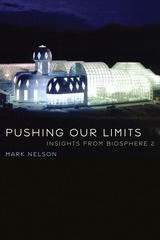
Biosphere 2 helped change public understanding of what our global biosphere is and how it provides for our health and well-being. However, the experiment is often dismissed as a failure, and news outlets at the time focused on interpersonal conflicts and unexpected problems that arose. Delving past the sensationalism, Nelson presents the goals and results of the experiment, addresses the implications of the project for our global situation, and discusses how the project’s challenges and successes can change our thinking about Biosphere 1: the Earth.
Pushing Our Limits offers insights from the project that can help us deal with our global ecological challenges. It also shows the intense and fulfilling connection the biospherians felt with their life support system and how this led to their vigilant attention to its needs.
With current concerns of sustainability and protection of our global biosphere, as well as the challenge of learning how to support life in space and on Mars, the largest, longest, and most important experiment in closed ecosystems is more relevant than ever. The book explores Biosphere 2’s lessons for changing technology to support and not destroy nature and for reconnecting people to a healthy relationship with nature.
READERS
Browse our collection.
PUBLISHERS
See BiblioVault's publisher services.
STUDENT SERVICES
Files for college accessibility offices.
RECENTLY PUBLISHED





UChicago Accessibility Resources
home | accessibility | search | about | contact us
BiblioVault ® 2001 - 2026
The University of Chicago Press