
 A SCHOLARLY BOOK REPOSITORY
23 start with P start with P
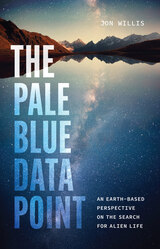
“Here is Willis’s fundamental argument: The more we learn about Earth—our one ‘pale blue data point’ for a planet on which life has definitively arisen—the more qualified we will be to recognize signs of life elsewhere. . . . [A] joyful account.”—Steven Poole, The Wall Street Journal
A thrilling tour of Earth that shows the search for extraterrestrial life starts in our own backyard.
Is there life off Earth? Bound by the limitations of spaceflight, a growing number of astrobiologists investigate the question by studying life on our planet. Astronomer and author Jon Willis shows us how it’s done, allowing readers to envision extraterrestrial landscapes by exploring their closest Earth analogs. With Willis, we dive into the Pacific Ocean from the submersible-equipped E/V Nautilus to ponder the uncharted seas of Saturn’s and Jupiter’s moons; search the Australian desert for some of Earth’s oldest fossils and consider the prospects for a Martian fossil hunt; visit mountaintop observatories in Chile to search for the telltale twinkle of extrasolar planets; and eavesdrop on dolphins in the Bahamas to imagine alien minds.
With investigations ranging from meteorite hunting to exoplanet detection, Willis conjures up alien worlds and unthought-of biological possibilities, speculating what life might look like on other planets by extrapolating from what we can see on Earth, our single “pale blue dot”—as Carl Sagan famously called it—or, in Willis’s reframing, scientists’ “pale blue data point.”
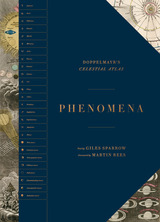
The expansive and intricate Atlas Coelestis, created by Johann Doppelmayr in 1742, set out to record everything known about astronomy at the time, covering constellations, planets, moons, comets, and more, all rendered in exquisite detail. Through stunning illustrations, historical notes, and scientific explanations, Phenomena contextualizes Doppelmayr’s atlas and creates a spectacular handbook to the heavens.
Phenomena begins by introducing Doppelmayr’s life and work, placing his extraordinary cosmic atlas in the context of discoveries made in the Renaissance and Enlightenment and highlighting the significance of its publication. This oversized book presents thirty beautifully illustrated and richly annotated plates, covering all the fundamentals of astronomy—from the dimensions of the solar system to the phases of the moon and the courses of comets. Each plate is accompanied by expert analysis from astronomer Giles Sparrow, who deftly presents Doppelmayr’s references and cosmological work to a modern audience. Each plate is carefully deconstructed, isolating key stars, planets, orbits, and moons for in-depth exploration. A conclusion reflects on the development of astronomy since the publication of the Atlas and traces the course of the science up to the present day. Following the conclusion is a timeline of key discoveries from ancient times onward along with short biographies of the key players in this history.
In The Physics of Extragalactic Radio Sources, David De Young provides a clearly written overview of what is currently known about these objects. A unique feature of the book is De Young's emphasis on the physical processes associated with extragalactic radio sources: their evolution, their environment, and their use as probes to solve other astrophysical problems. He also makes extensive use of the large amount of data now available from observations at x-ray, optical, and radio wavelengths to illustrate his main points.
The Physics of Extragalactic Radio Sources will be a comprehensive introduction to the field for graduate students and a useful summary for astrophysicists.

The vivid, dramatic images of distant stars and galaxies taken by the Hubble Space Telescope have come to define how we visualize the cosmos. In their immediacy and vibrancy, photographs from the Hubble show what future generations of space travelers might see should they venture beyond our solar system. But their brilliant hues and precise details are not simply products of the telescope’s unprecedented orbital location and technologically advanced optical system. Rather, they result from a series of deliberate decisions made by the astronomers who convert raw data from the Hubble into spectacular pictures by assigning colors, adjusting contrast, and actively composing the images, balancing the desire for an aesthetically pleasing representation with the need for a scientifically valid one.
In Picturing the Cosmos, Elizabeth A. Kessler examines the Hubble’s deep space images, highlighting the remarkable resemblance they bear to nineteenth-century paintings and photographs of the American West and their invocation of the visual language of the sublime. Drawing on art history and the history of science, as well as interviews with astronomers who work on the Hubble Heritage Project, Kessler traces the ways that the sublime, with its inherent tension between reason and imagination, not only forms the appearance of the images, but also operates on other levels. The sublime informs the dual expression—numeric and pictorial—of digital data and underpins the relevance of the frontier for a new era of exploration performed by our instruments rather than our bodies. Through their engagement with the sublime the Hubble images are a complex act of translation that encourages an experience of the universe as simultaneously beyond humanity’s grasp and within the reach of our knowledge.
Strikingly illustrated with full-color images, this book reveals the scientific, aesthetic, and cultural significance of the Hubble pictures, offering a nuanced understanding of how they shape our ideas—and dreams—about the cosmos and our places within it.


Intense heat and drought in the summer of 1988…greenhouse warming…acid rain…the ozone hole…rain forest destruction…Hurricane Hugo… The “endangered Earth” is making headlines around the world, and we are aware as never before of the fragility of the global environment and our own vulnerability to climate change. Yet, despite the technological advances of the last three decades, our knowledge of how the Earth’s systems work and interact remains incomplete at best. To determine environmental policies for the future, we need more information and better global climate models.
In Planet Earth, D. James Baker provides a concise, up-to-date overview of the ongoing international research efforts that will improve our ability to predict global climate change. In straightforward terms, Baker describes remote sensing from space. He reviews extant space-based satellites and their instruments and describes the areas in which operational and research missions are gathering ever-increasing data—on Earth–sun interaction, land vegetation patterns, ocean color, temperature, the atmosphere, the ice sheets of the polar regions, the shape and motion of the Earth’s crust, the Earth’s gravity field—which fill in gaps in our knowledge even as they raise new questions about critical global processes. In view of these questions and the subsequent need for more accurate global models, the satellite networks being planned for the 1990s will require state-of-the-art instrumentation, a new generation of supercomputers, and a high level of international cooperation if they are to succeed. Baker focuses on the United States initiative, Mission to Planet Earth, a long range attempt to study the planet as a whole using polar-orbiting, geostationary, and special orbit satellites coupled with a network of ground stations. In the concluding chapter, the author looks to the next century and examines the difficult long-term problems-of national security, technology transfer, data dissemination, cost, international coordination—that could undermine the achievement of the global operational system he proposes.
Planet Earth is a timely, well-illustrated introduction to Earth-observing satellite technology for the nonspecialist and specialist alike. It distills complex information that is otherwise available only in the technical literature. For those who follow space research, it will prove an indispensable guide.
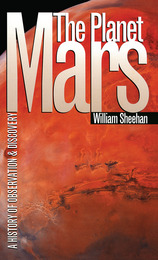
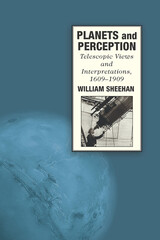
In this timely and vividly written account, William Sheehan traces human fascination with Mars back to the naked-eye observers of the planet. He recalls the early telescopic observers who first made out enigmatic markings and polar caps on its surface. Through lively historical anecdotes, he describes in detail the debate over the so-called canals of Mars, which encouraged speculation that the planet might be inhabited. Finally, Sheehan describes more recent theories about the planet, leading up to the present, when unmanned spacecraft have enabled us to make giant strides in exploration.
Well documented and sparked with human interest, this book will be a useful companion and guide in interpreting the barrage of headlines about Mars that is sure to come over the next few years. Amateurs will appreciate the contributions that have been made to Martian studies by people like themselves, and professionals will find much original material that has never before been published. The American Mars Global Surveyor is scheduled for launch in November 1996, and soon after the American Mars Pathfinder will make its way toward the red planet. A Russian mission consisting of an orbiter and two landers will be launched in October 1997. These space travelers will write a whole new chapter in the dramatic story of Mars, a planet whose exploration has only just begun. Astronomy Book Club main selection and selections of Book-of-the-Month Club and Quality Paperback Book Club.
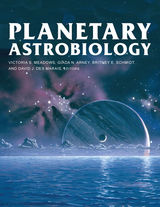
Planetary Astrobiology represents the combined efforts of more than seventy-five international experts consolidated into twenty chapters and provides an accessible, interdisciplinary gateway for new students and seasoned researchers who wish to learn more about this expanding field. Readers are brought to the frontiers of knowledge in astrobiology via results from the exploration of our own solar system and exoplanetary systems. The overarching goal of Planetary Astrobiology is to enhance and broaden the development of an interdisciplinary approach across the astrobiology, planetary science, and exoplanet communities, enabling a new era of comparative planetology that encompasses conditions and processes for the emergence, evolution, and detection of life.
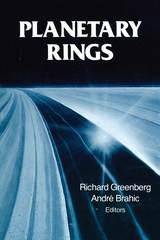
At the time of it's publication, the editors wrote, "it is our hope that this book will become out-of-date quickly, that new observations and theoretical connections will continue to revolutionize our knowledge of planetary rings."
“The high quality of this book is clearly due to strict editorial attention to each paper and the discussions. Gehrels’s book will surely stand for many years as the fundamental reference source for polarization studies in astronomy as well as in atmospheric physics.”—Journal of the Association of Lunar and Planetary Observers
This Space Science Series volume focuses on the scientific issues associated with Pluto and Charon. Fifty collaborating authors here review the latest research on the Pluto-Charon binary, from bulk properties, surfaces, and interiors to atmospheric structure, composition, and dynamics. They also provide historical perspectives on Pluto-Charon research and discuss the population of the trans-Neptunian region and the origin of the Pluto-Charon binary. Also included are prefatory remarks by Pluto's and Charon's discoverers, Clyde Tombaugh and James Christy.
Pluto and Charon offers the most comprehensive available compendium of research work for understanding these far-off members of our solar system, at a time following dramatic developments in our knowledge but before that knowledge can be advanced by spacecraft missions.
Originally published in 1997; now available as an e-book
The Pluto System After New Horizons seeks to become the benchmark for synthesizing our understanding of the Pluto system. The volume’s lead editor is S. Alan Stern, who also serves as NASA’s New Horizons Principal Investigator; co-editors Richard P. Binzel, William M. Grundy, Jeffrey M. Moore, and Leslie A. Young are all co-investigators on New Horizons. Leading researchers from around the globe have spent the last five years assimilating Pluto system flyby data returned from New Horizons. The chapters in this volume form an enduring foundation for ongoing study and understanding of the Pluto system. The volume also advances insights into the nature of dwarf planets and Kuiper Belt objects, providing a cornerstone for planning new missions that may return to the Pluto system and explore others of the myriad important worlds beyond Neptune.

Eddington was a world-class scientist who not only maintained his religious belief throughout his scientific career but also defended the interrelation of science and religion while drawing inspiration from both for his practices. For instance, at a time when a strict adherence to deductive principles of physics had proved fruitless for understanding the nature of stars, insights from Quaker mysticism led Eddington to argue that an outlook less concerned with certainty and more concerned with further exploration was necessary to overcome the obstacles of incomplete and uncertain knowledge.
By examining this intersection between liberal religion and astrophysics, Practical Mystic questions many common assumptions about the relationship between science and spirituality. Matthew Stanley’s analysis of Eddington’s personal convictions also reveals much about the practice, production, and dissemination of scientific knowledge at the beginning of the twentieth century.
Protostars and Planets III reflects the enormous progress made in understanding star and planet formation as a result of new observational capabilities and cooperative research among scientists from diverse fields.
Protostars and Planets IV is also the first book to include chapters describing the discoveries of extrasolar planets, brown dwarfs, and Edgeworth-Kuiper Belt objects, and the first to include high-resolution optical and near-infrared images of protoplanetary disks. Protostars and Planets IV is an unsurpassed reference not only for established researchers but also for younger scientists whose imagination and work will lead to tomorrow's discoveries.
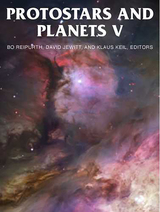
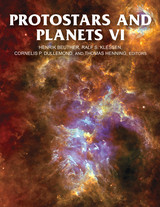
question: How do planets and their host stars form and evolve? Protostars and Planets VI brings together more than 250 contributing authors at the forefront of their field, conveying the latest results in this research area and establishing a new foundation for advancing our understanding of stellar and planetary formation.
Continuing the tradition of the Protostars and Planets series, this latest volume uniquely integrates the cross-disciplinary aspects of this broad field. Covering an extremely wide range of scales, from the formation of large clouds in our Milky Way galaxy down to small chondrules in our solar system, Protostars and Planets VI takes an encompassing view with the goal of not only highlighting what we know but, most importantly, emphasizing the frontiers of what we do not know.
As a vehicle for propelling forward new discoveries on stars, planets, and their origins, this latest volume in the Space Science Series is an indispensable resource for both current scientists and new students in astronomy, astrophysics, planetary science, and the study of meteorites.
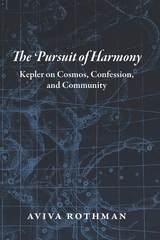
Harmony, Rothman shows, was both the intellectual bedrock for and the primary goal of Kepler’s disparate endeavors. But it was also an elusive goal amid the deteriorating conditions of his world, as the political order crumbled and religious war raged. In the face of that devastation, Kepler’s hopes for his theories changed: whereas he had originally looked for a unifying approach to truth, he began instead to emphasize harmony as the peaceful coexistence of different views, one that could be fueled by the fundamentally nonpartisan discipline of mathematics.
READERS
Browse our collection.
PUBLISHERS
See BiblioVault's publisher services.
STUDENT SERVICES
Files for college accessibility offices.
RECENTLY PUBLISHED







UChicago Accessibility Resources
home | accessibility | search | about | contact us
BiblioVault ® 2001 - 2026
The University of Chicago Press