
 A SCHOLARLY BOOK REPOSITORY
24 start with P start with P

Passionate Fictions was first published in 1994. Minnesota Archive Editions uses digital technology to make long-unavailable books once again accessible, and are published unaltered from the original University of Minnesota Press editions.
"Clarice Lispector is the premiere Latin American woman prose writer of this century," Suzanne Ruta noted in the New York Times Book Review, "but because she is a woman and a Brazilian, she has remained virtually unknown in the United States." Passionate Fictions provides American readers with a critical introduction to this remarkable writer and offers those who already know Lispector's fiction a deeper understanding of its complex workings.
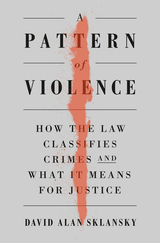
A law professor and former prosecutor reveals how inconsistent ideas about violence, enshrined in law, are at the root of the problems that plague our entire criminal justice system—from mass incarceration to police brutality.
We take for granted that some crimes are violent and others aren’t. But how do we decide what counts as a violent act? David Alan Sklansky argues that legal notions about violence—its definition, causes, and moral significance—are functions of political choices, not eternal truths. And these choices are central to failures of our criminal justice system.
The common distinction between violent and nonviolent acts, for example, played virtually no role in criminal law before the latter half of the twentieth century. Yet to this day, with more crimes than ever called “violent,” this distinction determines how we judge the seriousness of an offense, as well as the perpetrator’s debt and danger to society. Similarly, criminal law today treats violence as a pathology of individual character. But in other areas of law, including the procedural law that covers police conduct, the situational context of violence carries more weight. The result of these inconsistencies, and of society’s unique fear of violence since the 1960s, has been an application of law that reinforces inequities of race and class, undermining law’s legitimacy.
A Pattern of Violence shows that novel legal philosophies of violence have motivated mass incarceration, blunted efforts to hold police accountable, constrained responses to sexual assault and domestic abuse, pushed juvenile offenders into adult prisons, encouraged toleration of prison violence, and limited responses to mass shootings. Reforming legal notions of violence is therefore an essential step toward justice.
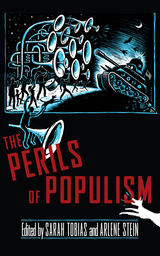
The Perils of Populism shows how a feminist lens can help diagnose the factors behind the global rise of right-wing populism and teach us how to resist the threat it presents to democracy. Featuring interdisciplinary essays about politics in the United States, the Middle East, Europe, and India from a variety of acclaimed theorists and activists, the volume contributes to a rapidly expanding literature on gender and the far right. Together, these chapters offer a truly intersectional analysis of the problem, addressing everything from how populism has thrived in a “post-truth” era to the ways it appeals to working-class voters looking for an alternative to neoliberalism. Yet the authors also find reasons to be hopeful, as they showcase forms of grassroots feminist activism that challenge right-wing populism by advocating for racial and economic justice.
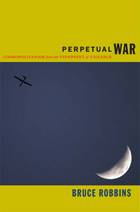
Under these conditions, cosmopolitanism in the traditional sense—primary loyalty to the good of humanity as a whole, even if it conflicts with loyalty to the interests of one's own nation—becomes a necessary resource in the struggle against military aggression. To what extent does the "new" cosmopolitanism also include or support this "old" cosmopolitanism? In an attempt to answer this question, Robbins engages with such thinkers as Noam Chomsky, Edward Said, Anthony Appiah, Immanuel Wallerstein, Louis Menand, W. G. Sebald, and Slavoj Zizek. The paradoxes of detachment and belonging they embody, he argues, can help define the tasks of American intellectuals in an era when the first duty of the cosmopolitan is to resist the military aggression perpetrated by his or her own country.
Short-listed for the Juan E. Méndez Book Award for Human Rights in Latin America from Duke University Libraries
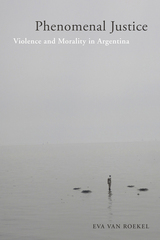
How do victims and perpetrators of political violence caught up in a complicated legal battle experience justice on their own terms? Phenomenal Justice is a compelling ethnography about the reopened trials for crimes against humanity committed during the brutal military dictatorship that ruled Argentina between 1976 and 1983. Grounded in phenomenological anthropology and the anthropology of emotion, this book establishes a new theoretical basis that is faithful to the uncertainties of justice and truth in the aftermath of human rights violations. The ethnographic observations and the first-person stories about torture, survival, disappearance, and death reveal the enduring trauma, heartfelt guilt, happiness, battered pride, and scratchy shame that demonstrate the unreserved complexities of truth and justice in post-conflict societies. Phenomenal Justice will be an indispensable contribution to a better understanding of the military dictatorship in Argentina and its aftermath.
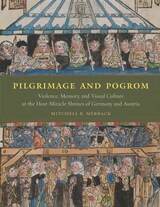
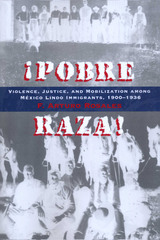
Fleeing the social and political turmoil spawned by the Mexican Revolution, massive numbers of Mexican immigrants entered the southwestern United States in the early decades of the twentieth century. But instead of finding refuge, many encountered harsh, anti-Mexican attitudes and violence from an Anglo population frightened by the influx of foreigners and angered by anti-American sentiments in Mexico.
This book examines the response of Mexican immigrants to Anglo American prejudice and violence early in the twentieth century. Drawing on archival sources from both sides of the border, Arturo Rosales traces the rise of "México Lindo" nationalism and the efforts of Mexican consuls to help poor Mexican immigrants defend themselves against abuses and flagrant civil rights violations by Anglo citizens, police, and the U.S. judicial system. This research illuminates a dark era in which civilian and police brutality, prejudice in the courtroom, and disproportionate arrest, conviction, and capital punishment rates too often characterized justice for Mexican Americans.
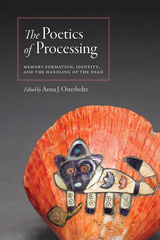
The contributors interpret postmortem treatment of the physical body through a poetics lens, examining body processing as a mechanism for the re-creation of cosmological events and processing’s role in the creation of social memory. They analyze methods of processing and the ways in which the living use the physical body to stratify society and gain power, as evidenced in rituals of body preparation and burial around the world, objects buried with the dead and the hierarchies of tomb occupancy, the dissection of cadavers by medical students, the appropriation of living spaces once occupied by the dead, and the varying treatments of the remains of social outsiders, prisoners of war, and executed persons.
The Poetics of Processing combines social theory and bioarchaeology to examine how the living manipulate the bodies of the dead for social purposes. These case studies—ranging from prehistoric to historic and modern and from around the globe—explore this complex material relationship that does not cease with physical death. This volume will be of interest to mortuary archaeologists, bioarchaeologists, and cultural anthropologists.
Contributors:
Dil Singh Basanti, Roselyn Campbell, Carlina de la Cova, Eric Haanstad, Scott Haddow, Christina Hodge, Christopher Knusel, Kristin Kuckelman, Clark Spencer Larsen, Debra Martin, Kenneth Nystrom, Adrianne Offenbecker, Megan Perry, Marin Pilloud, Beth K. Scaffidi, Mehmet Somel, Kyle D. Waller
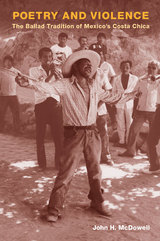
Detailed and rife with social and cultural implications, Poetry and Violence is a compelling commentary on violence as both human experience and communicative action.

This highly acclaimed study describes Aum Shinrikyo’s history, examines the various conflicts it was involved in, and discusses the contents of Asahara’s sermons and prophecies. Reader suggests that the Aum case is not unique but similar to other cases of religious violence.
The March 1995 gas attack on the Tokyo subway system killed 12 people and injured thousands. Massive police raids and the subsequent investigation linked this attack (plus a variety of other criminal activities including murders) to Aum Shinrikyo, a small religious movement whose leader, Asahara Shoko, had prophesied that Armageddon was at hand.
Many questions have been raised by the Aum affair. What were Aum's spiritual roots and the focus of Asahara's teaching? Why did a religious movement ostensibly focused on yoga, meditation, asceticism and the pursuit of enlightenment become involved in violent activities? What factors brought Aum into conflict with society at large, caused it to believe it was the victim of a huge conspiracy to destroy it, and impelled it to experiment with making nerve gasses, build weapons and form its own 'alternative government'?
Ian Reader examines these questions by describing Aum's history, examining the various conflicts it was involved in, and discussing the contents of Asahara's sermons and prophesies. In so doing, he points to a combination of factors which together took Aum down a path of violence. Suggesting that the Aum case is not unique, he shows how it displays similarities with other cases of violence and conflict among religious and political movements in Japan and elsewhere.

Mahatma Gandhi and Jawaharlal Nehru helped create the myth of a nonviolent ancient India while building a modern independence movement on the principle of nonviolence (ahimsa). But this myth obscures a troubled and complex heritage: a long struggle to reconcile the ethics of nonviolence with the need to use violence to rule. Upinder Singh documents the dynamic tension between violence and nonviolence in ancient Indian political thought and practice over twelve hundred years.
Political Violence in Ancient India looks at representations of kingship and political violence in epics, religious texts, political treatises, plays, poems, inscriptions, and art from 600 BCE to 600 CE. As kings controlled their realms, fought battles, and meted out justice, intellectuals debated the boundary between the force required to sustain power and the excess that led to tyranny and oppression. Duty (dharma) and renunciation were important in this discussion, as were punishment, war, forest tribes, and the royal hunt. Singh reveals a range of perspectives that defy rigid religious categorization. Buddhists, Jainas, and even the pacifist Maurya emperor Ashoka recognized that absolute nonviolence was impossible for kings.
By 600 CE religious thinkers, political theorists, and poets had justified and aestheticized political violence to a great extent. Nevertheless, questions, doubt, and dissent remained. These debates are as important for understanding political ideas in the ancient world as for thinking about the problem of political violence in our own time.
Between 1980 and 1994, Peru endured a bloody internal armed conflict, with some 69,000 people killed in clashes involving two insurgent movements, state forces, and local armed groups. In 2003, a government-sponsored “Truth and Reconciliation Committee” reported that the conflict lasted longer, affected broader swaths of the national territory, and inflicted higher costs in both human and economic terms than any other conflict in Peru’s history. Of those killed, 75 percent were speakers of an indigenous language, and almost 40 percent were among the poorest and most rural members of Peruvian society. These unequal impacts of the violence on the Peruvian people revealed deep and historical disparities within the country.
This collection of original essays by leading international experts on Peruvian politics, society, and institutions explores the political and institutional consequences of Peru’s internal armed conflict in the long 1980s. The essays are grouped into sections that cover the conflict itself in historical, comparative, and theoretical perspectives; its consequences for Peru’s political institutions; its effects on political parties across the ideological spectrum; and its impact on public opinion and civil society. This research provides the first systematic and nuanced investigation of the extent to which recent and contemporary Peruvian politics, civil society, and institutions have been shaped by the country’s 1980s violence.

Suzannah Biernoff draws on a wide variety of sources mainly from WWI but also contemporary photography and computer games. Each chapter revolves around particular images: Marine Wedding is discussed alongside Stuart Griffiths’ portraits of British veterans; Henry Tonks’ drawings of WWI facial casualties are compared to the medical photographs in the Gillies Archives; the production of portrait masks for the severely disfigured is approached through the lens of documentary film and photography; and finally the haunting image of one of Tonks’s patients reappears in BioShock, a highly successful computer game. The book simultaneously addresses a neglected area in disability studies; puts disfigurement on the agenda for art history and visual studies; and makes a timely and provocative contribution to the literature on the First World War.

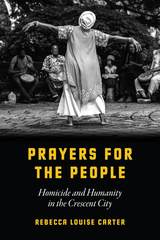
Inspired by ministers and guided by grieving mothers who hold birthday parties for their deceased sons, Prayers for the People traces the emergence of a powerful new African American religious ideal at the intersection of urban life, death, and social and spiritual change. Carter frames this sensitive ethnography within the complex history of structural violence in America—from the legacies of slavery to free but unequal citizenship, from mass incarceration and overpolicing to social abandonment and the unequal distribution of goods and services. And yet Carter offers a vision of restorative kinship by which communities of faith work against the denial of Black personhood as well as the violent severing of social and familial bonds. A timely directive for human relations during a contentious time in America’s history, Prayers for the People is also a hopeful vision of what an inclusive, nonviolent, and just urban society could be.


This book analyses the underlying reasons behind the formation of the Provisional Irish Republican Army (IRA), its development, where this current in Irish republicanism is at present and its prospects for the future.
Tommy McKearney, a former IRA member who was part of the 1980 hunger strike, challenges the misconception that the Provisional IRA was only, or even wholly, about ending partition and uniting Ireland. He argues that while these objectives were always the core and headline demands of the organisation, opposition to the old Northern Ireland state was a major dynamic for the IRA’s armed campaign. As he explores the makeup and strategy of the IRA he is not uncritical, examining alternative options available to the movement at different periods, arguing that its inability to develop a clear socialist programme has limited its effectiveness and reach.
This authoritative and engaging history provides a fascinating insight into the workings and dynamics of a modern resistance movement.
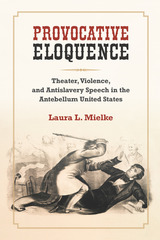
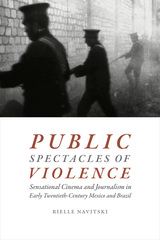
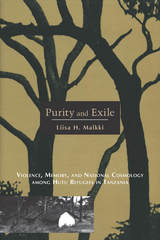
Through extensive fieldwork in two refugee communities, Malkki finds that the refugees' current circumstances significantly influence these constructions. Those living in organized camps created an elaborate "mythico-history" of the Hutu people, which gave significance to exile, and envisioned a collective return to the homeland of Burundi. Other refugees, who had assimilated in a more urban setting, crafted identities in response to the practical circumstances of their day to day lives. Malkki reveals how such things as national identity, historical consciousness, and the social imagination of "enemies" get constructed in the process of everyday life. The book closes with an epilogue looking at the recent violence between Hutu and Tutsi in Rwanda and Burundi, and showing how the movement of large refugee populations across national borders has shaped patterns of violence in the region.
READERS
Browse our collection.
PUBLISHERS
See BiblioVault's publisher services.
STUDENT SERVICES
Files for college accessibility offices.
RECENTLY PUBLISHED





UChicago Accessibility Resources
home | accessibility | search | about | contact us
BiblioVault ® 2001 - 2025
The University of Chicago Press