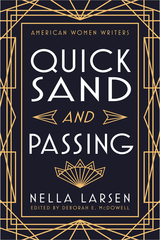
front cover of Quicksand and Passing
Quicksand and Passing
Larsen, Nella
Rutgers University Press, 1986

"Quicksand and Passing are novels I will never forget. They open up a whole world of experience and struggle that seemed to me, when I first read them years  ago, absolutely absorbing, fascinating, and indispensable." —Alice Walker

"A tantalizing mix of moral fable and sensuous colorful narrative, exploring female sexuality and racial solidarity."—Women's Studies International Forum

Rutgers' all-time bestselling book, Nella Larsen's novels Quicksand (1928) and Passing (1929) document the historical realities of Harlem in the 1920s and shed a bright light on the social world of the black bourgeoisie. The novels' greatest appeal and achievement, however, is not sociological, but psychological. As noted in the editor's comprehensive introduction, Larsen takes the theme of psychic dualism, so popular in Harlem Renaissance fiction, to a higher and more complex level, displaying a sophisticated understanding and penetrating analysis of black female psychology.

Passing is now a major motion picture written, produced, and directed by Rebecca Hall. It premiered at Sundance in 2021 and is available on Netflix.


[more]

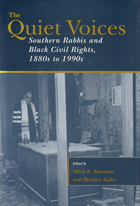
front cover of The Quiet Voices
The Quiet Voices
Southern Rabbis and Black Civil Rights, 1880s to 1990s
Mark K. Bauman
University of Alabama Press, 1997

These wide-ranging essays reveal the various roles played by southern rabbis in the struggle for black civil rights since Reconstruction

The study of black-Jewish relations has become a hotbed of controversy, especially with regard to the role played by Jewish leaders during the Civil Rights movement. Did these leaders play a pivotal role, or did many of them, especially in the South, succumb to societal pressure and strive to be accepted rather than risk being persecuted? If some of these leaders did choose a quieter path, were their reasons valid? And were their methods successful?

The contributors in this volume explore the motivations and subsequent behavior of rabbis in a variety of southern environments both before and during the civil rights struggle. Their research demonstrates that most southern rabbis indeed faced pressures not experienced in the North and felt the need to balance these countervailing forces to achieve their moral imperative.

Individually, each essay offers a glimpse into both the private and public difficulties these rabbis faced in their struggle to achieve good. Collectively, the essays provide an unparalleled picture of Jewish leadership during the civil rights era.
[more]


Send via email Share on Facebook Share on Twitter