
 A SCHOLARLY BOOK REPOSITORY
13 start with R start with R
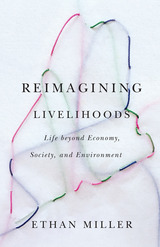
A provocative reassessment of the concepts underlying the struggle for sustainable development
Much of the debate over sustainable development revolves around how to balance the competing demands of economic development, social well-being, and environmental protection. “Jobs vs. environment” is only one of the many forms that such struggles take. But what if the very terms of this debate are part of the problem? Reimagining Livelihoods argues that the “hegemonic trio” of economy, society, and environment not only fails to describe the actual world around us but poses a tremendous obstacle to enacting a truly sustainable future.
In a rich blend of ethnography and theory, Reimagining Livelihoods engages with questions of development in the state of Maine to trace the dangerous effects of contemporary stories that simplify and domesticate conflict. As in so many other places around the world, the trio of economy, society, and environment in Maine produces a particular space of “common sense” within which struggles over life and livelihood unfold. Yet the terms of engagement embodied by this trio are neither innocent nor inevitable. It is a contingent, historically produced configuration, born from the throes of capitalist industrialism and colonialism. Drawing in part on his own participation in the struggle over the Plum Creek Corporation’s “concept plan” for a major resort development on the shores of Moosehead Lake in northern Maine, Ethan Miller articulates a rich framework for engaging with the ethical and political challenges of building ecological livelihoods among diverse human and nonhuman communities.
In seeking a pathway for transformative thought that is both critical and affirmative, Reimagining Livelihoods provides new frames of reference for living together on an increasingly volatile Earth.



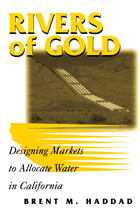
The movement to implement market-based approaches to allocating water is gaining ground across California and in other western states. Proponents argue that markets offer an efficient and cost-effective means of promoting conservation -- those who need water would pay for it on the open market, while others would conserve rather than pay increased prices.
Rivers of Gold takes a new look at California's water-reallocation challenge. The author explains the concept of water markets and the economic theory undergirding them. He shows how some water markets have worked -- and others have failed -- and gives the reader the analytic tools necessary to understand why. The book:
- provides an overview of water-supply issues in California
- compares the situation in California with that of other western states
- considers the different property rights regimes governing current use and their fit with water market institutions
- explains how water markets would work and their benefits and drawbacks as an allocation mechanism
- presents a series of case studies of water markets currently in effect in California
- offers a list of principles for water market design
Rivers of Gold offers a balanced understanding of both the role that markets can play in reallocating water and the limitations of the market mechanism. In the end, the author offers a comprehensive assessment of the institutional design features that any water market should incorporate if it is to reallocate water effectively, in California or in any other region where water is scarce.
Rivers of Gold is the first book to provide a detailed examination of water markets and the institutional design issues associated with them. It is the only book available that presents in-depth case studies of actual water-market transactions, and will be essential reading for water resource professionals and resource economists, as well as for students and scholars of environmental policy, environmental economics, and resource economics.
READERS
Browse our collection.
PUBLISHERS
See BiblioVault's publisher services.
STUDENT SERVICES
Files for college accessibility offices.
RECENTLY PUBLISHED







UChicago Accessibility Resources
home | accessibility | search | about | contact us
BiblioVault ® 2001 - 2026
The University of Chicago Press