
 A SCHOLARLY BOOK REPOSITORY
4 start with R start with R
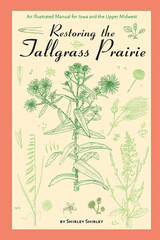
Iowa is the only state that lies entirely within the natural region of the tallgrass prairie. Early documents indicate that 95 percent of the state—close to 30 million acres—was covered by prairie vegetation at the time of Euro-American settlement. By 1930 the prairie sod had been almost totally converted to cropland; only about 30,000 acres of the original “great green sea” remained. Now, in this gracefully illustrated manual, Shirley Shirley has created a step-by-step guide to reconstructing the natural landscape of Iowa and the Upper Midwest.
Chapters on planning, obtaining and selecting plants and seeds, starting seeds indoors, preparing the site, planting, and maintenance set the stage for comprehensive species accounts. Shirley gives firsthand information on soil, moisture, sun, and pH requirements; location, size, and structure; blooming time and color; and propagation, germination, and harvesting for more than a hundred wildflowers and grasses.
Shirley's sketches—all drawn from native plants and from seedlings that she grew herself—will be valuable for even the most experienced gardener. While other books typically feature only the flowering plant, her careful drawings show the three stages of the seedlings, the flower, and the seedhead with seeds as well as the entire plant. This practical and attractive volume will help anyone dedicated to reconstructing the lost “emerald growth” of the historic tallgrass prairie.
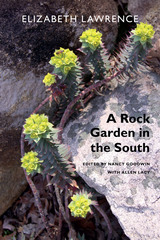
Lawrence, in her usual exquisite prose, deals with the full range of rock gardening topics in this work. She addresses the unique problem of cultivating rock gardens in the South, where the growing season is prolonged and humidity and heat are not conducive to such planting. She describes her own experiences in making a rock garden, with excellent advice on placing stones, constructing steps, ordering plants, and making cuttings.
At the same time, what she writes about here is in large part of interest to gardeners everywhere and for gardens with or without rocks. As always, she thoroughly discusses the plants she has tried—recommending bulbs and other perennials of all sorts, annuals, and woody plants—with poetic descriptions of the plants themselves as well as specific and useful cultural advice. A Rock Garden in the South includes an encyclopedia of plants alphabetized by genus and species and divided into two parts: wood and non-woody plants.
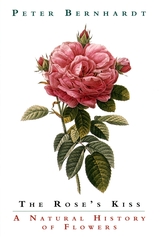
In The Rose's Kiss, Peter Bernhardt presents a fascinating and wide-ranging look at the natural history of flowers—how they look, what they do, and their often hidden interactions with the surrounding environment and other living organisms upon which they depend for their survival. You'll discover why flowers are so colorful, how they evolved, and how insects exploit them for their nectar. This is a book for all flower lovers, from naturalists and gardeners to poets and botanists.

READERS
Browse our collection.
PUBLISHERS
See BiblioVault's publisher services.
STUDENT SERVICES
Files for college accessibility offices.
RECENTLY PUBLISHED






UChicago Accessibility Resources
home | accessibility | search | about | contact us
BiblioVault ® 2001 - 2026
The University of Chicago Press