
 A SCHOLARLY BOOK REPOSITORY
49 start with R start with R
Located a mere fifteen minutes from Los Angeles, the San Gabriel Valley is an incubator for California's new ethnic politics. Here, Latinos and Asian Americans are the dominant groups. Politics are Latino-dominated, while a large infusion of Chinese immigrants and capital has made the San Gabriel Valley the center of the nation's largest Chinese ethnic economy. The white population, meanwhile, has dropped from an overwhelming majority in 1970 to a minority in 1990.
Leland T. Saito presents an insider's view of the political, economic, and cultural implications of this ethnic mix. He examines how diverse residents of the region have worked to overcome their initial antagonisms and develop new, more effective political alliances.
Tracing grassroots political organization along racial and ethnic lines, Race and Politics focuses on the construction of new identities in general and the panethnic affiliation "Asian American" in particular.

From the outbreak of civil war in El Salvador in 1979 through its conclusion in 1992, some 1.5 million Salvadorans fled the violence. This book focuses on the displaced Salvadorans who remained in Central America, seeking refuge in Belize, Costa Rica, Guatemala, Honduras, Nicaragua, and Panama. Their story has been almost entirely overshadowed by the greater numbers who fled farther north to the United States; however, as Rachael De La Cruz shows, the Central American history of Salvadoran refugees is rich, complex, and instructive for scholars of refugee studies, international relations, and human rights.
The isthmus nations that received Salvadoran refugees did not react consistently, and the arriving Salvadorans themselves were not passive participants. National mythologies, perceptions of economic contributions and burdens, regional militarization, state violence, and varying capacities for refugee activism, compounded by the fraught and variable circumstances of the Cold War, together shaped the multitude of government attitudes and policies toward the refugee communities within these countries’ borders. Rarely were refugees simply “a problem to solve”; rather, they represented and acted as catalysts for economic, social, and geopolitical change.
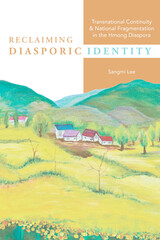
In-depth and interdisciplinary, Reclaiming Diasporic Identity blends ethnography and history to provide a fresh consideration of Hmong life today.
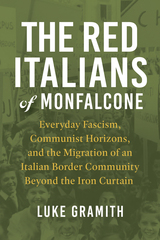
Between 1946 and 1948, roughly five thousand ethnic Italians from the northern Adriatic shipbuilding town of Monfalcone relocated to the newly communist Yugoslavia. This rare case of eastward Cold War migration demonstrates how ordinary people conceived of liberation during the transitional years between World War II and the early Cold War—a time when Monfalcone was both the object of competing Italian and Yugoslav territorial claims and the subject of Anglo-American military occupation.
In The Red Italians of Monfalcone, Luke Gramith undertakes a deep and detailed analysis—based on archival sources in Italy, Slovenia, and the United States—of how the Monfalconesi came to understand Fascism and communism through everyday experience and how those emergent ideologies affected and were affected by their migration. In the course of his analysis, Gramith also examines the failure of “defascistization” and how it fueled strong (but ultimately unsuccessful) pro-Yugoslav and communist movements.

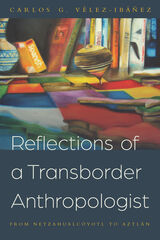
In each chapter, Vélez-Ibáñez revisits a critical piece of his written work, providing a new introduction and discussion of ideas, sources, and influences for the piece. These are followed by the work, chosen because it accentuates key aspects of his development and formation as an anthropologist. By returning to these previously published works, Vélez-Ibáñez offers insight not only into the evolution of his own thinking and conceptualization but also into changes in the fields in which he has been so influential. Throughout his career, Vélez-Ibáñez has addressed why he does the work that he does, and in this volume he continues to address the personal and intellectual drives that have brought him from Netzahualcóyotl to Aztlán.
Reflections of a Transborder Anthropologist shows how both Vélez-Ibáñez and anthropology have changed and formed over a fifty-year period. Throughout, he has worked to understand how people survive and thrive against all odds. Vélez-Ibáñez has been guided by the burning desire to understand inequality, exploitation, and legitimacy, and, most importantly, to provide platforms for the voiceless to narrate their own histories.
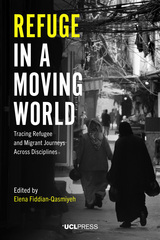
Through interdisciplinary lenses, the contributors explore the ways that different people experience and respond to their own situations and to those of other people. Refuge in a Moving World combines vital reflections on the intricacies of conceptualizing experiences of forced migration and how people inhabit and negotiate everyday life. Ultimately, Refuge in a Moving World argues that working collaboratively to share experiences of migration and displacement fosters more sustainable responses to our moving world.

The refugee is conventionally considered a powerless figure, eagerly cast aside by both migrant and host communities. In his book, The Refugee Aesthetic, Timothy August investigates how and why a number of Southeast Asian American artists and writers have recently embraced the figure of the refugee as a particularly transformative position. He explains how these artists, theorists, critics, and culture-makers reconstruct their place in the American imagination by identifying and critiquing the underlying structures of power that create refugees in the contemporary world.
August looks at the outside forces that shape refugee representation and how these expressions are received. He considers the visual legacy of the Southeast Asian refugee experience by analyzing music videos, graphic novels, and refugee artwork. August also examines the power of refugee literature, showing how and why Southeast Asian American writers look to the refugee position to disentangle their complicated aesthetic legacy.
Arguing that “aesthetics” should be central to the conceptualization of critical refugee studies, August shows how representational structures can galvanize or marginalize refugees, depending on how refugee aesthetics are used and circulated.

While state-based reception is frequently framed as one-off moments such as registration, Refugee Reception in Southern Africa proposes a new understanding whereby reception is a process that reflects the complex dynamics of contemporary refugee arrival. By adopting this understanding, the book demonstrates how reception is a complex and ongoing process of negotiations between refugees and the state. Indeed, the relationship between the refugee and host state often remains fragile and prone to ruptures, especially when less formal reception policies allow refugees to move back and forth between refugee camps and local areas. Nevertheless, through these negotiations, Refugee Reception in Southern Africa shows how reception policies are vital in shaping a refugee’s ability to settle and engage with local communities and labor markets.
Using the cases of Zambia and South Africa, the book explores why some countries maintain encampment reception policies for refugees and others use a more liberal “free settlement” approach, whereby refugees are granted freedom of movement and permitted to settle in cities and towns. This book offers an original and unique perspective on refugee hosting in southern Africa, one that does not look upon persons who flee across a border as a homogenous group whose movement abruptly ends once they arrive in a host state or refugee camp.
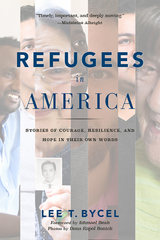
Each chapter of Refugees in America focuses on an individual from a different country, from a 93-year-old Polish grandmother who came to the United States after surviving the horrors of Auschwitz to a young undocumented immigrant from El Salvador who became an American college graduate, despite being born impoverished and blind. Some have found it easy to reinvent themselves in the United States, while others have struggled to adjust to America, with its new culture, language, prejudices, and norms.
Each of them speaks candidly about their experiences to author Lee T. Bycel, who provides illuminating background information on the refugee crises in their native countries. Their stories help reveal the real people at the center of political debates about US immigration.
Giving a voice to refugees from such far-flung locations as South Sudan, Guatemala, Syria, and Vietnam, this book weaves together a rich tapestry of human resilience, suffering, and determination.
Profits from the sale of this book will be donated to two organizations that are doing excellent refugee resettlement work and offer many opportunities to support refugees: HIAS (founded as the Hebrew Immigrant Aid Society) hias.org International Rescue Committee (IRC) rescue.org


How are refugee crises solved? This has become an urgent question as global displacement rates continue to climb, and refugee situations now persist for years if not decades. The resolution of displacement and the conflicts that force refugees from their homes is often explained as a top-down process led and controlled by governments and international organizations. This book takes a different approach. Through contributions from scholars working in politics, anthropology, law, sociology and philosophy, and a wide range of case studies, it explores the diverse ways in which refugees themselves interpret, create and pursue solutions to their plight. It investigates the empirical and normative significance of refugees’ engagement as agents in these processes, and their implications for research, policy and practice. This book speaks both to academic debates and to the broader community of peacebuilding, humanitarian and human rights scholars concerned with the nature and dynamics of agency in contentious political contexts, and identifies insights that can inform policy and practice.
Transnational migration has contributed to the rise of religious diversity and has led to profound changes in the religious make-up of society across the Western world. As a result, societies and nation-states have faced the challenge of crafting ways to bring new religious communities into existing institutions and the legal frameworks. Regulating Difference explores how the state regulates religious diversity and examines the processes whereby religious diversity and expression becomes part of administrative landscapes of nation-states and people’s everyday lives. Arguing that concepts of nationhood are key to understanding the governance of religious diversity, Regulating Difference employs a transatlantic comparison of the Spanish region of Catalonia and the Canadian province of Quebec to show how processes of nation-building, religious heritage-making and the mobilization of divergent interpretations of secularism are co-implicated in shaping religious diversity. It argues that religious diversity has become central for governing national and urban spaces.
This book is also freely available online as an open access digital edition.
Religion has jumped into the sphere of global and domestic politics in ways that few would have imagined a century ago. Some expected that religion would die as modernity flourished. Instead, it now stares at us almost daily from the front pages of newspapers and television broadcasts. Although it is usually stories about the Christian Right or conservative Islam that grab headlines, there are many religious activists of other political persuasions that are working quietly for social justice. This book examines how religious immigrants and religious activists are working for equitable treatment for immigrants in the United States.
The essays in this book analyze the different ways in which organized religion provides immigrants with an arena for mobilization, civic participation, and solidarity. Contributors explore topics including how non-Western religious groups such as the Vietnamese Caodai are striving for community recognition and addressing problems such as racism, economic issues, and the politics of diaspora; how interfaith groups organize religious people into immigrant civil rights activists at the U.S.–Mexican border; and how Catholic groups advocate governmental legislation and policies on behalf of refugees.
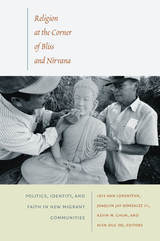
As they conducted research, the contributors not only visited churches and temples but also single-room-occupancy hotels, brothels, tattoo-removal clinics, and the streets of San Francisco, El Salvador, Mexico, and Vietnam. Their essays include an exploration of how faith-based organizations can help LGBT migrants surmount legal and social complexities, an examination of transgendered sex workers’ relationship with the unofficial saint Santisima Muerte, a comparison of how a Presbyterian mission and a Buddhist temple in San Francisco help Chinese immigrants to acculturate, and an analysis of the transformation of baptismal rites performed by Mayan migrants. The voices of gang members, Chinese and Vietnamese Buddhist nuns, members of Pentecostal churches, and many others animate this collection. In the process of giving voice to these communities, the contributors interrogate theories about acculturation, class, political and social capital, gender and sexuality, the sociology of religion, transnationalism, and globalization. The collection includes twenty-one photographs by Jerry Berndt.
Contributors. Luis Enrique Bazan, Kevin M. Chun, Hien Duc Do, Patricia Fortuny Loret de Mola, Joaquin Jay Gonzalez III, Sarah Horton, Cymene Howe, Mimi Khúc, Jonathan H. X. Lee, Lois Ann Lorentzen, Andrea Maison, Dennis Marzan, Rosalina Mira, Claudine del Rosario, Susanna Zaraysky
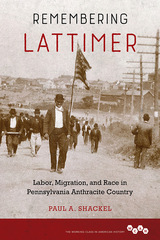
Paul A. Shackel confronts the legacies and lessons of the Lattimer event. Beginning with a dramatic retelling of the incident, Shackel traces how the violence, and the acquittal of the deputies who perpetrated it, spurred membership in the United Mine Workers. By blending archival and archaeological research with interviews, he weighs how the people living in the region remember--and forget--what happened. Now in positions of power, the descendants of the slain miners have themselves become rabidly anti-union and anti-immigrant as Dominicans and other Latinos change the community. Shackel shows how the social, economic, and political circumstances surrounding historic Lattimer connect in profound ways to the riven communities of today.
Compelling and timely, Remembering Lattimer restores an American tragedy to our public memory.
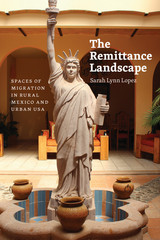
Lopez not only identifies a clear correspondence between the flow of remittances and the recent building boom in rural Mexico but also proposes that this construction boom itself motivates migration and changes social and cultural life for migrants and their families. At the same time, migrants are changing the landscapes of cities in the United States: for example, Chicago and Los Angeles are home to buildings explicitly created as headquarters for Mexican workers from several Mexican states such as Jalisco, Michoacán, and Zacatecas. Through careful ethnographic and architectural analysis, and fieldwork on both sides of the border, Lopez brings migrant hometowns to life and positions them within the larger debates about immigration.
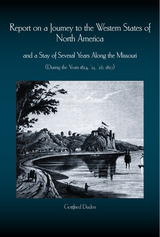
The mass migrations to the United States from Europe that began in the 1830s were strongly influenced by what is known today as emigration literature--travelers' writings about their experiences in the New World. Such accounts were particularly popular with German readers; over 150 examples of the genre were published in Germany between 1827 and 1856. Gottfried Duden's Report on a Journey to the Western States of North America, published in 1829, was one of the most influential of these books. The timing, format, coverage, and literary qualities of the Report, and its idyllic descriptions of pioneer farming in Missouri, combined to make it an instant success. It attracted thousands of Germans to the Midwest, and particularly to Missouri, the focus of Duden's account. This edited and annotated translation is the first complete version to be published in English. It provides for the general public and the professional historian a significant contribution to U.S. immigration history and a unique and delightful fragment of Missouri's rich German heritage.
Duden presented his account in the form of personal letters, a style that helped make the book believable. The Mississippi- Missouri valley reminded him of his native Rhineland where the rivers facilitated trade and transportation, and fertile river bottomland offers the perfect environment for agriculture. Duden farmed the land he bought during his sojourn in Missouri, and his book includes meticulous descriptions of clearing, fencing, and harvesting. His pro-emigration bias, colored by the fact that he himself had been able to hire help on his Missouri farm, made his view of the farmer's life, it turned out, more idyllic than practical. Many would-be gentlemen farmers, inspired by his book to come to Missouri, found pioneer farming more strenuous than they had expected.
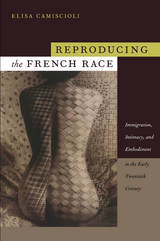
By focusing on telling aspects of the immigration debate, Camiscioli reveals how racial hierarchies were constructed, how gender figured in their creation, and how only white Europeans were cast as assimilable. Delving into pronatalist politics, she describes how potential immigrants were ranked according to their imagined capacity to adapt to the workplace and family life in France. She traces the links between racialized categories and concerns about industrial skills and output, and she examines medico-hygienic texts on interracial sex, connecting those to the crusade against prostitution and the related campaign to abolish “white slavery,” the alleged entrapment of (white) women for sale into prostitution abroad. Camiscioli also explores the debate surrounding the 1927 law that first made it possible for French women who married foreigners to keep their French nationality. She concludes by linking the Third Republic’s impulse to create racial hierarchies to the emergence of the Vichy regime.
Most of the women immigrated as dependents when their U.S.-educated husbands found professional jobs upon graduation. Constrained by their dependent visas, these women could not work outside of the home during the initial phase of their settlement. The significant contrast of their lives before and after immigration—changing from successful professionals to foreign housewives—generated feelings of boredom, loneliness, and depression. Mourning their lost careers and lacking fulfillment in homemaking, these highly educated immigrant women were forced to redefine the meaning of work and housework, which in time shaped their perceptions of themselves and others in the family, at work, and in the larger community.
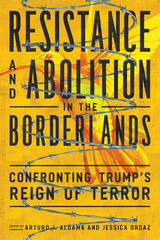
This volume provides a well-argued look at the Trump era. Insightful contributions delve into the impact of Donald Trump’s rhetoric and policies on migrants detained and returned, immigrant children separated from their parents and placed in detention centers, and migrant women subjected to sexual and reproductive abuses, among other timely topics. The chapter authors document a long list in what the book calls “Trump’s Reign of Terror.”
Organized thematically, the book has four sections: The first gathers histories about the Trump years’ roots in a longer history of anti-migration; the second includes essays on artistic and activist responses on the border during the Trump years; the third critiques the normalization of Trump’s rhetoric and actions in popular media and culture; and the fourth envisions the future.
Resistance and Abolition in the Borderlands is an essential reader for those wishing to understand the extent of the damage caused by the Trump era and its impact on Latinx people.
Contributors
Arturo J. Aldama
Rebecca Avalos
Cynthia Bejarano
Tria Blu Wakpa
Renata Carvalho Barreto
Karma R. Chávez
Leo R. Chavez
Jennifer Cullison
Jasmin Lilian Diab
Allison Glover
Jamila Hammami
Alexandria Herrera
Diana J. Lopez
Sergio A. Macías
Cinthya Martinez
Alexis N. Meza
Roberto A. Mónico
José Enrique Navarro
Jessica Ordaz
Eliseo Ortiz
Kiara Padilla
Leslie Quintanilla
J-M Rivera
Heidy Sarabia
Tina Shull
Nishant Upadhyay
Maria Vargas
Antonio Vásquez
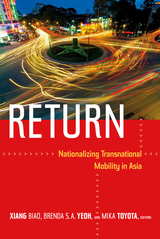
Contributors. Sylvia Cowan, Johan Lindquist, Melody Chia-wen Lu, Koji Sasaki, Shin Hyunjoon, Mariko Asano Tamanoi, Mika Toyota, Carol Upadhya, Wang Cangbai, Xiang Biao, Brenda S. A. Yeoh

Masferrer, Hamilton, and Denier draw on interviews with former U.S. migrants living in Mexico City to better understand the experience of return migration to urban areas. Each of the migrants they spoke with lived in the United States for long periods with noncitizen status during the last four decades. During this time, U.S. immigration policy became increasingly focused on restriction and enforcement, which made it difficult for migrants to safely move back and forth across the border for work or to visit family without documentation. The authors find that upon their return, migrants in Mexico City felt disoriented and lost and had difficulty adapting to a massive urban environment where there is little support for returnees. They struggled to translate their work experience from their time in the U.S. to find quality jobs. Additionally, many found their family lives upended as they reunited with or formed families in the U.S.. Some found themselves separated from family members still in the U.S. with no ability to legally visit them. Others brought their families back to Mexico, some of whom were U.S. citizens and had never been to Mexico before. They, too, struggled to adapt and integrate to life in Mexico City.
The authors use the experiences of return migrants to discuss policies and practices that would improve their lives and ease their reintegration. To help with the disorientation they experience, returnees proposed ongoing psychological support with mental health professionals who have knowledge and training in the social and legal issues that return migrants face. Return migrants also advocated for policies to enhance skill matching, job creation, and entrepreneurship, as many felt the occupational skills they developed in the U.S. were undervalued in Mexico. To address family separation, returnees argued for legal and policy reform to accommodate family reunification.
The Returned is an illuminating account of the difficulties faced by return migrants and their families in Mexico City.
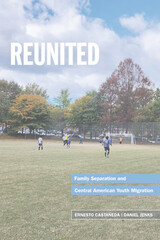
In interviews with Central American youth, their sponsors, and social services practitioners in and around Washington, D.C., Castañeda and Jenks find that Central American minors migrate on their own mainly for three reasons: gang violence, lack of educational and economic opportunity, and a longing for family reunification. The authors note that youth who feel comfortable leaving and have feelings of belonging upon arrival integrate quickly and easily while those who experience trauma in their home countries and on their way to the United States face more challenges.
Castañeda and Jenks recount these young migrants’ journey from Central America to the U.S. border, detailing the youths’ difficulties passing through Mexico, proving to U.S. Customs and Border Protection officials that they have a legitimate fear of returning or are victims of trafficking, and staying in shelters while their sponsorship, placement, and departure are arranged. The authors also describe the tensions the youth face when they reunite with family members they may view as strangers. Despite their biological, emotional, and financial bonds to these relatives, the youth must learn how to relate to new authority figures and decide whether or how to follow their rules.
The experience of migrating can have a lasting effect on the mental health of young migrants, Castañeda and Jenks note. Although the authors find that Central American youths’ mental health improves after migrating to the United States, the young migrants remain at risk of further problems. They are likely to have lived through traumatizing experiences that inhibit their integration. Difficulty integrating, in turn, creates new stressors that exacerbate PTSD, depression, and anxiety. Consequently, schools and social service organizations are critical, the authors argue, for enhancing youth migrants’ sense of belonging and their integration into their new communities. Bilingual programs, Spanish-speaking PTA groups, message boards, mentoring of immigrant children, and after-school programs for members of reunited families are all integral in supporting immigrant youth as they learn English, finish high school, apply to college, and find jobs.
Offering a complex exploration of youth migration and family reunification, Reunited provides a moving account of how young Central American migrants make the journey north and ultimately reintegrate with their families in the United States.
2024 Evelyn Shakir Non-Fiction Academic Award, The Arab American National Museum
An examination of Arab asylum seekers who feel compelled to package their tales of disenfranchisement and suffering to satisfy a deeply reluctant immigration system.
From the overloaded courts with their constantly changing dates and appointments to the need to prove oneself the “right” kind of victim, the asylum system in the United States is an exacting and drawn-out immigration process that itself results in suffering. When anthropologist Rhoda Kanaaneh became a volunteer interpreter for Arab asylum seekers, she learned how applicants were pushed to craft specific narratives to satisfy the system’s requirements.
Kanaaneh tells the stories of four Arab asylum seekers who sought protection in the United States on the basis of their gender or sexuality: Saud, who relived painful memories of her circumcision and police harassment in Sudan and then learned to number and sequence these recollections; Fatima, who visited doctors and therapists in order to document years of spousal abuse without over-emphasizing her resulting mental illness; Fadi, who highlighted the homophobic motivations that provoked his arrest and torture in Jordan, all the while sidelining connected issues of class and racism; and Marwa, who showcased her private hardships as a lesbian in a Shiite family in Lebanon and downplayed her environmental activism. The Right Kind of Suffering is a compelling portrait of Arab asylum seekers whose success stories stand in contrast with those whom the system failed.
Carlos G. Vélez-Ibáñez’s latest work, The Rise of Necro/Narco Citizenship investigates the intricate and often harrowing dynamics that define the borderlands between the United States, Mexico, and beyond. This groundbreaking book provides a comprehensive cultural, economic, social, and political-ecological analysis, illustrating how various forms of violence and militarization have reshaped the daily lives and identities of the region’s inhabitants. Through meticulous ethnographic fieldwork, extensive archival research, and rigorous statistical data, Vélez-Ibáñez exposes the deeply entrenched networks of exploitation and conflict that have emerged in response to global capitalism’s pressures.
Vélez-Ibáñez builds on theorization about necrocitizenship to introduce the concept of necro/narco citizenship, which argues that pervasive violence and socioeconomic disruptions create a unique form of existence on both sides of the border. The author examines the dislocation of thousands, the persistent threat of violence, and the ways in which these forces compel individuals to navigate a reality steeped in addiction, self-destruction, and civil deterioration. This book reveals the transnational networks and the morally compromised political economies that sustain them, offering readers an unflinching look at the cost of survival in this tumultuous region.
This essential volume is not only a critical addition to the field of anthropology but also an invaluable resource for those interested in the sociopolitical landscape of the U.S.-Mexico border. Vélez-Ibáñez’s insights will resonate with scholars, students, and policymakers alike. The Rise of Necro/Narco Citizenship challenges us to rethink the narratives of violence, militarization, and resistance that define our understanding of the Southwest North American Region.

The cinema of Ritwik Ghatak (1925–76) continues to resonate across borders and generations. His films—largely shaped by the 1947 Partition of Bengal and the experience of displacement—probe the fractured human condition through bold formal experimentation, unforgettable soundscapes, and a profound sense of myth and memory. Though his body of work was modest in size, Ghatak’s influence has steadily expanded, securing his place as a major figure in world cinema. This distinctive volume, which marks the centenary of this visionary filmmaker, gathers essays by important scholars and thinkers from around the world.
Moving beyond conventional film criticism and area studies, the collection stages new, transnational encounters with Ghatak’s films—approaching them as world texts, as sonic and visual experiments, and as meditations on migration, collectivity, and social existence.

Stereotyped as “model minorities” who excel in the classroom, Asian Americans are more highly educated than all other U.S. groups. Once in the labor market, they outearn White Americans. Some believe this is evidence that White privilege, racial bias, and gender discrimination are fictitious narratives of a liberal “woke” agenda. Others use it as proof that confirms their stereotypes that Asian Americans are inherently smarter and harder working than other groups. While much attention has focused on Asian Americans’ academic achievement, far less research considers whether their later careers mirror their early success. In this issue of RSF, sociologists Jennifer Lee, Kimberly Goyette, Xi Song, and Yu Xie, management scholar Jackson G. Lu, and an interdisciplinary group of contributors examine how Asian Americans fare in the workplace.
The ten articles in this issue examine the ways in which Asian Americans, due to geographic clustering, are advantaged at a national level but disadvantaged at the regional level, how gender, family, and marriage impact Asian Americans in the workplace, and the different ways Asian Americans strategically adapt to the labor market. Robert Manduca and Jane Furey reveal that while, on average, Asian Americans outearn White Americans at a national level, when compared to Whites living in the same metropolitan area, Asians earn only 88 percent as much. Sharon Sassler and Gabrielle Sorresso find that among computer science professionals, Indian women have a larger gender wage gap than White and Chinese women and experience larger marriage and parenthood penalties in earnings. Sojung Lim and Wonjeong Jeong show that Asian women are more likely to live with extended family than White women, leading to higher rates of employment among Asian women with children. Angelina Grigoryeva finds that while Asian Americans are more likely to receive stock-based compensation than White Americans, this is because they are more likely to work in jobs where stock options are provided. Asians and Whites working in the same types of jobs are equally likely to receive stock-based compensation and in similar amounts. Shih-Chun Chien and colleagues find that despite being the fastest-growing racial minority group entering the legal profession, Asian Americans are underrepresented in leadership positions. They find this pattern is attributed, in part, to employers’ pervasive stereotypes that Asian Americans lack traits typically associated with leadership, such as creativity and assertiveness.
This issue of RSF reveals that the perception of the Asian American advantage in the workplace is illusory and sheds light on the lived experiences of the “model minority” when they go to work.
Rather than treating Asian Americans as a monolithic group, the contributors use the 2016 National Asian American Survey to pinpoint areas of convergence and divergence within the U.S. Asian population. Despite their diversity, Asian Americans share many attitudes, behavior, and experiences in ways that exceed expectations based on socioeconomic status alone— what Lee and Ramakrishnan refer to as the “diversity-convergence paradox.” This paradox — of convergence despite divergence in national origins and socioeconomic status — is the animating question of this issue of RSF.
Contributors Janelle Wong and Sono Shah find strong political consensus within the Asian American population, particularly with regard to a robust government role in setting public policies ranging from environmental protection to gun control to higher taxation and social service provision, and even affirmative action. Wong and Shah posit that political differences within the Asian American community are between progressives and those who are even more progressive. Analyzing where policy opinions converge and diverge, Sunmin Kim finds that while many Asian Americans support government interventions in health care, education, and racial justice, some diverge sharply with regard to Muslim immigration. Lucas G. Drouhot and Filiz Garip construct a novel typology of five subgroups of Asian immigrants spanning class, gender, region, and immigrant generation to examine varied experiences of immigrant inclusion. They show how different subgroups contend with the effects of racialized othering and inclusion simultaneously at play. Van C. Tran and Natasha Warikoo analyze both interracial and intra-Asian attitudes toward immigration and find diversity among Asians’ views by national origin: As labor migrants, Filipinos support Congress increasing the number of annual work visas; as economic migrants, Chinese and Indians support an increase in annual family visas; and as refugees, Vietnamese are least supportive of pro-immigration policies.
Placing Asian Americans at the center of their analyses, the contributors illuminate how such a broadly diverse population shares similar attitudes and experiences in often surprising ways. By turning a lens on the richly diverse U.S. Asian population, this issue of RSF unveils comprehensive, compelling narratives about Asian Americans and advances our understanding of race and immigrant integration in the 21st century.
Several articles examine the incorporation of the foreign-born into American politics. Katharine Donato and Samantha Perez track differences in Latinos’ political ideologies by gender and find that among new immigrants, women tend to hold more conservative political views than men. However, after living in the U.S. for five years, Latinas report themselves as more liberal; after fifteen years of U.S. residence, Latino men view themselves as more conservative. Frank D. Bean and Susan K. Brown show that due to “membership exclusion”—or significant relegation to the margins of society—undocumented immigrants have less political knowledge than those with green cards or driver’s licenses, regardless of how long they have resided here. Melissa Michelson explores how politicians’ expanded outreach to Latino communities during the 2012 election season helped reverse a decades-long trend of declining trust in the government among Latinos.
Other articles compare the political behavior of Latinos to that of other ethnic groups. Jan Leighley and Jonathan Nagler find that while the demographic patterns central to predicting whites’ political engagement—such as income and education levels—do not predict Latinos’ voting turnout, increased political outreach to Latinos has led to greater turnout. Leonie Huddy, Lily Mason, and Nechama Horwitz find that, similar to African Americans, Latino immigrants who both strongly identify with a minority group (in this case, Hispanic) and perceive discrimination against that group are more likely to align themselves with the Democratic Party.
With Latinos constituting an increasing percentage of the population, understanding how and when they participate in our political system is vital for policymakers, scholars, and advocates. The analyses in this issue of RSF provide contribute to our understanding of how immigrants and their descendants navigate American democracy.
Several articles explore how immigrants negotiate their positions in the racial hierarchy and how they perceive themselves in relation to native-born groups. Michael Jones-Correa and coauthors find that while Mexican immigrants are more likely to identify as Americans the more they report positive interactions with both native-born whites and blacks, Indian immigrants’ identification with being American is largely shaped by positive interactions just with whites. Prema Kurien shows that in response to the wave of hate crimes after 9/11, Sikh Americans sought to be recognized as an American religious minority, as well as an ethnic group distinct from Indian Americans. In their study of the children of immigrants in middle adulthood, Cynthia Feliciano and Rubén G. Rumbaut find that some second-generation immigrants retain a strong attachment to an ethnic identity into their late thirties, but that ethnic identification for others wanes as their social identities as parents, workers, or spouses become more important.
Other contributors investigate the extent to which longer-established Americans respond to increased immigration. Maureen Craig and Jennifer Richeson show that whites living in areas with large or increasing racial minority populations are more likely to believe that anti-white discrimination is on the rise. Deborah Schildkraut and Satia Morotta similarly find that when millennials—particularly those who identify as white and Republican—are exposed to information on the changing racial makeup of the U.S., they express more conservative political views.
At a time when questions of immigration and national identity are at the forefront of our political and public discourse, understanding how immigrants and their offspring influence—and are influenced by—conceptions of race and identity is critical for social scientists. This issue provides key insights into the challenges of a rapidly changing population.
Several articles survey the history of immigrant labor market niches and how they have affected local economies. Siobhan O’Keefe and Sarah Quincy investigate a labor niche—farming—created by Russian Jews in rural New Jersey in the nineteenth century that revitalized local markets and reduced the outmigration of natives from the area. Zai Liang and Bo Zhou study the occupational niches held by Chinese immigrants from the turn of the century to present day. They show that restaurants have historically provided, and continue to provide, a major source of employment for low-skilled Chinese immigrants and that these immigrants tend to use new job-finding services such as employment agencies and internet advertising. These services have also allowed Chinese-owned restaurants to expand into new geographical locations.
Other contributors analyze the divisions between high and low-skill labor market niches. In his ethnographic study of restaurants in Los Angeles, Eli Wilson finds that Mexican immigrants primarily work “back of the house” jobs performing low-wage manual labor with few opportunities for advancement, while English-speaking whites hold higher-paid “front of the house” jobs interacting with customers. However, bilingual second-generation Latinos are often able to bridge these two roles, increasing their chances for promotions and greater job responsibilities. Yasmin Ortiga explores the effects of programs designed to recruit middle-skill nurses from the Philippines. She finds that because the United States only accepts a certain number of nurses, these programs have contributed to an oversupply of trained nurses in the Philippines and increased joblessness and underemployment there.
Together, the studies in this issue contribute to a deeper understanding of how and why new immigrants gravitate to specific lines of work. They also reveal how these labor niches influence markets both within the United States and abroad.
The contributors grapple with a central overarching question: How is it that a court decision from 125 years ago still has such an enduring impact on racial disparities? john a. powell provides a nuanced overview of the legal context of the case to show that segregation was not only about separating people by race but was primarily about preserving White supremacy. The wide latitude for judicial interpretation granted to judges means that who decides matters, and today, just as much as in 1896, the justices sitting on the Supreme Court matter. If the views of Justice Harlan – the lone dissenter in Plessy – had prevailed, U.S. jurisprudence would look very different today.
Thomas J. Davis discusses how control over personal identity lay at the heart of Plessy, and how its denial of basic human rights and fundamental freedoms reverberates today. From sex and marriage to adoption, gender recognition, employment, and voting, persistent discrimination turns in various degrees on state authority to define, categorize, and deny freedom of personal identity. To ensure personal autonomy in such domains requires the continual reevaluation of U.S. law to recognize the freedom of individuals to define and express their own identities.
Looking at enduring educational impact of “Separate but Equal,” which was not entirely rectified by the 1954 decision outlawing school segregation in Brown v. Board of Education, Dania V. Francis and William A. Darity, Jr., link today’s ongoing within-school segregation to the legacy of racialized tracking born from White resistance to desegregation. They demonstrate how a short-term, concerted effort to increase the number of Black high school students taking advanced courses could lead to long-term benefits in closing the educational achievement gap and eliminating institutionalized segregation within our schools.
Plessy rightfully stands as one of the continuing stains on the history of our country in its ambivalence and unwillingness to address White dominance. This issue of RSF both corrects and expands the narrative around the Plessy decision, and provides important lessons for addressing the nation’s continuing racial travails. It is ideal for use by scholars, community leaders, and policy makers alike.
The United States is home to the largest deportation system in the world: Between 2001 and 2022, U.S. Immigration and Customs Enforcement (ICE) carried out nearly 6.5 million deportations. Deportation is often framed as a singular event that happens to an individual. However, as public policy scholar Caitlin Patler and political scientist Brad Jones argue in this issue of RSF, deportation is a system that encompasses premigration, within-U.S., and post-deportation contexts and outcomes. With Congress recently approving a massive expansion of the US deportation system, understanding its consequences is more important than ever before.
In this issue, an interdisciplinary group of contributors explore the wide range of impacts of the U.S. deportation system. The introductory chapter by Patler and Jones defines the U.S. deportation system and provides a comprehensive historical context for understanding its causes and consequences. Mass deportation is enabled primarily through the merging of U.S. immigration and criminal laws. Ian Peacock explores the proliferation of 287(g) agreements, which deputize local law enforcement to enforce immigration law. He shows that counties with stronger ties to public official associations, such as the National Sheriff’s Association and the Major County Sheriffs of America, were more likely to adopt identical 287(g) agreements, devote more jail space to ICE detainees, and comply with ICE detainer requests at higher rates. The issue also presents empirical analyses of the consequences of the US deportation system. Articles by Youngjin Stephanie Hong and colleagues, Cora Bennett and colleagues, and J. Jacob Kirksey and Carolyn Sattin-Bajaj, link deportation to reduced Head Start enrollment, lower K-12 test scores, and declines in college enrollment, respectively. The remaining articles turn to the aftermath of deportation. Erin R. Hamilton and colleagues show that between 2015 and 2020, 11,000 individuals were de facto deportees—family members who leave the country because another family member has been deported—in Mexico, with a disproportionate number being women and children. Further highlighting the importance of family, Ángel A. Escamilla García and Adriana M. Cerón analyze survey data from recently deported Central Americans and find those who left minor children in the U.S. were more likely to intend to remigrate to the U.S.
This issue of RSF sheds light on various dimensions of the increasingly punitive U.S. deportation system and the many ways it harms individuals and communities. In the current era of mass expansion of immigration law enforcement, it will be a valuable educational tool for students, faculty, policymakers, and many other stakeholders.
Donato and Amuedo-Dorantes outline American immigration policies from 1880 to the present and consider the impact of the COVID-19 pandemic on immigration. They underscore the fact that many recent immigration policies have been a result of presidential executive orders rather than legislative acts, making families and workers who enter the country without proper documentation especially vulnerable. They also examine how and why these orders are often racist and xenophobic, privileging some racial and ethnic groups and excluding others.
Contributors to the issue investigate the various ways in which immigrants secure visas, working permits, and citizenship in the United States, including through employment and family ties, as well as special statuses for military veterans, refugees, asylum seekers, and unaccompanied minors. Daniel Costa writes about how temporary migrant workers’ precarious immigration status makes them particularly likely to experience workplace abuse because they fear losing their jobs and being deported if they complain about unfair labor practices. Pia Orrenius and Madeline Zavodny consider the substantial increase in employer demand for temporary work visas, demonstrating how improved economic conditions have led to this surge, creating a viable alternative to hiring unauthorized workers. Julia Gelatt uses employment and economic data analysis to compare multiple classes of legal immigrants. Her research demonstrates that employer-sponsored immigrants are better educated, exhibit higher English proficiency, and work in more highly skilled jobs than other types of immigrants (including family-sponsored, humanitarian, and diversity visa immigrants).
Other contributors examine the experiences of immigrants with special statuses, including veterans. Cara Wong and Jonathan Bonaguro find that Americans are more likely to support a path to citizenship via military service for immigrants who entered the country with the appropriate documentation, and that many Americans believe that undocumented migrants should be barred from the military, Peace Corps, AmeriCorps and firefighting. Van C. Tran and Francisco Lara-García find little variation in early socioeconomic outcomes between refugee groups from various countries. They show that schooling and employment, along with strategic financial, community building, and other support services, are critical factors in the successful integration and improved socioeconomic outcomes of refugees. Luis Edward Tenorio finds that the patchwork of legal systems, including family, immigration, and federal courts that adjudicate the laws for children with special immigrant juvenile status, make for the uneasy and uneven integration of unaccompanied minors into key social institutions.
This issue of RSF is a timely contribution that will invigorate the field of scholarly work on the American legal immigration system.
Caitlin Patler and Nicholas Branic find that undocumented individuals in immigrant detention facilities that are privately operated are less likely to be visited by family members than those in county or city jails, in part because private facilities have restricted visiting hours and are more difficult to access via public transportation. Lauren Heidbrink finds that unaccompanied minors in the custody of the Office of Refugee Resettlement (ORR) are less likely to be released to guardians or reunited with family members because ORR standards are much tougher than those used by child protective services for minor citizens.
Lauren E. Gulbas and Luis H. Zayas find that many children with undocumented parents experience symptoms of anxiety and depression due to fears about their parents’ status. Yet, increased access to financial, educational, legal, and other immigration-related resources for these families can help buffer these children against trauma related to deportation and family separations. Susan K. Brown and Alejandra J. Sanchez focus on children with undocumented mothers and show that because having an undocumented mother is associated with a reduction in children’s years of schooling, it also indirectly lowers their levels of voting, activism, and political awareness as young adults.
Although undocumented immigrants are more enmeshed in the U.S. than they have been in the past, their status prevents further integration into society. This issue reveals the consequences of illegality not just for undocumented immigrants, but also for their families and their communities.
Strengthened by largely unknown archival documentation and an original historiographic methodology, the work reveals a new political dimension in the religious history of Italian immigrants in the United States and their relationship with the Catholic religious canon. By integrating the analysis of the ecclesial practices of the Italian communities into a far-reaching epistemological reflection, the work also contributes to the continuing discussion of how we study and examine the religious practices of Catholic communities in the modern era.
Insightful and dramatic, The Ruined Anthracite combines archaeology, documentary research, and oral history to render the ongoing human cost of environmental devastation and unchecked capitalism.
READERS
Browse our collection.
PUBLISHERS
See BiblioVault's publisher services.
STUDENT SERVICES
Files for college accessibility offices.
RECENTLY PUBLISHED





UChicago Accessibility Resources
home | accessibility | search | about | contact us
BiblioVault ® 2001 - 2026
The University of Chicago Press