
 A SCHOLARLY BOOK REPOSITORY
20 start with R start with R


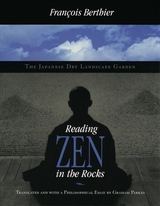
Berthier's guided tour of the famous garden of Ryoanji (Temple) in Kyoto leads him into an exposition of the genre, focusing on its Chinese antecedents and affiliations with Taoist ideas and Chinese landscape painting. He traces the roles of Shinto and Zen Buddhism in the evolution of the garden and also considers how manual laborers from the lowest classes in Japan had a hand in creating some of its highest examples. Parkes contributes an equally original and substantive essay which delves into the philosophical importance of rocks and their "language of stone," delineating the difference between Chinese and Japanese rock gardens and their relationship to Buddhism. Together, the two essays compose one of the most comprehensive and elegantly written studies of this haunting garden form.
Reading Zen in the Rocks is fully illustrated with photographs of all the major gardens discussed, making it a handsome addition to the library of anyone interested in gardening, Eastern philosophy, and the combination of the two that the karesansui so superbly represents.
Praise for the French edition:
"A small book of rare depth, remarkably illustrated, on one of the most celebrated and beautiful rock gardens of the monasteries of Kyoto."—L'Humanité
"Through Le Jardin de Ryoanji, Berthier teaches us to read the zen in the rocks, to discover the language offered by the garden at Ryoanji. Enigmatic, poetic, and disconcerting, an enriching journey through a work of art of surprising modernity, Le Jardin de Ryoanji is a work that will interest all the amateurs of Japanese art and Eastern philosophy."—Lien Horticole
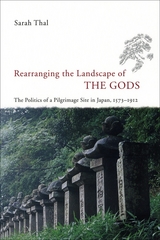
Using miracle tales, votive plaques, diaries, and newspapers, Sarah Thal traces such changes at one of the most popular Japanese pilgrimage sites of the nineteenth and twentieth centuries: the shrine of Konpira on the island of Shikoku. This rich and fascinating history explores how people from all walks of life gave shape to the gods, shrines, and rituals so often attributed to ancient, indigenous Japan. Thal shows how worshippers and priests, rulers and entrepreneurs, repeatedly rebuilt and reinterpreted Konpira to reflect their needs and aspirations in a changing world—and how, in doing so, they helped shape the structures of the modern state, economy, and society in turn.
Rearranging the Landscape of the Gods will be welcomed by all scholars of Japanese history and by students of religion interested in the construction of modernity.
Iwabuchi has conducted extensive interviews with producers, promoters, and consumers of popular culture in Japan and East Asia. Drawing upon this research, he analyzes Japan’s "localizing" strategy of repackaging Western pop culture for Asian consumption and the ways Japanese popular culture arouses regional cultural resonances. He considers how transnational cultural flows are experienced differently in various geographic areas by looking at bilateral cultural flows in East Asia. He shows how Japanese popular music and television dramas are promoted and understood in Taiwan, Hong Kong, and Singapore, and how "Asian" popular culture (especially Hong Kong’s) is received in Japan.
Rich in empirical detail and theoretical insight, Recentering Globalization is a significant contribution to thinking about cultural globalization and transnationalism, particularly in the context of East Asian cultural studies.

Chamberlain highlights the differing views of Filipinos and Japanese about the trials. The Philippine government aimed to show its commitment to impartial proceedings with just outcomes. In Japan, it appeared that defendants were selected arbitrarily, judges and prosecutors were biased, and lower-ranking soldiers were punished for crimes ordered by their superior officers. She analyzes the broader implications of this divergence as bilateral relations between the two nations evolved and contends that these competing narratives were reimagined in a way that, paradoxically, aided a path toward postwar reconciliation.

As the first step toward a comprehensive reinterpretation of the role of evolutionary science and biomedicine in pre-1945 Japan, this book addresses the early writings of that era’s most influential exponent of shinkaron (evolutionism), the German-educated research zoologist and popularizer of biomedicine, Oka Asajirō (1868–1944). Concentrating on essays that Oka published in the years during and after the Russo-Japanese War (1904–5), the author describes the process by which Oka came to articulate a programmatic modernist vision of national regeneration that would prove integral to the ideological climate in Japan during the first half of the twentieth century. In contrast to other scholars who insist that Oka was merely a rationalist enlightener bent on undermining state Shinto orthodoxy, Gregory Sullivan maintains that Oka used notions from evolutionary biology of organic individuality—especially that of the nation as a super-organism—to underwrite the social and geopolitical aims of the Meiji state.
The author suggests that this generative scientism gained wide currency among early twentieth-century political and intellectual elites, including Emperor Hirohito himself, who had personal connections to Oka. The wartime ideology may represent an unfinished attempt to synthesize Shinto fundamentalism and the eugenically-oriented modernism that Oka was among the first to articulate.
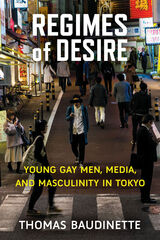
Shinjuku Ni-chōme is a nightlife district in central Tokyo filled with bars and clubs targeting the city’s gay male community. Typically understood as a “safe space” where same-sex attracted men and women from across Japan’s largest city can gather to find support from a relentlessly heteronormative society, Regimes of Desire reveals that the neighborhood may not be as welcoming as previously depicted in prior literature. Through fieldwork observation and interviews with young men who regularly frequent the neighborhood’s many bars, the book reveals that the district is instead a space where only certain performances of gay identity are considered desirable. In fact, the district is highly stratified, with Shinjuku Ni-chōme’s bar culture privileging “hard” masculine identities as the only legitimate expression of gay desire and thus excluding all those men who supposedly “fail” to live up to these hegemonic gendered ideals.
Through careful analysis of media such as pornographic videos, manga comics, lifestyle magazines and online dating services, this book argues that the commercial imperatives of the Japanese gay media landscape and the bar culture of Shinjuku Ni-chōme act together to limit the agency of young gay men so as to better exploit them economically. Exploring the direct impacts of media consumption on the lives of four key informants who frequent the district’s gay bars in search of community, fun and romance, Regimes of Desire reveals the complexity of Tokyo’s most popular “gay town” and intervenes in debates over the changing nature of masculinity in contemporary Japan.
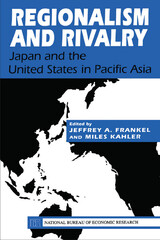
The authors contend that although intraregional trade in East Asia is growing rapidly, a trade bloc is not necessarily forming. They show that the trade increase can be explained entirely by factors independent of discriminatory trading arrangements, such as the rapid growth of East Asian economies. Other chapters look in detail at cases of Japanese direct investment in Southeast Asia and find little evidence of attempts by Japan to use the power of its multinational corporations for political purposes. A third group of papers attempt to gauge Japan's leadership characteristics. They focus on Japan's "technology ideology," its contributions to international public goods, international monetary cooperation, and economic liberalization in East Asia.
In the 1960s and 1970s, the United States and Japan went through massive welfare expansions that sparked debates about citizenship. At the heart of these disputes stood African Americans and Koreans. Reinventing Citizenship offers a comparative study of African American welfare activism in Los Angeles and Koreans’ campaigns for welfare rights in Kawasaki. In working-class and poor neighborhoods in both locations, African Americans and Koreans sought not only to be recognized as citizens but also to become legitimate constituting members of communities.
Local activists in Los Angeles and Kawasaki ardently challenged the welfare institutions. By creating opposition movements and voicing alternative visions of citizenship, African American leaders, Tsuchiya argues, turned Lyndon B. Johnson’s War on Poverty into a battle for equality. Koreans countered the city’s and the nation’s exclusionary policies and asserted their welfare rights. Tsuchiya’s work exemplifies transnational antiracist networking, showing how black religious leaders traveled to Japan to meet Christian Korean activists and to provide counsel for their own struggles.
Reinventing Citizenship reveals how race and citizenship transform as they cross countries and continents. By documenting the interconnected histories of African Americans and Koreans in Japan, Tsuchiya enables us to rethink present ideas of community and belonging.

Remembering Japanese Baseball: An Oral History of the Game transports us onto diamonds and into dugouts on the other side of the globe, where the vigorous sportsmanship of the game and the impassioned devotion of its fans transcend cultural and geographic borders and prove that baseball is fast becoming an international pastime.
Called Yakyu, baseball has been played in Japan since the 1890s but has only recently gained a substantial global following. Robert K. Fitts chronicles the nation’s distinctive version of the sport as recounted by twenty-five of its players. Fitts’s careful choice of subjects represents the experiences of a mix of American and Japanese players—including stars, titleholders, and members of the Japanese Hall of Fame. Informal, candid, and remarkably specific, these recollections describe teammates and opponents, corporate owners and loyal fans, triumphs and frustrations, collectively capturing all the spirit and emotion engendered by the game from decidedly personal vantage points. Throughout, readers glimpse the unique traits of baseball in Japan and discern how the game has evolved since its inception as well as how it differs from its American counterpart.
An unparalleled introduction for an American audience, Remembering Japanese Baseball is augmented by photos of its twenty-five interviewees and a timeline demarking milestone moments in the game’s Japanese history. Robert Whiting, author of You Gotta Have Wa! and The Meaning of Ichiro, provides the foreword.

In a major contribution to modern Japanese intellectual history, J. Victor Koschmann analyzes the debate over subjectivity. He traces the arguments of intellectuals from various disciplines and political viewpoints, and finds that despite their stress on individual autonomy, they all came to define subjectivity in terms of deterministic historical structures, thus ultimately deferring the possibility of radical change in Japan.
Establishing a basis for historical dialogue about democratic revolution, this book will interest anyone concerned with issues of nationalism, postcolonialism, and the formation of identities.

Beginning with journalistic accounts of female criminals in the aftermath of the Meiji civil war, Treat moves on to explore how woman novelist Higuchi Ichiyō’s stories engaged with modern liberal economics, sex work, and marriage; credits Natsume Sōseki’s satire I Am a Cat with the triumph of print over orality in the early twentieth century; and links narcissism in the visual arts with that of the Japanese I-novel on the eve of the country’s turn to militarism in the 1930s. From imperialism to Americanization and the new media of television and manga, from boogie-woogie music to Yoshimoto Banana and Murakami Haruki, Treat traces the stories Japanese audiences expected literature to tell and those they did not. The book concludes with a classic of Japanese science fiction a description of present-day crises writers face in a Japan hobbled by a changing economy and unprecedented natural and manmade catastrophes. The Rise and Fall of Japanese Literature reinterprets the “end of literature”—a phrase heard often in Japan—as a clarion call to understand how literary culture worldwide now teeters on a historic precipice, one at which Japan’s writers may have arrived just a moment before the rest of us.

Griffis and Kusakabe were only a small piece of a vast transnational network of leading modernizers of Japan in the 1860s and 70s. The Japanese students in New Brunswick were young and innovative men of samurai and aristocratic lineage, who were sent by reform-minded leaders of Japan, which was undergoing a dramatic transformation. They came to New Brunswick seeking Western knowledge that was much needed for the modernization of a newly forming nation. New Brunswick became the hub of a network of Japanese nationals that extended to the major cities of New York, Philadelphia, and Boston, and from there to the smaller towns of New England. Once in New Brunswick, these Japanese students were embraced by Protestant ministers, educators, and missionaries—both men and women—whose network encompassed Rutgers College and the neighboring New Brunswick Theological Seminary, and which stretched to Dutch Reformed parishes throughout the Eastern seaboard, and westward as far as the Dutch enclave of Holland, Michigan. Meanwhile, the American teachers and missionaries who left for Japan became part of a network of reformist leaders and Japanese returnees that extended to schools, colleges, and missions in Japan, and formed the foundations of Japan’s modern educational system. Through contributions from scholars and archivists in the U.S., Canada, and Japan, Rutgers Meets Japan aims to reconstruct the early Rutgers-Japan connections and examine the role and impact of this transnational network on Japan and the U.S. in the late nineteenth century.
The Ryukyu Islands between Japan and Taiwan consist of around 160 islands and are home to about 1.5 million inhabitants. Across the islands’ history, sea-lanes and trade patterns have connected them to the East China Sea region, giving them a unique vantage point on the region’s changes and making them a useful lens through which to view and understand those transformations. In this book, Gregory Smits marshals his expertise to canvass the environmental, political, and social history of this fascinating area, emphasizing the diversity of influences from China, Japan, and Korea that have shaped it. Smits begins by tracing the islands’ early history from the time of the oldest extant human remains, through massive inflows of settlers from Japan, until the emergence of a centralized state in the sixteenth century. He then traces the development of the Ryukyu Kingdom from the fifteenth to the nineteenth century, examining its major cultural formations and the interplay of local and external influences driving its evolution. Finally, Smits ushers readers to the modern era, from the end of the Ryukyu Kingdom in 1879 through World War II, the era of American military control, and on to the present. He concludes with their present-day status as a tourist destination affected by ongoing geopolitical, economic, and environmental challenges. Synthesizing decades of research, this book is an indispensable, comprehensive guide to the islands’ history for scholars and nonspecialists alike.
READERS
Browse our collection.
PUBLISHERS
See BiblioVault's publisher services.
STUDENT SERVICES
Files for college accessibility offices.
RECENTLY PUBLISHED






UChicago Accessibility Resources
home | accessibility | search | about | contact us
BiblioVault ® 2001 - 2026
The University of Chicago Press