
 A SCHOLARLY BOOK REPOSITORY
7 start with R start with R
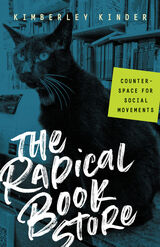
Examines how radical bookstores and similar spaces serve as launching pads for social movements
How does social change happen? It requires an identified problem, an impassioned and committed group, a catalyst, and a plan. In this deeply researched consideration of seventy-seven stores and establishments, Kimberley Kinder argues that activists also need autonomous space for organizing, and that these spaces are made, not found. She explores the remarkably enduring presence of radical bookstores in America and how they provide infrastructure for organizing—gathering places, retail offerings that draw new people into what she calls “counterspaces.”
Kinder focuses on brick-and-mortar venues where owners approach their businesses primarily as social movement tools. These may be bookstores, infoshops, libraries, knowledge cafes, community centers, publishing collectives, thrift stores, or art installations. They are run by activist-entrepreneurs who create centers for organizing and selling books to pay the rent. These spaces allow radical and contentious ideas to be explored and percolate through to actual social movements, and serve as crucibles for activists to challenge capitalism, imperialism, white privilege, patriarchy, and homophobia. They also exist within a central paradox: participating in the marketplace creates tensions, contradictions, and shortfalls. Activist retail does not end capitalism; collective ownership does not enable a retreat from civic requirements like zoning; and donations, no matter how generous, do not offset the enormous power of corporations and governments.
In this timely and relevant book, Kinder presents a necessary, novel, and apt analysis of the role these retail spaces play in radical organizing, one that demonstrates how such durable hubs manage to persist, often for decades, between the spikes of public protest.
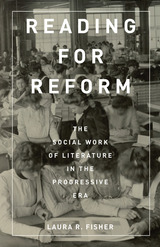
An unprecedented examination of class-bridging reform and U.S. literary history at the turn of the twentieth century
Reading for Reform rewrites the literary history of late nineteenth and early twentieth century America by putting social reform institutions at the center of literary and cultural analysis. Examining the vibrant, often fractious literary cultures that developed as part of the Progressive mandate to uplift the socially disadvantaged, it shows that in these years reformers saw literature as a way to combat the myriad social problems that plagued modern U.S. society. As they developed distinctly literary methods for Americanizing immigrants, uplifting and refining wage-earning women, and educating black students, their institutions gave rise to a new social purpose for literature.
Class-bridging reform institutions—the urban settlement house, working girls’ club, and African American college—are rarely addressed in literary history. Yet, Laura R. Fisher argues, they engendered important experiments in the form and social utility of American literature, from minor texts of Yiddish drama and little-known periodical and reform writers to the fiction of Edith Wharton and Nella Larsen. Fisher delves into reform’s vast and largely unexplored institutional archives to show how dynamic sites of modern literary culture developed at the margins of social power.
Fisher reveals how reformist approaches to race, class, religion, and gender formation shaped American literature between the 1880s and the 1920s. In doing so, she tells a new story about the fate of literary practice, and the idea of literature’s practical value, during the very years that modernist authors were proclaiming art’s autonomy from concepts of social utility.
Administrative burdens are the learning, compliance, and psychological costs that individuals incur during encounters with public services. While some burdens are created unintentionally, others are deliberately constructed as barriers to limit claims to programs and services. Often, burdens fall most heavily on marginalized groups, preventing them from resources they need. In this double issue of RSF public administration scholar Pamela Herd, economist Hilary Hoynes, political scientists Jamila Michener and Donald Moynihan, and an interdisciplinary group of contributors explore how administrative burdens shape inequality.
Issue 1 examines how administrative burdens impact Medicaid and health inequality, student loan repayment programs, and immigration to the U.S. Emily Rauscher and Ailish Burns find that combinations of reforms to reduce administrative burdens in the late 1980s increased Medicaid enrollment and improved infant health nearly as much as Medicaid expansion. Adam Goldstein and colleagues show that administrative burdens in enrolling in income-driven repayment student loan programs causes borrowers with lower socioeconomic status to be disproportionately excluded from these programs. Lilly Yu finds that dramatic changes to immigration law and policy during the Trump Administration led immigration lawyers to inadvertently exacerbate inequality among undocumented and vulnerable immigrants’ access to legal representation.
Issue 2 looks at the role of administrative burdens in experiences with child and family support programs, the child welfare system, disaster and housing relief programs, and housing support programs. Carolyn Barnes and colleagues find that mothers’ perceptions of the costs and benefits of participation in the Special Supplemental Nutrition Assistance Program for Women, Infants, and Children (WIC) vary over time and influence whether they choose to enroll or continue participating in the program. Ethan J. Raker and Tyler M. Woods find applications from poor communities of color for Federal Emergency Management Agency (FEMA) housing aid after Hurricanes Katrina and Rita were disproportionately denied or delayed due to burdensome program requirements and implementation. Stephanie Casey Pierce and Stephanie Moulton reveal that reforms to reduce administrative burden in foreclosure programs are associated with a significant increase in the rate of benefit receipt and decrease in the foreclosure rate. Frank Edwards and colleagues show child welfare system-involved parents must navigate considerable administrative burdens in order to retain custody of their children.
This volume of RSF sheds light on the origins, experiences, and consequences of administrative burdens.
Administrative burdens are the learning, compliance, and psychological costs that individuals incur during encounters with public services. While some burdens are created unintentionally, others are deliberately constructed as barriers to limit claims to programs and services. Often, burdens fall most heavily on marginalized groups, preventing them from resources they need. In this double issue of RSF public administration scholar Pamela Herd, economist Hilary Hoynes, political scientists Jamila Michener and Donald Moynihan, and an interdisciplinary group of contributors explore how administrative burdens shape inequality.
Issue 1 examines how administrative burdens impact Medicaid and health inequality, student loan repayment programs, and immigration to the U.S. Emily Rauscher and Ailish Burns find that combinations of reforms to reduce administrative burdens in the late 1980s increased Medicaid enrollment and improved infant health nearly as much as Medicaid expansion. Adam Goldstein and colleagues show that administrative burdens in enrolling in income-driven repayment student loan programs causes borrowers with lower socioeconomic status to be disproportionately excluded from these programs. Lilly Yu finds that dramatic changes to immigration law and policy during the Trump Administration led immigration lawyers to inadvertently exacerbate inequality among undocumented and vulnerable immigrants’ access to legal representation.
Issue 2 looks at the role of administrative burdens in experiences with child and family support programs, the child welfare system, disaster and housing relief programs, and housing support programs. Carolyn Barnes and colleagues find that mothers’ perceptions of the costs and benefits of participation in the Special Supplemental Nutrition Assistance Program for Women, Infants, and Children (WIC) vary over time and influence whether they choose to enroll or continue participating in the program. Ethan J. Raker and Tyler M. Woods find applications from poor communities of color for Federal Emergency Management Agency (FEMA) housing aid after Hurricanes Katrina and Rita were disproportionately denied or delayed due to burdensome program requirements and implementation. Stephanie Casey Pierce and Stephanie Moulton reveal that reforms to reduce administrative burden in foreclosure programs are associated with a significant increase in the rate of benefit receipt and decrease in the foreclosure rate. Frank Edwards and colleagues show child welfare system-involved parents must navigate considerable administrative burdens in order to retain custody of their children.
This volume of RSF sheds light on the origins, experiences, and consequences of administrative burdens.
Widening inequality has received much attention recently, but most of the focus has been on the top one percent or the middle class. The problems of those at the very bottom of society remain largely invisible. Along with the Great Recession, factors such as rising housing costs, welfare reform, mass incarceration, suppressed wages, and pervasive joblessness have contributed to deepening poverty in America. In this inaugural double issue of RSF: The Russell Sage Foundation Journal of the Social Sciences, a distinguished roster of poverty scholars from multiple disciplines focuses on families experiencing “severe deprivation”: acute, compounded, and persistent economic hardship.
Over twenty million families in America live in deep poverty, on incomes below half the federal poverty threshold, yet Liana Fox and colleagues find that government taxes and transfers lift millions of families out of deep poverty each year. Searching even further below the poverty line, Luke Shaefer, Kathryn Edin, and Elizabeth Talbert find that the number of children in households experiencing chronic extreme poverty—living on $2 or less per day—increased by over 240 percent between 1996 and 2012. Focusing on the elderly, Helen Levy shows that failing health exacerbates low-income seniors’ hardship by driving up their out-of-pocket medical spending. Other contributors examine the relationship between violence and severe deprivation.
Through longitudinal interviews with former prisoners in Boston, Bruce Western reveals the ubiquity of violence in the life course of disadvantaged young men. And Laurence Ralph draws on years of ethnography in Chicago to document how families and communities cope with the trauma of gun violence. Other studies in this
issue show that mass incarceration has changed the nature of poverty in recent decades, with consequences ranging from increased levels of deprivation among children of incarcerated parents to housing insecurity among parolees, which increases their risk for recidivism. Finally, several papers devise novel methods and concepts relevant to the study of severe deprivation. Kristin Perkin and Robert Sampson develop an innovative measure of “compounded disadvantage” that groups individual and ecological hardship, while Megan Comfort and colleagues pioneer a new approach to ethnographic fieldwork that combines embedded social work with participant observation.
This issue provides in-depth analyses of the causes and human costs of extreme disadvantage in one of the richest countries in the world and offers a new paradigm for understanding the changing face of poverty in America. In an age of economic extremes, understanding how and why severe deprivation persists will be vital for policymakers and practitioners attempting to deliver relief to the nation’s most marginalized families.
Widening inequality has received much attention recently, but most of the focus has been on the top one percent or the middle class. The problems of those at the very bottom of society remain largely invisible. Along with the Great Recession, factors such as rising housing costs, welfare reform, mass incarceration, suppressed wages, and pervasive joblessness have contributed to deepening poverty in America. In this inaugural double issue of RSF: The Russell Sage Foundation Journal of the Social Sciences, a distinguished roster of poverty scholars from multiple disciplines focuses on families experiencing “severe deprivation”: acute, compounded, and persistent economic hardship.
Over twenty million families in America live in deep poverty, on incomes below half the federal poverty threshold, yet Liana Fox and colleagues find that government taxes and transfers lift millions of families out of deep poverty each year. Searching even further below the poverty line, Luke Shaefer, Kathryn Edin, and Elizabeth Talbert find that the number of children in households experiencing chronic extreme poverty—living on $2 or less per day—increased by over 240 percent between 1996 and 2012. Focusing on the elderly, Helen Levy shows that failing health exacerbates low-income seniors’ hardship by driving up their out-of-pocket medical spending. Other contributors examine the relationship between violence and severe deprivation.
Through longitudinal interviews with former prisoners in Boston, Bruce Western reveals the ubiquity of violence in the life course of disadvantaged young men. And Laurence Ralph draws on years of ethnography in Chicago to document how families and communities cope with the trauma of gun violence. Other studies in this
issue show that mass incarceration has changed the nature of poverty in recent decades, with consequences ranging from increased levels of deprivation among children of incarcerated parents to housing insecurity among parolees, which increases their risk for recidivism. Finally, several papers devise novel methods and concepts relevant to the study of severe deprivation. Kristin Perkin and Robert Sampson develop an innovative measure of “compounded disadvantage” that groups individual and ecological hardship, while Megan Comfort and colleagues pioneer a new approach to ethnographic fieldwork that combines embedded social work with participant observation.
This issue provides in-depth analyses of the causes and human costs of extreme disadvantage in one of the richest countries in the world and offers a new paradigm for understanding the changing face of poverty in America. In an age of economic extremes, understanding how and why severe deprivation persists will be vital for policymakers and practitioners attempting to deliver relief to the nation’s most marginalized families.
READERS
Browse our collection.
PUBLISHERS
See BiblioVault's publisher services.
STUDENT SERVICES
Files for college accessibility offices.
RECENTLY PUBLISHED






UChicago Accessibility Resources
home | accessibility | search | about | contact us
BiblioVault ® 2001 - 2026
The University of Chicago Press