
 A SCHOLARLY BOOK REPOSITORY
5 start with R start with R
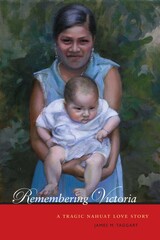
On October 15, 1983, a young mother of six was murdered while walking across her village of Huitzilan de Serdán, Mexico, with her infant son and one of her daughters. This woman, Victoria Bonilla, was among more than one hundred villagers who perished in violence that broke out soon after the Mexican army chopped down a cornfield that had been planted on an unused cattle pasture by forty Nahuat villagers.
In this anthropological account, based on years of fieldwork in Huitzilan, James M. Taggart turns to Victoria's husband, Nacho Angel Hernández, to try to understand how a community based on respect and cooperation descended into horrific violence and fratricide. When the army chopped down the cornfield at Talcuaco, the war that broke out resulted in the complete breakdown of the social and moral order of the community.
At its heart, this is a tragic love story, chronicling Nacho's feelings for Victoria spanning their courtship, marriage, family life, and her death. Nacho delivered his testimonio to the author in Nahuat, making it one of the few autobiographical love stories told in an Amerindian language, and a very rare account of love among the indigenous people of Mesoamerica. There is almost nothing in the literature on how a man develops and changes his feelings for his wife over his lifetime. This study contributes to the anthropology of emotion by focusing on how the Nahuat attempt to express love through language and ritual.
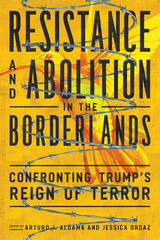
This volume provides a well-argued look at the Trump era. Insightful contributions delve into the impact of Donald Trump’s rhetoric and policies on migrants detained and returned, immigrant children separated from their parents and placed in detention centers, and migrant women subjected to sexual and reproductive abuses, among other timely topics. The chapter authors document a long list in what the book calls “Trump’s Reign of Terror.”
Organized thematically, the book has four sections: The first gathers histories about the Trump years’ roots in a longer history of anti-migration; the second includes essays on artistic and activist responses on the border during the Trump years; the third critiques the normalization of Trump’s rhetoric and actions in popular media and culture; and the fourth envisions the future.
Resistance and Abolition in the Borderlands is an essential reader for those wishing to understand the extent of the damage caused by the Trump era and its impact on Latinx people.
Contributors
Arturo J. Aldama
Rebecca Avalos
Cynthia Bejarano
Tria Blu Wakpa
Renata Carvalho Barreto
Karma R. Chávez
Leo R. Chavez
Jennifer Cullison
Jasmin Lilian Diab
Allison Glover
Jamila Hammami
Alexandria Herrera
Diana J. Lopez
Sergio A. Macías
Cinthya Martinez
Alexis N. Meza
Roberto A. Mónico
José Enrique Navarro
Jessica Ordaz
Eliseo Ortiz
Kiara Padilla
Leslie Quintanilla
J-M Rivera
Heidy Sarabia
Tina Shull
Nishant Upadhyay
Maria Vargas
Antonio Vásquez
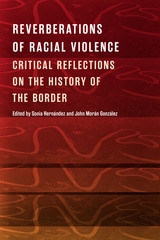
Between 1910 and 1920, thousands of Mexican Americans and Mexican nationals were killed along the Texas border. The killers included strangers and neighbors, vigilantes and law enforcement officers—in particular, Texas Rangers. Despite a 1919 investigation of the state-sanctioned violence, no one in authority was ever held responsible.
Reverberations of Racial Violence gathers fourteen essays on this dark chapter in American history. Contributors explore the impact of civil rights advocates, such as José Tomás Canales, the sole Mexican-American representative in the Texas State Legislature between 1905 and 1921. The investigation he spearheaded emerges as a historical touchstone, one in which witnesses testified in detail to the extrajudicial killings carried out by state agents. Other chapters situate anti-Mexican racism in the context of the era's rampant and more fully documented violence against African Americans. Contributors also address the roles of women in responding to the violence, as well as the many ways in which the killings have continued to weigh on communities of color in Texas. Taken together, the essays provide an opportunity to move beyond the more standard Black-white paradigm in reflecting on the broad history of American nation-making, the nation’s rampant racial violence, and civil rights activism.
READERS
Browse our collection.
PUBLISHERS
See BiblioVault's publisher services.
STUDENT SERVICES
Files for college accessibility offices.
RECENTLY PUBLISHED



UChicago Accessibility Resources
home | accessibility | search | about | contact us
BiblioVault ® 2001 - 2026
The University of Chicago Press