
 A SCHOLARLY BOOK REPOSITORY
59 start with S start with S

An urgent and intimate meditation on what it means to feel—and to be—safe.
In Safe Space, Raphaëlle Red traces the physiological toll of insecurity on marginalized lives across literature, film, music, and political discourse. In conversation with artists and thinkers such as James Baldwin, Nina Simone, June Jordan, Ja’Tovia Gary, and Leslie Feinberg, she maps the genealogy of “safe spaces,” from their radical origins to their contested place in today’s public debates. Rather than dismissing or defending the concept, Red asks what we might recover if we redefined safety not as fragility or withdrawal, but as self-determination, collective defense, and the right to opacity. She explores the tension between feeling and reality, protection and powerlessness, the language of safety, and the politics it sustains. Along the way, she grounds her reflections in personal narrative, European and North American contexts, and contemporary movements of resistance. At once theoretical and deeply personal, Safe Space refuses easy answers. Instead, it imagines safe space as temporary, regenerative, and insurgent—a practice of care and solidarity that unsettles hierarchies rather than reproducing them. A book for anyone wrestling with fear, vulnerability, and the fragile promise of collective liberation.
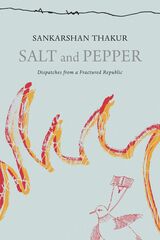
Salt and Pepper is a collection of literary columns that defy convention—acerbic, tender, and unrelenting in their gaze. Written between the margins of news and national spectacle, these pieces are not topical commentary but something far more enduring: political satire that reads like poetry, reportage that mutates into parable, lament, and fable. In these dispatches from a fractured republic, written over the past decade, journalist Sankarshan Thakur captures the surreal absurdities and deep disquiet of an India caught between thunderous assertion and muffled dissent. Governments speak in acronyms, mobs chant in hashtags, silence acquires a sound—and memory becomes an act of resistance. These are chronicles of a society slipping into curated amnesia, of belonging turned conditional, and of patriotism twisted into performance.
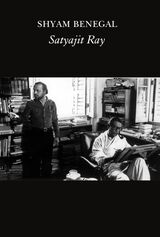
Two of Indian cinema’s most acclaimed auteurs, Satyajit Ray and Shyam Benegal, come together in this intimate dialogue, offering a fascinating glimpse into the mind of a cinematic genius. Based on Benegal’s 1985 documentary on Ray, this volume brings together the film’s script, excerpts from extended interviews, and a remarkable collection of visual material showcasing Ray’s work as a filmmaker, illustrator, designer, and writer.
Through candid conversations, Ray reflects on his childhood and the philosophy behind his storytelling, providing an unparalleled look at his creative process. With one master filmmaker capturing another, the result is a deeply personal and layered portrait that moves beyond Ray’s films to reveal the man behind the camera. Satyajit Ray: A Film is both a historical document and a celebration of artistic legacy; a rare opportunity to witness a dialogue between two legends shaping the course of Indian and global cinema.
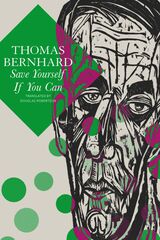
Save Yourself if You Can is a collection of six plays that span the entirety of Thomas Bernhard’s career as a dramatist. The plays collected in this long-awaited addition to Bernhard’s oeuvre in English—The Ignoramus and the Madman, The Celebrities, Immanuel Kant, The Goal Attained, Simply Complicated, and Elizabeth II—traverse somber lyricism and misanthropy to biting satire and glorious slapstick. They explore themes that will be familiar to longtime readers of Bernhardt, but here they are presented in a subtly different register, attuned to the needs of the stage.
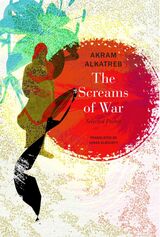
“Those who believe in the currency of patience / Were burned out in the alleyway.”
The Screams of War is a visceral collection of poems that confront the realities of contemporary Syria. Akram Alkatreb’s verses capture the sense of the quotidian during war. His words, mere “murmurs engraved on stones,” long for and despair over an irrevocable past. At the heart of Alkatreb’s work lies a preoccupation with trauma and the profound burden of alienation that accompanies exile. Nascent memories are shrouded by the “scars of sleep,” and words find themselves nostalgic for destruction. The ubiquity of violence that Alkatreb channels into his poetry does not tolerate enclaves of innocence. The Screams of War is an unforgettable testament to the resilience of the human spirit and a stark reminder of the harsh realities faced by those trapped in conflict.
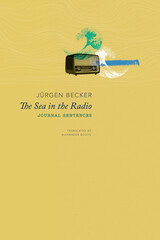
Jürgen Becker’s The Sea in the Radio is a collection of “journal sentences” divided into three sections called notebooks. In this great concert of a novel, language has been pared down to a minimum: fragments, phrases, and short sentences combine and make up a life both banal and profound. It is a life in which many of the details remain unstated or, as in miniatures, float just beyond the edges of the frame. Though at first the narrative may seem to move in a relatively harmless manner, soon enough we begin to realize that the story to be told may indeed be more unsettling than we had suspected.
The Sea in the Radio is a novel that bears witness not only to one’s final years but also to one’s place within history in general and Germany’s cataclysmic twentieth-century past in particular.
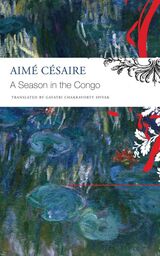
This play by renowned poet and political activist Aime Césairerecounts the tragic death of Patrice Lumumba, the first prime minister of the Congo Republic and an African nationalist hero. A Season in the Congofollows Lumumba’s efforts to free the Congolese from Belgian rule and the political struggles that led to his assassination in 1961. Césaire powerfully depicts Lumumba as a sympathetic, Christ-like figure whose conscious martyrdom reflects his self-sacrificing humanity and commitment to pan-Africanism.
Born in Martinique and educated in Paris, Césaire was a revolutionary artist and lifelong political activist, who founded the Martinique Independent Revolution Party. Césaire’s ardent personal opposition to Western imperialism and racism fuels both his profound sympathy for Lumumba and the emotional strength of A Season in the Congo.
Now rendered in a lyrical translation by distinguished scholar Gayatri Chakravorty Spivak, Césaire’s play will find a new audience of readers interested in world literature and the vestiges of European colonialism.
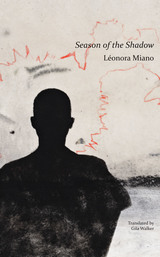
This powerful novel presents the early days of the transatlantic slave trade from a new perspective: that of the sub-Saharan population that became its first victims. Cameroonian novelist Léonora Miano presents a world on the brink of disappearing—a pre-colonial civilization with roots that stretch back for centuries. One day, a group of villagers finds twelve of their people missing. Where have they gone? Who is responsible? A collective dream, troubling a group of mothers in a communal dwelling, may have some of the answers, as the women’s missing sons call to them in terror; at the same time, a thick shadow settles over the huts, blocking out the light of day. It is the shadow of slavery, which will soon grow to blight the whole world.
Miano renders this brutal story in deliberately strange, dreamlike prose, befitting a situation that is, on its face, all but impossible for the villagers to believe.
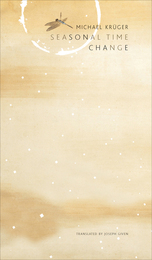
Bearing witness to Krüger’s interactions with renowned poets and artists through his time as director of Hanser publishing house, proximity and relationships are ongoing themes in this volume. Together, the poems remind us of our own mortality and of the finiteness of nature, but also our need for celebration even—perhaps especially—in times of darkness.
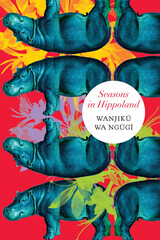
Victoriana is a country ruled by an Emperor-for-Life who is dying from an illness not officially acknowledged in a land where truth and facts are decided by the Emperor. The elite goes along with the charade. Their children are conditioned to conform. It is a land of truthful lies, where reality has uncertain meaning.
Mumbi, a rebellious child from the capital of Westville, and her brother are sent to live in rural Hippoland. But what was meant to be a punishment turns out to be a glorious discovery of the magic of the land, best captured in the stories their eccentric aunt Sara tells them. Most captivating to the children is the tale of a porcelain bowl supposed to possess healing powers. Returning to Westville as an adult, Mumbi spreads the story throughout the city and to the entire country. Exhausted by years of endless bleak lies, the people are fascinated by the mystery of the porcelain bowl. When word of its healing powers reaches the Emperor himself, he commands Mumbi to find it for him—with dramatic consequences for everyone in Victoriana.
Captivating and enchanting, Seasons in Hippoland plays with the tradition of magic realism. Every image in this novel is a story, and every story is a call for resistance to anyone who tries to confine our imagination or corrupt our humanity.
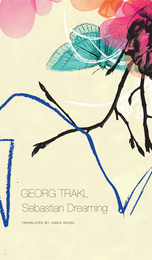
A century later, the book appears for the first time in English. While a number of its poems have been included in other collections, translator James Reidel argues that this particular book deserves to stand on its own and be read as one piece, as Trakl intended. Only by doing this can we begin to see Trakl in his proper time and place, as an early modern poet whose words nonetheless continue to exert a powerful hold on us while we make our way through a new, uncharted century.
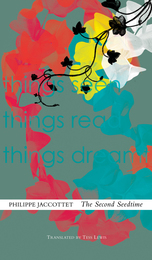
One of Europe’s finest contemporary poets, Jaccottet is a writer of exacting attention. Through keen observations of the natural world, art, literature, and music, and reflections on the human condition, Jaccottet opens his readers’ eyes to the transcendent in everyday life. The Second Seedtime is a collection of “things seen, things read, and things dreamed.” The volume continues the project Jaccottet began three decades earlier in his first volume of notebooks, Seedtime. Here, again, he gathers flashes of beauty dispersed around him like seeds that may blossom into poems or moments of inspiration. He returns, insistently, to such literary touchstones as Dante, Montaigne, Góngora, Goethe, Kierkegaard, Hölderlin, Michaux, Hopkins, Brontë, and Dickinson, as well as musical greats including Bach, Monteverdi, Purcell, and Schubert. The Second Seedtime is the vivid chronicle of one man’s passionate engagement with the life of the mind, the spirit, and the natural world.
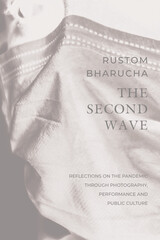
Focusing on the second wave of the Covid-19 pandemic in India between April and December 2021, Rustom Bharucha’s timely essay reflects on four interconnected realities that haunted this ongoing crisis—death, grief, mourning, and extinction. How do we cope with multiple deaths and the dislocation of rituals when the act of mourning is either postponed or denied? What roles do political surveillance, censorship, the regulation of lockdowns, and the sheer indifference to the lives of people play in the containment of civil liberties? Through vivid examples of photography, theater, dance, visual arts, and the cultures of everyday life, this meditative essay illuminates both the horror of the pandemic as well as its unexpected intimacies and revelations of shared suffering. Against the destruction of nature and the disrespect for the nonhuman, The Second Wave offers lessons in resilience through its reflections on the ethos of waiting and the need to re-envision breath as a vital resource of self-renewal and resistance.
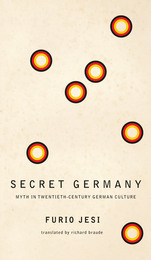
In the decades before the rise of the Third Reich, “Secret Germany” was a phrase used by the circle of writers around the poet Stefan George to describe a collective political and poetic project: the introduction of the highest values of art into everyday life, the secularization of myth and the mythologization of history. In this book, Furio Jesi takes up the term in order to trace the contours of that political, artistic, and aesthetic thread as it runs through German literary and artistic culture in the period—which, in the 1930s, became absorbed by Nazism as part of its prophecy of a triumphant future. Drawing on thinkers like Carl Jung and writers such as Thomas Mann and Rainer Maria Rilke, Jesi reveals a literary genre that was transformed, tragically, into a potent political myth.
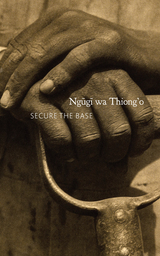
Ngũgĩ's fiction has been met with wide acclaim, but his nonfiction work, while equally brilliant, is more difficult to find. Secure the Base changes this by bringing together for the first time essays spanning nearly three decades. Originating as disparate lectures and texts, this complete volume will remind readers anew of Ngũgĩ's power and importance. Written in a personal and accessible style, the book covers a range of issues, including the role of the intellectual, the place of Asia in Africa, labor and political struggles in an era of rampant capitalism, and the legacies of slavery and prospects for peace. At a time when Africa looms large in our discussions of globalization, Secure the Base is mandatory reading.
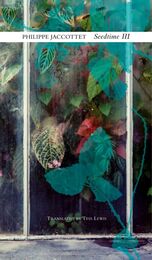
Seedtime III, which brings this series to a close, records numerous fleeting thoughts, ephemeral experiences, and philosophical observations from a renowned poet well into his seventies, charting the single steps—sometimes forwards, sometimes back—taken in a lifelong attempt to transcend the limits of art. The inconclusive nature of the notebook entries, their tentativeness and lack of resolution, renders them as intriguing and evocative as some of Jaccottet’s best works. In them readers will find a life full of the kind of contemplation that attracts yet eludes most of us in our daily existence.
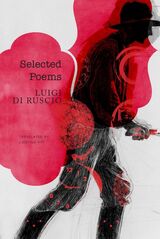
Born in a sub-proletarian ghetto in Italy in 1930 under the fascist regime, Luigi Di Ruscio was an urchin running wild in the countryside, a Communist with clear anarchist leanings, a jack-of-all-trades. In 1957 he emigrated to Oslo, where he worked for forty years in a steel-wire factory, spending his evenings at the typewriter, delving with furious energy into his native Italian. Di Ruscio insisted that whereas the language of power is always a contrived, one-way fabrication, the language of the underprivileged is upfront and direct, aiming straight and sharp for the truth. Caustic as a shopfloor scouring agent, exhilarating in its overabundance, humor, and outspokenness, Selected Poems stands as a testament of tenacity, a record of class struggle, and a vital presence for our times.
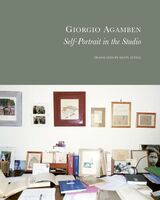
This book’s title, Self-Portrait in the Studio—a familiar iconographic subject in the history of painting—is intended to be taken literally: the book is a self-portrait, but one that comes into view for the reader only by way of patient scrutiny of the images, photographs, objects, and paintings present in the studios where the writer has worked and still works. That is to say, Giorgio Agamben’s wager is to speak of himself solely and uniquely by speaking of others: the poets, philosophers, painters, musicians, friends, passions—in short, the meetings and encounters that have shaped his life, thought, and writing, from Martin Heidegger to Elsa Morante, from Herman Melville to Walter Benjamin, from Giorgio Caproni to Giovanni Urbani. For this reason, images are an integral part of the book, images that—like those in a rebus that together form another, larger image—ultimately combine with the written text in one of the most unusual self-portraits that any writer has left of himself: not an autobiography, but a faithful and timeless auto-heterography.
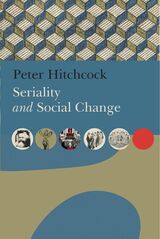
From Karl Marx’s decision to publish Capital in serial form to contemporary adaptations in manga and graphic novels, Seriality and Social Change examines how serialization both democratizes knowledge and shapes the very process of social transformation. Peter Hitchcock delves into the paradox of the serial: while it can expand access to radical thought, it can also impose structural limits, slowing or containing the revolutionary potential it seeks to unleash.
Through a sweeping analysis that links literature and political economy, Hitchcock explores how serialized narratives frame, sustain, or even hinder movements for change. Does seriality mirror the mechanics of capitalism, or can it be a tool for subverting them? Engaging with this question across genres and forms, Seriality and Social Change invites readers to rethink how revolution is told and imagined over time.
A few years after the deadly 2011 terror attack in Norway’s Utøya Island, Otto and Sofie are attempting to put the pieces of their life back together without their beloved daughter, who was murdered alongside countless other youths on one of the worst days in Norway’s history. Seven Days in August is the story of Otto and Sofie’s grief, painstakingly narrated over just one week—a window into their attempts to navigate a life together, face to face with their own helplessness and mortality.
Situated at the crossroads of three countries—Cameroon, France, and, now, the United States—Nathalie Etoke is uniquely positioned for this polyphonic reflection on race. She examines what happens when race obliterates historical, social, cultural, and political differences among populations of African descent from different parts of the world. Focusing on recent and ongoing topics in the United States, including the murder of George Floyd, police brutality, the complex symbolism of Barack Obama and Kamala Harris, Etoke explores the relations of violence, oppression, dispossession, and inequalities that have brought us here, face to face with these existential questions: Are you breathing? Are we breathing?
In an unnamed African nation, the people are subject to a state of perpetual warfare and to an Orwellian abuse of language that strips from language its meaning and renders life senseless. And in a bare room lit only by moonlight, a young man hides, waiting for the mysterious crocodile-men to come and help him escape from the violent tyranny of the state. While he waits, he tells his story.
This is Kossi Efoui’s catastrophic and carnivalesque dreamscape, the dark setting of The Shadow of Things to Come. Here, men and women are taken in the night, spirited away from their families, and sent to plantation penal colonies to be worked to the edge of madness. When they return, they are empty shells, their lost time referred to as the “Time of Annexation.” But though his parents were taken, our protagonist survived, first in the care of a quirky benefactress named Mama Maize, then under the wing of the state itself, as a student at one of its elite schools. When he meets a bookseller named Axis Kemal, however, he has found a surrogate father, an eccentric and wise man who can bring him out of the meaningless confusion and tell him the truth about the society he lives in.
Through his characters, Efoui speaks out against atrocity and the abuse of power, but more, he writes against political rhetoric and the destruction of meaning by government. This novel is a love letter to language and, in Chris Turner’s dazzling translation, it becomes a stunning introduction for English-language readers to an exciting new talent.
As the complex plot to bring down a major financial institution unfolds at a rapid pace, American and Japanese officials scramble to prevent a crisis with international implications. Set against the backdrop of the political and financial practices of Japan, China, and the US, The Shanghai Intrigue brings with it murder, betrayal, romance, even a natural disaster, as the plot races to a most unpredictable outcome. The book’s breakneck speed and thrilling twists and turns will leave readers spellbound from the first page.
In the beginning, was the light, or was it the Lumières? In Ulrike Almut Sandig’s latest volume of poetry, it is only a leap from the creation of the world to the symphony of the Berlin metropolis. And there is a question holding out off the coast of Lampedusa: Can shining sheep be used as night storage for the dark hours, when we are overwhelmed with fears of God, of a gym teacher with a whistle, of mothers with eyes as black as coal? In devastating sequences, Sandig charts the reality of an abused child, victims of contemporary war, or a fourteenth-century Madonna. Full of humor, musicality, lightness, and rage, Shining Sheep is not just visual poetry—it has loops in your ear and filmic explosions of imagery for all your senses.
A Significant Year is the result: an analysis of the political and sociological state of the Moroccan nation on the eve of a crucial moment in the post–Hassan II period, but also a travelogue that describes what the author saw and heard on his travels in the summer months leading up to the epochal vote. Through Saaf’s eyes, we see the country’s varied regions and its urban and rural landscapes. We meet Moroccans from all walks of life, such as a waiter at a favorite cafe, a car-park attendant who recognizes the author from TV, and fellow writer and intellectual Abdelkabir Khatibi. Behind the deceptive simplicity of the book’s narrative structure, readers will find in A Significant Year an insightful and nuanced portrayal of modern Morocco’s many complexities.
Roland Barthes was a restless, protean thinker. A constant innovator—often as a daring smuggler of ideas from one discipline to another—he first gained an audience with his pithy essays on mass culture and then went on to produce some of the most suggestive and stimulating cultural criticism of the late twentieth century, including Empire of Signs, The Pleasure of the Text, and Camera Lucida. In 1976, this one-time structuralist outsider was elected to a chair at France’s preeminent Collège de France, where he chose to style himself as a professor of literary semiology until his death in 1980.
The greater part of Barthes’s published writings has been available to a French audience since 2002, but now, translator Chris Turner presents a collection of essays, interviews, prefaces, book reviews, and other journalistic material for the first time in English and divided into five themed volumes. Volume four, Signs and Images, gathers pieces related to his central concerns—semiotics, visual culture, art, cinema, and photography—and features essays on Marthe Arnould, Lucien Clergue, Daniel Boudinet, Richard Avedon, Bernard Faucon, and many more.
The Silences of Hammerstein, the latest work from one of Germany’s most significant contemporary authors, engages readers with a blend of a documentary, collage, narration, and fictional interviews. The gripping plot revolves around the experiences of real-life German General Kurt von Hammerstein and his wife and children. A member of an old military family, a brilliant staff officer, and the last commander of the German army before Hitler seized power, Hammerstein, who died in 1943 before Hitler’s defeat, was nevertheless an idiosyncratic character. Too old to be a resister, he retained an independence of mind that was shared by his children: three of his daughters joined the Communist Party, and two of his sons risked their lives in the July 1944 Plot against Hitler and were subsequently on the run till the end of the war. Hammerstein never criticized his children for their activities, and he maintained contacts with the Communists himself and foresaw the disastrous end of Hitler’s dictatorship.
In The Silences of Hammerstein, Hans Magnus Enzensberger offers a brilliant and unorthodox account of the military milieu whose acquiescence to Nazism consolidated Hitler’s power and of the heroic few who refused to share in the spoils.
A haunting homage to life and liberty, to society and solitude, and to the binding and unbinding that constitute the weft of our lives.
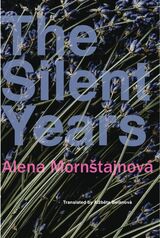
Bohdana is an introverted young woman grappling with tensions in her family and a lingering question she can’t quite shake: on her last visit to the hospital, why did her gravely ill grandmother call her “Blanka,” and what potential hidden past is her family keeping from her? As Bohdana struggles to piece together the truth, another story unfolds alongside hers—that of Svatopluk Žák, a devoted builder of socialist society who hopes his beloved family’s future will be as brilliant as the star on the Soviet flag. When their two stories collide, hidden histories come to light.
In The Silent Years, Czech author Alena Mornštajnová weaves a rich, intimate family drama that reveals how easily a carefully constructed world can shatter and transform in an instant. Set in postwar Czechoslovakia, the novel follows a human story against a larger backdrop of a society in upheaval.

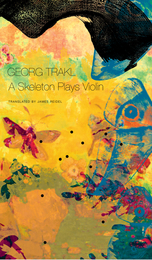
A Skeleton Plays Violin comprises the final volume in a trilogy of works by Trakl published by Seagull Books. This selection gathers Trakl’s early, middle, and late work, none of it published in book form during his lifetime. The work here ranges widely, from his haunting prose pieces to his darkly beautiful poems documenting the first bloody weeks of World War I on the Eastern Front.
Book Three of Our Trakl—the series that began with Trakl’s first book Poems and his posthumously published Sebastian Dreaming—also includes translations of unpublished poems and significant variants. Interpolated throughout this comprehensive and chronological selection is a biographical essay that provides more information about Trakl’s gifted and troubled life, especially as it relates to his poetry, as well as the necessary context of his relationship with his favorite sibling, his sister Grete, whose role as a muse to her brother is still highly controversial. Trakl’s life was mysterious and fascinating, a fact reflected in his work. A Skeleton Plays Violin should not be missed.
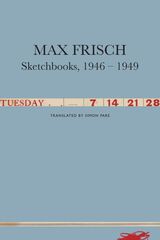
Throughout his life, the great Swiss playwright and novelist Max Frisch (1911–1991) kept a series of diaries, or sketchbooks, as they came to be known in English. First published in English translation in the 1970s, these sketchbooks played a major role in establishing Frisch as, according to the New York Times, “the most innovative, varied and hard-to-categorize of all major contemporary authors.” His diaries, said the Times, “read like novels and his best novels are written like diaries.”
Now Seagull Books presents the first unabridged English translation of Sketchbooks, 1946–1949 in a new translation by Simon Pare. This edition reinstates material omitted from the 1977 edition, including a screenplay for an unmade film. In this first volume, which covers the years 1946 to 1949, Frisch chronicles the intellectual and material situation in postwar Europe from the vantage point of a citizen of a neutral, German-speaking country. His notes on travels to the scarred cities of Germany, to Austria, France, Italy, Prague, Wroclaw, and Warsaw paint a complex and stimulating picture of a continent emerging from the rubble as new fault lines are drawn between East and West. As Frisch completes his final architectural projects and garners early success as a writer, he reflects on theater, language, and writing, and he sketches the outlines of plays, including The Fire Raisers and Count Öderland.
Whatever experience he chronicles in the sketchbook—whether it’s a Bastille Day party, an Italian fish market, or a tightrope display amid the ruins of Frankfurt or an afternoon by Lake Zurich with Bertolt Brecht, to take just a few examples—his keen dramatist’s eye immerses the reader in the setting while also probing the deeper significance and motivations underlying the scene. This new translation will serve to draw out the immediacy and contemporary quality of Frisch’s observations from the shadow of his status as a classic author, bringing his work to life for a new audience.
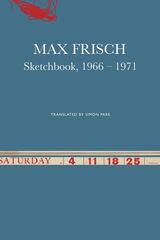
By the time Swiss author Max Frisch published the second volume of his diaries or sketchbooks, he had achieved international recognition as a writer and dramatist. In this volume, he develops his version of the literary diary as a mosaic of musings on architecture and writing, travelogue, autobiography, and political insight. He considers Cold War tensions as well as the civil rights and anti–Vietnam War movements in the United States. Now middle-aged himself, he looks squarely at men’s evolving attitude to life, love, sex, women, and status. And for all the idyllic descriptions of his new home in Berzona, Frisch becomes increasingly critical of his native Switzerland, in particular the crackdowns on left-wingers and protestors, and receives abuse for his stance. Based on the second German edition that reinstated material that had been removed from the original 1972 version, this fresh and definitive translation brings an important mid-twentieth-century European classic back to life.
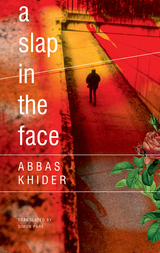
In our era of mass migration, much of it driven by war and its aftermath, A Slap in the Face could not be more timely. It tells the story of Karim, an Iraqi refugee living in Germany whose right to asylum has been revoked in the wake of Saddam Hussein’s defeat. But Hussein wasn’t the only reason Karim left, and as Abbas Khider unfolds his story, we learn both the secret struggles he faced in his homeland and the battles with prejudice, distrust, poverty, and bureaucracy he has to endure in his attempts to make a new life in Germany. As he erupts in frustration at his caseworker and finally forces her to listen to his story, we get an account of a contemporary life upended by politics and violence, told with warmth and humor that, while surprising us, does nothing to lessen the outrages Karim describes.
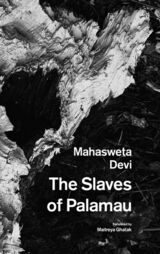
A collection of Mahasweta Devi's activist essays, reportage, and editorials on rural development and dispossession.
What do India’s poorest communities reveal about power, land, and survival? In the late 1970s, writer Mahasweta Devi shifted her focus to the lives of Adivasi (Indigenous peoples of the Indian subcontinent) and Dalit communities in eastern India, especially Bihar and West Bengal. Traveling widely and staying with the communities she wrote about, she drew on these firsthand encounters in her writing. She also edited the Bengali quarterly Bortika, making the journal a space for peasants, laborers, workers, and other marginalized groups to speak for themselves.
The Slaves of Palamau and Other Writings brings together a representative selection from her activist prose of the 1980s and early 1990s, drawn from essays, reportage, and editorials. These pieces examine rural development; dispossession and land alienation; environmental damage; and the conditions of landless laborers, sharecroppers, bonded and contract workers, miners, and Indigenous communities, with the steady attention that also informs her fiction.
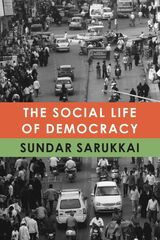
TheSocial Life of Democracy is a response to the polarization of our times and the crisis in democracy being experienced across the world today. Drawing from B. R. Ambedkar’s view that democracy is not a form of government but more a form of society and mental disposition, this book argues that democracy needs to be seen as a form of social life that must be part of our everyday practice. Noting that the obstacles to realizing Ambedkar’s vision of democracy are both material and conceptual, philosopher Sundar Sarukkai critically examines the meaning of democratic action and the function of democracy in different domains ranging from homes to governments. He also examines its relation to labor, science, and religion, and analyzes the ethical processes that are central to democracy. Finally, clarifying the concepts of truth in politics and the ideas of freedom and choice, he persuasively argues in favor of bringing democracy into our everyday lives rather than leaving it exclusively in the domain of electoral politics.
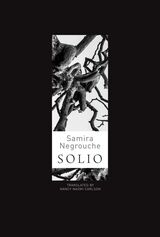
In these otherworldly poetry sequences, Samira Negrouche reminds us that “all life is movement,” where “time passes through me / beings pass through me / they are me / I am them.” The “I” is representative of one voice, three voices, all voices, all rooted in movement as their bodies brush past one another, brush against thresholds of time and space. Everything is in flux—including the dream-like landscapes at the borders of borders—as the poet seeks to recover parts of self and memory, on both a personal and universal level. In these poems, history-laden locales such as Algiers, Timbuktu, N’Djamena, Cotonou, Zanzibar, Cape Town, and Gorée are evoked. Even the language, expertly and sensitively translated by Nancy Naomi Carlson, refuses to be pinned down, as it loops back on itself. At times contradictory, at times fractured in meaning, syntax, and diction, the playful language is riddled with “restless” verbs. In the end, the “I” takes on prophetic overtones, instilling hope for the future.
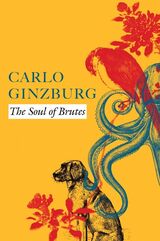
Carlo Ginzburg has been at the forefront of the discipline of microhistory ever since his earliest works were published to great acclaim in the 1970s. The Soul of Brutes brings together four of Ginzburg’s recent scintillating essays and lectures that testify to the diversity of his thoughts on history and philosophy.
“Civilization and Barbarism” resurrects a sixteenth-century debate between two thinkers in Spain about the humanness, or lack thereof, of Native Americans, and highlights the influence of classical thinkers, from Herodotus to Aristotle, and the iterations and interpretations through which their writings have traversed down to the Cinquecento. In “The Soul of Brutes” Ginzburg traces the genealogy of the debate on the rationality of animals and the limits of their imagination, from Plutarch and Aristotle to sixteenth-century thinkers like Pietro Pomponazzi and Girolamo Rorario. Following Montaigne, he provokes, are we to beasts as they seem to us? In “Calvino, Manzoni and the Grey Zone,” Carlo Ginzburg pithily writes about the mental dialogue between Holocaust survivor Primo Levi and two Italians who profoundly influenced Levi’s search for these “unexplored pockets of exception”—his contemporary Italo Calvino and the nineteenth-century novelist and philosopher Alessandro Manzoni. And finally, in “Schema and Bias”, he probes whether the historian can clearly see into the past, peering through the layers of bias, which include their own prejudices, or if relativism is the only path.
With several beautifully reproduced color illustrations, The Soul of Brutes will interest not only scholars of history, philosophy, and art, but also general intellectual readers.
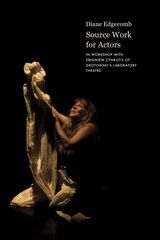
The legacy of Polish theatre director Jerzy Grotowski and the skills of his legendary actors come to life in this personal account of a workshop and intensive with Laboratory Theatre master actor Zbigniew Cynkutis. Drawing from her extensive notes and recordings, Diane Edgecomb takes us to the heart of the workshop experience as a young actor determined to make this process her own. Cynkutis guides the participants to a deep understanding of his artistic philosophy and craft, giving them invaluable tools and sources to enrich their acting. Stimulated by a developing series of tasks, Laboratory Theatre training exercises, and by Cynkutis’ startling demonstrations, the group is challenged to bring their whole selves to the work and to reimagine what is possible in theatre.
The intensive proceeds from exercises familiar to those who have studied Grotowski to innovative explorations of dramatic text and character which draw from theatre sources based in the primal energies of nature. Those who have been mystified by academic writings on the work of the Laboratory Theatre will find this personal story refreshing and accessible, filled with advice and exercises grounded in the rich conversational style of a charismatic master actor. Links to audio files of Cynkutis speaking as he leads the work lend an invaluable immersive element to the book.
This compelling volume bears witness to the power of a deeply visceral form of theatre and illustrates why the work of Grotowski and his actors has had such a profound impact on generations of theatre artists. It is sure to stimulate students, challenge directors and inspire innovative work.
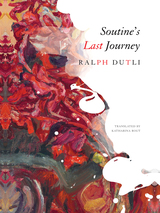
August 6, 1943. Chaim Soutine, a Jewish painter from Belorussia and a contemporary of Chagall, Modigliani, and Picasso, is hidden in a hearse that’s traveling from a small town on the Loire towards Nazi-occupied Paris. Suffering from a stomach ulcer, he urgently needs a life-saving operation. But the hearse must avoid the occupiers’ checkpoints, and it becomes increasingly likely that he will not survive the journey.
In a stream of extraordinary images, the morphine-induced artist hallucinates and remembers his life. He dreams of his childhood in Smilovichi near Minsk; his beginnings as a painter in Vilna; his arrival in 1913 in the art capital of the world, Paris, where he befriends Modigliani; and his survival of years of struggle and finding sudden success, only to be persecuted and forced into hiding when the Nazis invade. Back in the present, the painter believes that the power of milk is the only possible remedy for his ulcer. In his mind, he is traveling to a “white paradise”—a strange clinic where a “god in white” declares him healed but forbids him to paint. But for Soutine, neither paradise nor salvation exists if he cannot paint. So, he begins to paint again in secret, willing to pay the price of discovery.
A brilliant biographical novel about childhood, longing, friendship, bodily pain, and the wounds of exile, Ralph Dutli’s Soutine’s Last Journey is ultimately an exploration of language and the power of art.

In the largely undocumented sphere of political violence in eastern India, Qadir the Spider is a mythological killer and casanova, known for the various assassinations and liaisons he carries out across the region. His oldest son Rahim is the latest entry to the field. A 13-year-old killer, the boy bides his time like his father—killing, farming, and getting high as the battles go on around him. In this world where they only follow orders, mutilation becomes their only expression, the nature of violence their only meaningful form of autonomy in the various power struggles of interior Bengal.
After his first year in the field, as the child is groomed by his father to carry on the ways of their mercenary clan, he begins to confront the various legends surrounding the Spider. However, while roaming the strange, spectral forests surrounding the town, his chance encounter with a pair of wandering musicians leads him to question the killings that pattern his life. As he searches for the answers around him, he is slowly led to confront the man his father truly is, as well as the man he knows he will become.
A gripping tale of inherited violence and identity in politically volatile Bengal, Aurko Maitra’s The Spider contains powerful, disturbing parallels to modern-day conflicts. Boldly interrogating our concepts of autonomy and survival in chaos, this revelatory novel explores the impact of political violence and timeless issues of legacy and intergenerational violence.
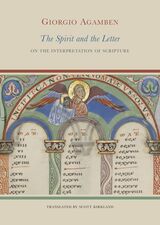
The problem of interpreting Scripture—above all, sacred scripture, but ultimately any form of writing—coincides with the very history of Western culture. It is no surprise, then, that an archaeological inquiry such as the one proposed here—on the problem of interpretation from Origen to Auerbach, from the Talmud to Benjamin—might hold unexpected revelations.
Essential reading for scholars of theology, religious studies, and hermeneutics interested in the history of scriptural interpretation, The Spirit and the Letter highlights how the interpretation of Scripture reveals itself as inseparable from ethics and politics.
The Spirits of the Earth is at heart a family drama, set at the Fraidaigue château, along the shores of Lake Geneva, and in the Maison d’en Haut country mansion, located in the hills above the lake. In these luxe locales, readers encounter upper-class characters with faltering incomes, parvenues, and even ghosts. Throughout, Colomb builds a psychologically penetrating and bold story in which the living and the dead intermingle and in which time itself is a mystery.
The pieces collected in Spivak Moving touch on a variety of topics, including her crucial thinking on pan-Africanism and W. E. B. DuBois, reproductive heteronormativity, art and film, class apartheid in education, practices of institutional critique, and the training of imaginative activism through a sustained engagement with the humanities. She moves from a look at the unsystematized first languages of continental Africa into a broader consideration of human rights, international civil society practice, the question of terror, the “freedom” of the academic, and the place of the digital. About half the essays are collected here for the first time and are not found in Spivak’s several published essay collections.

Austrian writer Ilse Aichinger (1921–2016) was a member of the Gruppe 47 writers’ group, which sought to renew German-language literature after World War II. From a wide-ranging literary career that encompassed all genres, Squandered Advice was Aichinger’s sole poetry collection. The book gathers poems written over several decades, yet Aichinger’s poetic voice remains remarkably consistent, frequently addressing us or a third party, often in the imperative, with many poems written in the form of a question. Even though they use free verse throughout, the poems are still tightly structured, often around sounds or repetition, using spare language. Phrases are often fragmentary, torn off, and juxtaposed as if in a collage. Isolated and haunting, the images are at times everyday, at other times surreal, suggesting dreams or memories. The tone ranges from reassuring and gentle to disjointed and disturbing, but the volume was carefully composed by the author into an integral whole, not chronological but following its own poetic logic. This new translation makes Aichinger’s critically acclaimed book, which has inspired poets in the German-speaking world for decades, available to English-language readers for the first time.
In the summer of 1965, a journalist newly released from prison finds himself stranded at the sprawling site of the Aswan High Dam, the flagship project of Gamal Abdel Nasser’s modern Egypt. Amid oppressive heat, unreliable transport, a mysterious epidemic, and the oppressive gaze of state surveillance, he confronts a dramatic transformation underway: villages erased, communities displaced, and a rich past disappearing beneath the waters of a new lake. As the journalist journeys south along the Nile, his observations illuminate a key moment in Cold War politics and a society wrestling with the promises and perils of progress.
Originally published in Arabic in 1974, Star of August is a masterwork by Sonallah Ibrahim—a writer who lived through these upheavals firsthand—and a timeless exploration of ideology, power, and the price of change.
At just twenty-three, Louise finds herself stranded in a Paris shelter with her baby, Bliss, in her arms while battling homelessness, racism, and the struggles that come with being a female immigrant trying to keep her dignity alive. Yet amid the chaos, Louise encounters a fragile network of mothers and survivors from the Maghreb and sub-Saharan Africa, each carrying their own story of violence, addiction, and resilience.
Based on a pivotal moment in author Léonora Miano’s own life, Stardust is a luminous story of the quiet power of choosing life. The novel was first composed over twenty years ago and remained unpublished for years. Now, Miano invites readers into her world, shedding light on the invisible corners of French society and offering a moving meditation on motherhood, dignity, and renewal.
Jacob Asleep introduces a family marked by illness, eccentricity, and a child’s death. In A Man’s Fate, a moment of inattention on a mountainous hike upends a teacher’s life and his understanding of mortality. And finally, The Argentine traces the fluctuations of memory and desire in a man’s journey around the world. In each novella, Merz takes readers on a profound and intimate journey. Read as a whole, the works complement, enrich, and echo each other.
Originally published in 1979, this book displays Fachinelli’s eclectic methodology. The Still Arrow goes against Freud’s attempt in Totem and Taboo to equate individual psycho-libidinal predicaments with those of whole societies. Yet, it argues that the difference between the two always remains one of degree, not of principle. The vexing problem of their relation is approached through an interrogation of time. From a psychoanalytic standpoint, individual obsessional neurosis is firmly connected to a repudiation of death. But, Fachinelli argues, comparable temporal strategies are also present at the group level, in disparate social and historical contexts, for instance, in the archaic transformation of the dead into ancestors and in what he names 'the fascist phenomenon'.
From this perspective, history is not just the sum of all possible histories but also of impossible ones. Fachinelli delineates an innovative knowledge of time which brings together apparently distant events into a characteristic series. This first English translation of a book by Fachinelli, The Still Arrow introduces a major critical European voice to the larger readership.
A poignant reckoning with the Marxism of a generation and its militant postcolonial intellectuals.
Arwa Salih was a member of the political bureau of the Egyptian Communist Workers Party, founded in the wake of the Arab–Israeli War and the vibrant Egyptian student movement of the early 1970s. Written more than a decade after Salih quit the party and left political life—and published shortly after she tragically took her own life—The Stillborn offers a devastatingly honest look at the tragic failure of both the national liberation and communist projects in Egypt.
This powerful, unflinching critique speaks not only to and about Salih’s own generation of left-wing activists, but also extends its gaze outward. The Stillborn addresses the broader, still fiercely salient dilemmas of revolutionary politics that continue to echo throughout the developing world in the postcolonial era.
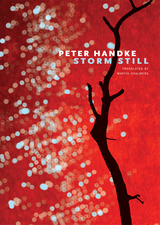
In Storm Still, Handke’s most recent work, he returns to the land of his birth, the Austrian province of Carinthia. There on the Jaunfeld, the plain at the center of Austria’s Slovenian settlement, the dead and the living of a family meet and talk. Composed as a series of monologues, Storm Still chronicles both the battle of the Slovene minority against Nazism and their love of the land. Presenting a panorama that extends back to the author’s bitter roots in the region, Storm Still blends penetrating prose and poetic drama to explore Handke’s personal history, taking up themes from his earlier books and revisiting some of their characters. In this book, the times of conflict and peace, war and prewar, and even the seasons themselves shift and overlap. And the fate of an orchard comes to stand for the fate of a people.
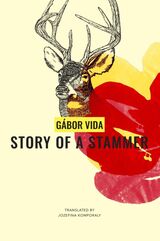
In the novel Story of a Stammer, Gábor Vida asks a fundamental question: Where does stammering come from? In the process of answering this question, he discovers that an entire historical period and an entire world have been stammering, too. Through Vida’s eyes, we see that stammering comprises all the lies accumulated over time and over generations because nobody had ever articulated what they felt or thought, nor done what they really wanted. Nobody, Vida shows, had ever told the truth.
Describing life in the 1970s and ’80s under Romanian Communist dictator Nicolae Ceauçescu’s authoritarian regime, Vida writes with disarming honesty, breaking taboos and chronicling the ways in which tyranny and exploitation seep into family relationships. The novel charts the first two decades of a young Hungarian man’s life in Romania, telling a story of coming to terms with a stammer, loneliness, and an unstimulating environment where religion, alcoholism, and suicide are the most common escape strategies. A Bildungsroman, a novel about Transylvania, a chronicle of minority life, a sociological analysis of cultural identity, and ultimately a deeply personal account of a historical era, Story of a Stammer is a major contribution to contemporary Hungarian literature—an unfailingly serious yet humorously delightful witness to a turbulent period in recent history.
Ghassan Zaqtan is not only one of the most significant Palestinian poets at work today, but one of the most important poets writing in Arabic. Since the publication of his first collection in 1980, Zaqtan’s presence as a poet has evolved with the same branching and cumulative complexity as his poems—an invisible system of roots insistently pushing through the impacted soil of political and national narratives.
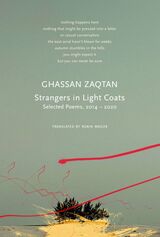
Strangers in Light Coats is the third collection of Zaqtan’s poetry to appear in English. It brings together poems written between 2014 and 2020 drawn from six volumes of poetry. Catching and holding the smallest particles of observation and experience in their gravity, the poems sprout and grow as though compelled, a trance of process in which fable, myth, and elegy take form only to fall apart and reconfigure, each line picked apart by the next and brought into the new body.
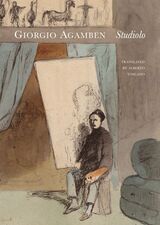
In Renaissance palaces, the studiolo was a small room to which the prince withdrew to meditate or read, surrounded by paintings he particularly loved. This book is a kind of studiolo for its author, Giorgio Agamben, as he turns his philosophical lens on the world of Western art.
Studiolo is a fascinating take on a selection of artworks created over millennia; some are easily identifiable, others rarer. Though they were produced over an arc of time stretching from 5000 BCE to the present, only now have they achieved their true legibility. Agamben contends that we must understand that the images bequeathed by the past are really addressed to us, here and now; otherwise, our historical awareness is broken. Notwithstanding the attention to detail and the critical precautions that characterize the author’s method—they provoke us with a force, even a violence, that we cannot escape. When we understand why Dostoevsky feared losing his faith before Holbein’s Body of the Dead Christ, when Chardin’s Still Life with Hare is suddenly revealed to our gaze as a crucifixion or Twombly’s sculpture shows that beauty must ultimately fall, the artwork is torn from its museological context and restored to its almost prehistoric emergence. These artworks are beautifully reproduced in color throughout Agamben’s short but significant addition to his scholarly oeuvre in English translation.
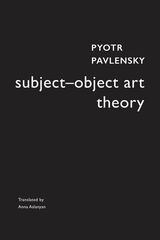
Pyotr Pavlensky turns state violence into his medium—now, in his own words, he reveals the theory behind the fire.
Pyotr Pavlensky’s Subject–Object Art Theory is both a manifesto and a method—an incendiary redefinition of what art can and should be in an era of increasing repression. Known for his radical public events, such as setting fire to government buildings, stitching his lips shut, or nailing his own body to the ground, Pavlensky has been called a provocateur. In this book, he offers his own framework: subject–object art, a practice that redefines the position of art with respect to power and forces state mechanisms to work for art.
Venturing past the confines of political art, he examines the historical intersections of art and power, situating his work within a lineage of radical avant-garde movements. Whether seen as a guide or an act of defiance in itself, Subject–Object Art Theory urges the reader to rethink artistic freedom but as a means of bringing art back to its true independence.
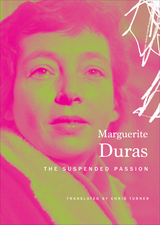
The interviews that make up the book were conducted in 1987, when Italian journalist Leopoldina Pallotta della Torre met the seventy-three-year-old Duras at her Paris flat and convinced her to sit for a series of conversations. The resulting book was published in Italian in 1989, but it somehow failed to attract a French publisher, and it was quickly forgotten. Nearly a quarter of a century later, however, the book was rediscovered and translated into French, and, it has now become a sensation. In its revealing pages, Duras speaks with extraordinary freedom about her life as a writer, her relationship to cinema, her friendship with Mitterand , her love of Chekhov and football, and, perhaps most significantly, her childhood in pre-war Vietnam, the experiences that propelled her most famous novel, The Lover.
A true literary event, finally available in English, The Suspended Passion is a remarkable document of an extraordinary literary life.
READERS
Browse our collection.
PUBLISHERS
See BiblioVault's publisher services.
STUDENT SERVICES
Files for college accessibility offices.
RECENTLY PUBLISHED


UChicago Accessibility Resources
home | accessibility | search | about | contact us
BiblioVault ® 2001 - 2026
The University of Chicago Press