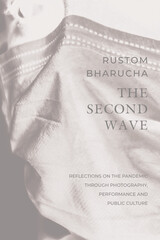
front cover of The Second Wave
The Second Wave
Reflections on the Pandemic through Photography, Performance and Public Culture
Rustom Bharucha
Seagull Books, 2022
Lessons in resilience in the second wave of the Covid-19 pandemic in India.

Focusing on the second wave of the Covid-19 pandemic in India between April and December 2021, Rustom Bharucha’s timely essay reflects on four interconnected realities that haunted this ongoing crisis—death, grief, mourning, and extinction. How do we cope with multiple deaths and the dislocation of rituals when the act of mourning is either postponed or denied? What roles do political surveillance, censorship, the regulation of lockdowns, and the sheer indifference to the lives of people play in the containment of civil liberties? Through vivid examples of photography, theater, dance, visual arts, and the cultures of everyday life, this meditative essay illuminates both the horror of the pandemic as well as its unexpected intimacies and revelations of shared suffering. Against the destruction of nature and the disrespect for the nonhuman, The Second Wave offers lessons in resilience through its reflections on the ethos of waiting and the need to re-envision breath as a vital resource of self-renewal and resistance.
[more]

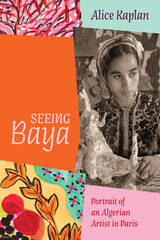
front cover of Seeing Baya
Seeing Baya
Portrait of an Algerian Artist in Paris
Alice Kaplan
University of Chicago Press, 2024
The first biography of the Algerian artist Baya Mahieddine, celebrated in mid-twentieth-century Paris, her life shrouded in myth.  

On a flower farm in colonial Algeria, a servant and field worker known as Baya escaped the drudgery of her labor by coloring the skirts in fashion magazines. Three years later, in November 1947, her paintings and fanciful clay beasts were featured in a solo show in Paris. She wasn’t yet sixteen years old. In this first biography of Baya, Alice Kaplan tells the story of a young woman seemingly trapped in subsistence who becomes a sensation in the French capital, then mysteriously fades from the history of modern art—only to reemerge after independence as an icon of Algerian artistic heritage.
 
The toast of Paris for the 1947 season, Baya inspired colonialist fantasies about her “primitive” genius as well as genuine appreciation. She was featured in newspapers, on the radio, and in a newsreel; her art was praised by Breton and Camus, Marchand and Braque. At the dawn of Algerian liberation, her appearance in Paris was used to stage the illusion of French-Algerian friendship, while horrific French massacres in Algeria were still fresh in memory. 

Kaplan uncovers the central figures in Baya’s life and the role they played in her artistic career. Among the most poignant was Marguerite Caminat-McEwen-Benhoura, who took Baya from her sister’s farm to Algiers, where Baya worked as Marguerite’s maid and was given paint and brushes. A complex and endearing character, Marguerite—and her Pygmalion ambitions—was decisive in shaping Baya’s destiny. Kaplan also looks closely at Baya’s earliest paintings with an eye to their themes, their palette and design, and their enduring influence.

In vivid prose that brings Baya’s story into the present, Kaplan’s book, the fruit of scrupulous research in Algiers, Blida, Paris, and Provence, allows us to see in a whole new light the beloved artist who signed her paintings simply “Baya.”
[more]

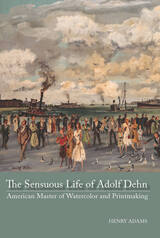
front cover of The Sensuous Life of Adolf Dehn
The Sensuous Life of Adolf Dehn
American Master of Watercolor and Printmaking
Henry Adams
University of Missouri Press, 2020
Adolf Dehn belongs to a group of distinguished midcentury American artists who were eclipsed by Abstract Expressionism and the following movements in American art. His lithographs of the Roaring Twenties introduced a note of social satire into American printmaking. He was one of the most gifted and innovative printmakers of the American Scene movement of the 1930s and one of the most significant American watercolorists.

In this wide-ranging biography, Henry Adams explores how a once central figure can come to be forgotten. Noting that Dehn’s watercolor Spring in Central Park has been widely reproduced on calendars, postcards, and other Metropolitan Museum of Art souvenirs, Adams asks why it is that some artists are celebrated as key figures while others, even those who created images that form an integral part of our visual culture, are relatively unknown. With his account of the life of the prolific and influential Dehn, and a look at the circles of artists and writers in which Dehn moved, Adams helps to fill in what he calls the “secret or subterranean history of art.”

[more]

front cover of Slavery and the Invention of Dutch Art
Slavery and the Invention of Dutch Art
Caroline Fowler
Duke University Press, 2025
In Slavery and the Invention of Dutch Art, Caroline Fowler examines the fundamental role of the transatlantic slave trade in the production and evolution of seventeenth-century Dutch art. Whereas the sixteenth-century image debates in Europe engaged with crises around the representation of divinity, Fowler argues that the rise of the transatlantic slave trade created a visual field of uncertainty around picturing the transformation of life into property. Fowler demonstrates how the emergence of landscape, maritime, and botanical painting were deeply intertwined with slavery’s economic expansion. Moreover, she considers how the development of one of the first art markets was inextricable from the trade in human lives as chattel property. Reading seventeenth-century legal theory, natural history, inventories, and political pamphlets alongside contemporary poetry, theory, and philosophy from Black feminism and the African diaspora, Fowler demonstrates that ideas about property, personhood, and citizenship were central to the oeuvres of artists such as Rembrandt van Rijn, Hercules Segers, Frans Post, Johannes Vermeer, and Maria Sibylla Merian and therefore inescapably within slavery’s grasp.
[more]

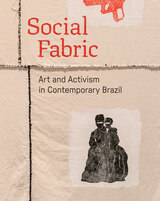
front cover of Social Fabric
Social Fabric
Art and Activism in Contemporary Brazil
Edited by Maria Emilia Fernandez, Adele Nelson, and MacKenzie Stevens
University of Texas Press, 2023

Social Fabric: Art and Activism in Contemporary Brazil brings together the work of ten artists who reflect upon the long-standing histories of oppressive power structures in the territory now known as Brazil. Blurring the line between art and activism and spanning installation, painting, performance, photography, sculpture, and video, these artists contribute to local and global conversations about the state of democracy, racial injustice, and the violence inflicted by the nation-state. This first English-language, book-length study of contemporary Brazilian art in relationship to activism assembles artist-authored texts, interviews, essays, and a conceptual mapping of Brazilian history to illuminate the function of art as a platform for critical engagement with the historical, political, and cultural configurations of a particular place. By refusing to remain neutral, these artists create spaces of vibrant and vital community and self-construction to explore how healing and justice may be possible, especially in the Black, LGBTQIA+, and Indigenous communities to which many of them belong.
[more]

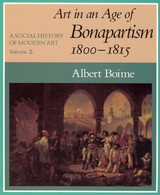
front cover of A Social History of Modern Art, Volume 2
A Social History of Modern Art, Volume 2
Art in an Age of Bonapartism, 1800-1815
Albert Boime
University of Chicago Press, 1990
In this second volume, Albert Boime continues his work on the social history of Western art in the Modern epoch. This volume offers a major critique and revisionist interpretation of Western European culture, history, and society from Napoleon's seizure of power to 1815. Boime argues that Napoleon manipulated the production of images, as well as information generally, in order to maintain his political hegemony. He examines the works of French painters such as Jacques-Louis David and Jean Auguste Dominique Ingres, to illustrate how the art of the time helped to further the emperor's propagandistic goals. He also explores the work of contemporaneous English genre painters, Spain's Francisco de Goya, the German Romantics Philipp Otto Runge and Caspar David Friedrich, and the emergence of a national Italian art.

Heavily illustrated, this volume is an invaluable social history of modern art during the Napoleonic era.

Stimulating and informative, this volume will become a valuable resource for faculty and undergraduates.—R. W. Liscombe, Choice
[more]

front cover of The Sovereign Self
The Sovereign Self
Aesthetic Autonomy from the Enlightenment to the Avant-Garde
Grant H. Kester
Duke University Press, 2023
In The Sovereign Self, Grant H. Kester examines the evolving discourse of aesthetic autonomy from its origins in the Enlightenment through avant-garde projects and movements in the nineteenth and twentieth centuries. Kester traces the idea of aesthetic autonomy—the sense that art should be autonomous from social forces while retaining the ability to reflect back critically on society—through Kant, Schiller, Hegel, Marx, and Adorno. Kester critiques the use of aesthetic autonomy as the basis for understanding the nature of art and the shifting relationship between art and revolutionary praxis. He shows that dominant discourses of aesthetic autonomy reproduce the very forms of bourgeois liberalism that autonomy discourse itself claims to challenge. Analyzing avant-garde art and political movements in Russia, India, Latin America, and elsewhere, Kester retheorizes the aesthetic beyond autonomy. Ultimately, Kester demonstrates that the question of aesthetic autonomy has ramifications that extend beyond art to encompass the nature of political transformation and forms of anticolonial resistance that challenge the Eurocentric concept of “Man,” upon which the aesthetic itself often depends.
[more]

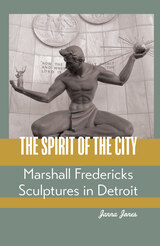
front cover of The Spirit of the City
The Spirit of the City
Marshall Fredericks Sculptures in Detroit
Janna Jones
Michigan State University Press, 2023
Marshall Fredericks’s Detroit sculptures capture the spirit of the Motor City and its dramatic transformation from the 1950s to the present day. In this book, Janna Jones analyzes eight of these enormous works of public art, situating them and their structures in metro Detroit’s distinctive midcentury milieu and bringing much-needed critical attention to this sculptor’s oeuvre. Sadly, some of these artworks have suffered along with the city as it shrank from its postwar zenith. Both the buildings and the sculptures erected for them deserve to be rescued from neglect, and then maintained and preserved for the future.
 
[more]

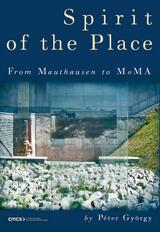
front cover of Spirit of the Place
Spirit of the Place
From Mauthausen to Moma
Péter György
Central European University Press, 2008
These essays are case-studies, the cases unraveling our cultural roots, memory itself. If a museum is the subject, then for instance the way the museum changes face, function, its manner of speech; how, a repository of collections and the cultural memory of humankind itself turns into one of the objects, memories, a custodian and exponent of its own history, or the opposite: how it connects with its modernized environs and changing audience: us. How has, or might the sanctum be transformed into a public venue, go from an inward looking, reverential enclosure to a space full of life. In other studies included here the author speaks of spatial and incarnate remembrance: the radical difference between a monument and a memorial. The duality of “always remembering” and “never forgetting”: a past depersonalized and dehistoricized as it was seized and processed. Of the layers of meaning attached to concentration camps, transmuting essence of artworks, and the difficult, the contradictory but inescapable processing of history and the past, of self-identical existence in history. So that we know we are alive. And how that is so.
[more]

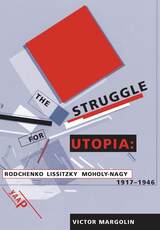
front cover of The Struggle for Utopia
The Struggle for Utopia
Rodchenko, Lissitzky, Moholy-Nagy, 1917-1946
Victor Margolin
University of Chicago Press, 1997
Following World War I, a new artistic-social avant-garde emerged with the ambition to engage the artist in the building of social life. Through close readings of the works of Alexander Rodchenko, El Lissitzky, and László Moholy-Nagy whose careers covered a broad range of artistic practices and political situations, Victor Margolin examines the way these three artists negotiated the changing relations between their social ideals and the political realities they confronted. Focusing on the difficult relationship between art and social change, Margolin brings important new insights to the understanding of the avant-garde's role in a period of great political complexity.

"An ambitious effort. This book puts the masters of European Modernism into perfect focus as inventors, propagators, and practitioners of a visual language that continues to hold sway over contemporary graphic style."—Steven Heller

"Worth the wait. . . . Margolin usefully presents what he calls the 'failed hope' of this movement in this valuable effort."—Publishers Weekly
[more]

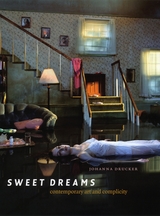
front cover of Sweet Dreams
Sweet Dreams
Contemporary Art and Complicity
Johanna Drucker
University of Chicago Press, 2005
Johanna Drucker's "sweet dream" is for a new and more positive approach to contemporary art. Calling for a revamping of the academic critical vocabulary used to discuss art into one more befitting current creative practices, Drucker argues that contemporary art is fully engaged with material culture—yet still struggling to escape the oppositional legacy of the early twentieth-century avant-garde.

Drucker shows that artists today are aware of working within the ideologies of mainstream culture and have replaced avant-garde defiance with eager complicity. Finding their materials at flea markets or exploring celebrity culture, contemporary artists have created a vibrantly participatory movement that exudes enthusiasm and affirmation—all while critics continue to cling to an outmoded vocabulary of opposition and radical negativity that defined modernism's avant-garde. At the cutting edge of new media research, Drucker surveys a wide range of exciting contemporary artists, demonstrating their clear departure from the past and petitioning viewers and critics to shift their terms and sensibilities as well. Sweet Dreams is a testament to the creative processes and self-conscious heterogeneity of art today as well as a revolutionary effort to solicit collaboration that will encourage the production of imaginative thought and contribute to contemporary life.
[more]

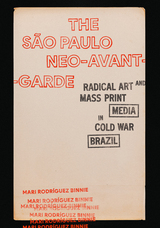
front cover of The São Paulo Neo-Avant-Garde
The São Paulo Neo-Avant-Garde
Radical Art and Mass Print Media in Cold War Brazil
Mari Rodríguez Binnie
University of Texas Press, 2024

How artists challenged a military dictatorship through mass print technologies in 1970s and 1980s São Paulo.

Throughout the 1970s and into the 1980s, during Brazil's military dictatorship, artists shifted their practices to critique the government and its sanitized images of Brazil, its use of torture, and its targeted persecutions. Mari Rodríguez Binnie's The São Paulo Neo-Avant-Garde examines these artworks and their engagement with politics and mainstream art institutions and practices.

As Binnie skillfully shows, artists appropriated processes like photocopy, offset lithography, and thermal and heliographic printing, making newly available technologies of mass production foundational to their work of resistance against both the dictatorship and the established art world. Often working collaboratively, these artists established alternative networks of exchange locally and internationally to circulate their work. As democracy was reestablished in Brazil, and in the decades that followed, their works largely fell out of sight. Here, in the first English-language book to focus entirely on conceptual practices in São Paulo in the 1970s and 1980s, Binnie unearths a scene critical to the development of contemporary Brazilian Art.

[more]


Send via email Share on Facebook Share on Twitter