
 A SCHOLARLY BOOK REPOSITORY
10 start with S start with S
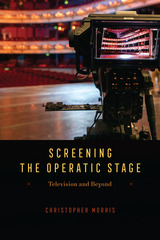
From the early days of television broadcasts to today’s live streams, opera houses have embraced technology as a way to reach new audiences. But how do these new forms of remediated opera extend, amplify, or undermine production values, and what does the audience gain or lose in the process? In Screening the Operatic Stage, Christopher Morris critically examines the cultural implications of opera’s engagement with screen media.
Foregrounding the potential for a playful exchange and self-awareness between stage and screen, Morris uses the conceptual tools of media theory to understand the historical and contemporary screen cultures that have transmitted the opera house into living rooms, onto desktops and portable devices, and across networks of movie theaters. If these screen cultures reveal how inherently “technological” opera is as a medium, they also highlight a deep suspicion among opera producers and audiences toward the intervention of media technology. Ultimately, Screening the Operatic Stage shows how the conventions of televisual representation employed in opera have masked the mediating effects of technology in the name of fidelity to live performance.
Explore insights, methodologies, and advances in socio-rhetorical interpretation
Essays in this volume from Vernon K. Robbins merge social and rhetorical strategies of interpretation and set the stage for how socio-rhetorical interpretation has developed in the context of research into the rhetoric of religious antiquity. This book contains “By Land and By Sea: The We Passages and Ancient Sea Voyages” (1978), which initially received widespread praise and then became an object of significant criticism. The volume includes Robbins’s varied, detailed responses to both encouragement and critique of his approach.
Features:
- Introduction to the collection by David B. Gowler
- Twelve essays that programmatically study early Christian texts using resources from the social sciences
- Reflections on the future of socio-rhetorical criticism
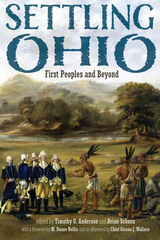
Scholars working in archaeology, education, history, geography, and politics tell a nuanced story about the people and dynamics that reshaped this region and determined who would control it.
The Ohio Valley possesses some of the most resource-rich terrain in the world. Its settlement by humans was thus consequential not only for shaping the geographic and cultural landscape of the region but also for forming the United States and the future of world history.
Settling Ohio begins with an overview of the first people who inhabited the region, who built civilizations that moved massive amounts of earth and left an archaeological record that drew the interest of subsequent settlers and continues to intrigue scholars. It highlights how, in the eighteenth century, Native Americans who migrated from the East and North interacted with Europeans to develop impressive trading networks and how they navigated complicated wars and sought to preserve national identities in the face of violent attempts to remove them from their lands.
The book situates the traditional story of Ohio settlement, including the Northwest Ordinance, the dealings of the Ohio Company of Associates, and early road building, into a far richer story of contested spaces, competing visions of nationhood, and complicated relations with Indian peoples. By so doing, the contributors provide valuable new insights into how chaotic and contingent early national politics and frontier development truly were. Chapters highlighting the role of apple-growing culture, education, African American settlers, and the diverse migration flows into Ohio from the East and Europe further demonstrate the complex multiethnic composition of Ohio’s early settlements and the tensions that resulted.
A final theme of this volume is the desirability of working to recover the often-forgotten history of non-White peoples displaced by the processes of settler colonialism that has been, until recently, undervalued in the scholarship.
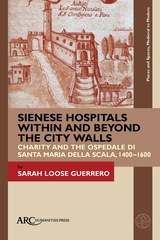
This book combines the history of charitable institutions with the study of power in urban and rural spaces from the late medieval to the early modern era. Focusing on the Ospedale di Santa Maria della Scala in Siena, the book goes beyond examining hospitals in an urban context to also consider the significant impact of charitable institutions in rural spaces. Case studies of Santa Maria della Scala's farms allow an investigation of the relationship between urban institutions and their rural properties, while looking at subject hospitals outside the Sienese state offers a glimpse into the competition for power with non-Sienese entities. As Siena's politics shifted in the sixteenth century, Santa Maria della Scala and its rural spaces became sites where power was negotiated. The book thus demonstrates how geographies of power affected the practice of charity for both urban hospitals and the rural communities they influenced.
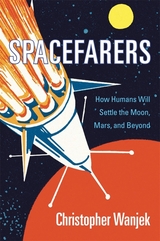
A Telegraph Best Science Book of the Year
“A witty yet in-depth exploration of the prospects for human habitation beyond Earth…Spacefarers is accessible, authoritative, and in the end, inspiring.”
—Richard Panek, author of The Trouble with Gravity
It’s been over fifty years since Apollo 11 landed on the moon. So why is there so little human presence in space? Will we ever reach Mars? And what will it take to become a multiplanet species? While many books have speculated on the possibility of living beyond the Earth, few have delved into the practical challenges.
A wry and compelling take on the who, how, and why of near-future colonies in space, Spacefarers introduces us to the engineers, scientists, planners, dreamers, and entrepreneurs who are striving right now to make life in space a reality. While private companies such as SpaceX are taking the lead and earning profits from human space activity, Christopher Wanjek is convinced this is only the beginning. From bone-whittling microgravity to eye-popping profits, the risks and rewards of space settlement have never been so close at hand. He predicts we will have hotels in low-earth orbit, mining and tourism on the Moon, and science bases on Mars—possibly followed (gravity permitting) by full blown settlements.
“Nerdily engaging (and often funny)…Technology and science fiction enthusiasts will find much here to delight them, as Wanjek goes into rich detail on rocketry and propulsion methods, including skyhooks and railguns to fling things into orbit…He is a sensible skeptic, yet also convinced that, in the long run, our destiny is among the stars.”
—The Guardian
“If the events of this year have had you daydreaming about abandoning the planet entirely, [Spacefarers] is a geekily pleasurable survey of the practicalities and challenges.”
—The Telegraph
“The best book I’ve read on space exploration since Isaac Asimov.”
—Michael Shermer, publisher of Skeptic
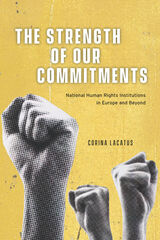
A deep dive into the mechanics of national human rights institutions and the forces that make or break their success.
In the years since World War II, the endeavor to promote human rights has gained momentum and become increasingly important within international relations. Yet these efforts often run into serious problems of enforcement.
Many countries formed national human rights institutions (NHRIs) with independent mandates to support and monitor government compliance with international human rights law. Be they commissions, ombudsmen, or tribunals, these institutions vary in their power and impact. For this book, Corina Lacatus surveyed NHRIs in Europe and around the world to determine their effectiveness and explain why some succeed while others fail.
The Strength of Our Commitments explores the relationship between the domestic and international support an institution receives and its ability to secure resources, credibility, and tangibly improve human rights conditions. Lacatus shows that NHRIs can be models of resilience, even in the face of opposition from political elites. Although their impact on human rights is difficult to measure, The Strength of Our Commitments shows how NHRIs’ strength comes from clearly defined formal powers, strong institutional leadership, and independence from political interference.
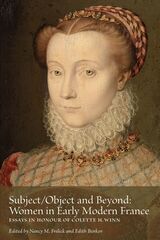
Subject/Object and Beyond brings together essays by established and emerging scholars to honor the exceptionally rich contributions and career of scholar Colette H. Winn. It also celebrates fifty years of sustained scholarship on early modern women, along with the foundation of Women’s Studies as a recognized academic discipline in North America. The collection comprises seventeen articles that explore multiple perspectives on early modern women, including their writings, translations, reception, and contributions to various fields, including literature, music, politics, religion, and science.
READERS
Browse our collection.
PUBLISHERS
See BiblioVault's publisher services.
STUDENT SERVICES
Files for college accessibility offices.
RECENTLY PUBLISHED



UChicago Accessibility Resources
home | accessibility | search | about | contact us
BiblioVault ® 2001 - 2025
The University of Chicago Press