
 A SCHOLARLY BOOK REPOSITORY
32 start with S start with S
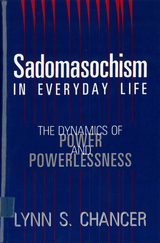
Lynn Chancer advances the provocative thesis that sadomasochism is far more prevalent in contemporary societies like the United States than we realize. According to Chancer, sexual sadomasochism is only the best-known manifestation of what is actually a much more broadly based social phenomenon. Moving from personal relationships to school, the workplace, and other interactions, Chancer uses a variety of examples that are linked by a recurrent pattern of behavior. She goes beyond the predominantly individualistic and psychological explanations generally associated with sadomasochism (including those popularized in the "how to" literature of the recent Women Who Love Too Much genre) toward a more sociological interpretation. Chancer suggests that the structure of societies organized along male-dominated and capitalistic lines reflects and perpetuates a sadomasochistic social psychology, creating a culture steeped in everyday experiences of dominance and subordination.
In the first part of the book, Chancer discusses the prevalence of sadomasochistic cultural imagery in contemporary America and examines sadomasochism through several perspectives. She develops a set of definitional traits both through existential analysis of an instance of S/M sex and by incorporating a number of Hegelian and psychoanalytic concepts. In the second part of the book, she places sadomasochism in a broader context by exploring whether and how it appears in the workplace and how it relates to gender and race.
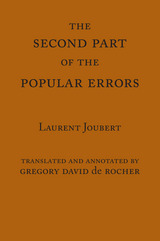
English translation of the second volume of Laurent Joubert’s 1578 French work Erreurs Populaires
Joubert proposed to dispel folk remedies and folklore still relied on by doctors and care-givers in France. It also challenged medical theories and advice from classical Greek and Latin writers that French doctors followed uncritically.
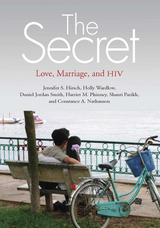
For many women around the world, their greatest risk of HIV infection comes from having sex with the very person with whom they are supposed to have sex: their spouse. The Secret situates marital HIV risk within a broader exploration of marital and extramarital sexuality in five diverse settings: Mexico, Nigeria, Uganda, Vietnam, and Papua New Guinea. In these settings, the authors write, men's extramarital sex is an officially secret but actually widespread (and widely acknowledged) social practice, rather than something men do because their bodies demand it and women can't stop them.
Drawing on research conducted as part of an innovative comparative ethnographic study, and modeling a novel approach to collaborative anthropological scholarship, the authors show men's extramarital sex to be a fundamental aspect of gendered social organization. Through theoretically sophisticated yet lucid writing and vivid ethnographic description, drawing on rich data from the marital case studies conducted by research teams in each country, they trace how extramarital opportunity structures, sexual geographies, and concerns about social risk facilitate men's participation in extramarital sex. Also documented throughout is the collision between traditional ways and the new practices of romantic companionate marriage.

A world-renowned scientist offers a much-needed analysis of what it takes to have good immune health—helping readers navigate what can really help, what is a complete myth, and why.
Does orange juice help ward off colds? And how does our age affect our ability to recover from one? When it comes to immunity, are we really what we eat? Or how much we eat? We are surrounded by big questions and big claims about enhancing our immune systems, so how do we tell the fiction from the facts? And, ultimately, what can we do to reduce our chances of getting sick?
World-leading immunologist Daniel M. Davis offers answers in this authoritative, highly accessible, myth-busting guide to the effects of stress, age, exercise, weight, nutrition, sleep, vaccines, and mental health on our immune health. Taking us to the cutting edge of immunology research and explaining both what we know and how we know it, Self-Defense helps readers spot phony claims and make informed choices. Davis shows us that everyone’s immune system is entirely unique, and that’s why we should be wary of one-size-fits-all “cures.” We learn how exercise, for example, has all sorts of different, even opposing, short- and long-term effects on our immune health. And while our gut microbes are vitally important, it’s unlikely that yogurt drinks can really boost your immune system to stop you getting ill.
An eye-opening window into some of the astonishing possibilities for the future, when it comes to distinguishing bogus and beneficial health claims about everything from vitamin D to inflammation and cancer therapies, Davis’s book may be your best self-defense.

A world-renowned scientist offers a much-needed analysis of what it takes to have good immune health—helping readers navigate what can really help, what is a complete myth, and why.
Does orange juice help ward off colds? And how does our age affect our ability to recover from one? When it comes to immunity, are we really what we eat? Or how much we eat? We are surrounded by big questions and big claims about enhancing our immune systems, so how do we tell the fiction from the facts? And, ultimately, what can we do to reduce our chances of getting sick?
World-leading immunologist Daniel M. Davis offers answers in this authoritative, highly accessible, myth-busting guide to the effects of stress, age, exercise, weight, nutrition, sleep, vaccines, and mental health on our immune health. Taking us to the cutting edge of immunology research and explaining both what we know and how we know it, Self-Defense helps readers spot phony claims and make informed choices. Davis shows us that everyone’s immune system is entirely unique, and that’s why we should be wary of one-size-fits-all “cures.” We learn how exercise, for example, has all sorts of different, even opposing, short- and long-term effects on our immune health. And while our gut microbes are vitally important, it’s unlikely that yogurt drinks can really boost your immune system to stop you getting ill.
An eye-opening window into some of the astonishing possibilities for the future, when it comes to distinguishing bogus and beneficial health claims about everything from vitamin D to inflammation and cancer therapies, Davis’s book may be your best self-defense.
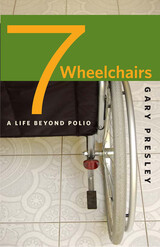
Presley is no wheelchair hero, no inspiring figure preaching patience and gratitude. An army brat turned farm kid, newly arrived in a conservative rural community, he was immobilized before he could take the next step toward adulthood. Prevented, literally, from taking that next step, he became cranky and crabby, anxious and alienated, a rolling responsibility crippled not just by polio but by anger and depression, “a crip all over, starting with the brain.” Slowly, however, despite the limitations of navigating in a world before the Americans with Disabilities Act, he builds an independent life.
Now, almost fifty years later, having worn out wheelchair after wheelchair, survived post-polio syndrome, and married the woman of his dreams, Gary has redefined himself as Gimp, more ready to act out than to speak up, ironic, perceptive, still cranky and intolerant but more accepting, more able to find joy in his family and his newfound religion. Despite the fact that he detests pity, can spot condescension from miles away, and refuses to play the role of noble victim, he writes in a way that elicits sympathy and understanding and laughter. By giving his readers the unromantic truth about life in a wheelchair, he escapes stereotypes about people with disabilities and moves toward a place where every individual is irreplaceable.

For more than three decades, Kathleen Cash has lived and worked with impoverished people, learning about their lives. Listening to them talk about their feelings of shame, Cash heard how people suffered from being unable to change what was happening to them--HIV infection, sexual and domestic violence, violence toward children, and environmental degradation. She saw that many interventions lacked emotional and cultural integrity and thus did little to alleviate these hardships. So Cash went outside the conventional approaches to health promotion and social justice and devised a community narrative practice, a strategy for engaging people through storytelling. From numerous ethnographic interviews, she pieced together cultural stories in a way that resonated with community people and revealed the paradoxes in their suffering. Cash recruited local artists to illustrate the stories in a form resembling a graphic novel and distributed these booklets for community discussion. (This book includes excerpts from these illustrated stories.)
In Thailand, Bangladesh, Haiti, Uganda, and the United States, people learned to talk about forbidden subjects and say what they could never say before. They stood up to each other, reconciled, and made health-seeking decisions. By helping others, they repaired themselves. In cathartic conversations they acknowledged shame, which led to acts of courage and generosity.
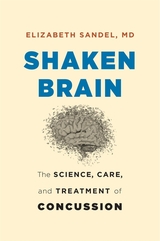
A physician with thirty-five years of experience treating people with brain injuries shares the latest research on concussions and best practices for care.
The explosion of attention to sports concussions has many of us thinking about the addled brains of our football and hockey heroes. But concussions happen to everyone, not just elite athletes. Children fall from high chairs, drivers and cyclists get into accidents, and workers encounter unexpected obstacles on the job. Concussions are prevalent, occurring even during everyday activities. In fact, in less time than it takes to read this sentence, three Americans will experience a concussion. The global statistics are no less staggering.
Shaken Brain offers expert advice and urgently needed answers. Elizabeth Sandel, MD, is a board-certified physician who has spent more than three decades treating patients with traumatic brain injuries, training clinicians, and conducting research. Here she explains the scientific evidence for what happens to the brain and body after a concussion. And she shares stories from a diverse group of patients, educating readers on prevention, diagnosis, and treatment. Few people understand that what they do in the aftermath of their injury will make a dramatic difference to their future well-being; patient experiences testify to the best practices for concussion sufferers and their caregivers. Dr. Sandel also shows how to evaluate risks before participating in activities and how to use proven safety strategies to mitigate these risks.
Today concussions aren’t just injuries—they’re big news. And, like anything in the news, they’re the subject of much misinformation. Shaken Brain is the resource patients and their families, friends, and caregivers need to understand how concussions occur, what to expect from healthcare providers, and what the long-term consequences may be.

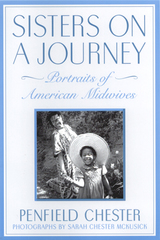
This book celebrates midwives from very different ethnic, religious, and ideological backgrounds-in all of their richness and diversity. Chester presents a community of voices of women who share a commitment to other women and who strive together to ensure for a practice with such a long history a successful and vibrant future.
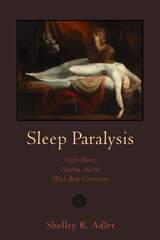
Shelley R. Adler's fifteen years of field and archival research focus on the ways in which night-mare attacks have been experienced and interpreted throughout history and across cultures and how, in a unique example of the effect of nocebo (placebo's evil twin), the combination of meaning and biology may result in sudden nocturnal death.

How do smokers evaluate evidence that smoking harms health? Some evidence suggests that smokers overestimate health risks from smoking. This book challenges this conclusion. The authors find that smokers tend to be overly optimistic about their longevity and future health if they quit later in life.
Older adults' decisions to quit smoking require personal experience with the serious health impacts associated with smoking. Smokers over fifty revise their risk perceptions only after experiencing a major health shock--such as a heart attack. But less serious symptoms, such as shortness of breath, do not cause changes in perceptions. Waiting for such a jolt to occur is imprudent.
The authors show that well-crafted messages about how smoking affects quality of life can greatly affect current perceptions of smoking risks. If smokers are informed of long-term consequences of a disease, and if they are told that quitting can indeed come too late, they are able to evaluate the risks of smoking more accurately, and act accordingly.
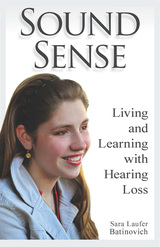
One out of every eight people between the ages of 18 and 67 in the United States has a hearing loss, estimated as 12 percent of the working-age population. Sound Sense: Living and Learning with Hearing Loss addresses the acute need of these people to function at the highest level in these income-earning years, the longest phase in their lives. In nine pointed chapters, author Sara Laufer Batinovich, who also has lost her hearing, shares her experience and knowledge in turning every challenge into an opportunity to become one’s best self-advocate.
Batinovich begins in the workplace, advising on winning a job, keeping it, and developing a long-term career, plus how to reduce stress and establish fulfilling professional relationships with colleagues. She offers tips on communication ranging from having sales people face you for easier speechreading to parsing boarding announcements at airports and play-by-play at ballparks. Her practical handbook also provides step-by-step guidance for getting a hearing aid or a cochlear implant and finding one’s way through prickly insurance claim mazes.
Sound Sense features information on finding a service dog, securing legally mandated accommodations for continuing education, tips on exercise and health, and even sensitive suggestions on strengthening personal relationships. Batinovich’s vivacious style and her own anecdotes add an upbeat, genuine sensibility to her book’s value as a positive guide to living with hearing loss.
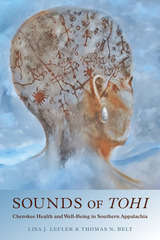
Sounds of Tohi: Cherokee Health and Well-Being in Southern Appalachia is the result of almost two decades of work by medical anthropologist Lisa J. Lefler and Cherokee elder and traditionalist Thomas N. Belt. The narrative consists of a dialogue between them that displays traditional Indigenous knowledge as well as the importance of place for two people from cultures and histories that intersect in the mountains of Southern Appalachia. Together, Lefler and Belt decolonize thinking about health, well-being, and environmental issues through the language and experiences of people whose identity is inextricably linked to the mountains and landscape of western North Carolina.
Lefler and Belt discuss several critical cultural concepts that explain the science of relationships with this world, with the spirit world, and with people. They explore tohi, the Cherokee concept of health, which offers a more pervasive understanding of relationships in life as balanced and moving forward in a good way. They converse about the importance of matrilineality, particularly in light of community healing, the epistemologies of Cherokee cosmography, and decolonizing counseling approaches.
The discussions here offer a different way of approaching the issues that face Americans in this difficult time of division. Lefler and Belt share their urgency to take action against the wholesale exploitation of public lands and the shared environment, to work to perpetuate tribal languages, to preserve the science that can make a difference in how people treat one another, and to create more forums that are inclusive of Native and marginalized voices and that promote respect and appreciation of one another and the protection of sacred places. Throughout, they rely on the preservation of traditional knowledge, or Native science, via Native language to provide insight as to why people should recognize a connection to the land.
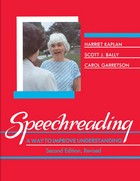
Speechreading: A Way to Improve Understanding discusses the nature and process of speechreading, its benefits, and its limitations. This useful book clarifies commonly-held misconceptions about speechreading. The beginning chapters address difficult communication situations and problems related to the speaker, the speechreader, and the environment. It then offers strategies to manage them.
Speechreading provides practical exercises illustrating the use ofthese communication strategies in actual situations. It is an excellent book for late-deafened adults, families and friends, parents of children with hearing loss, and professionals and students.
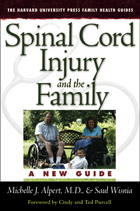
Spinal cord injury, or SCI, is frequently sudden and unexpected—through accident, disease, or violence, patients temporarily lose control of their bodies and, it seems, their lives. With rehabilitation, they can learn to navigate their world once more, retraining muscles and mind to compensate for paralyzed limbs and diminished strength. But as Dr. Michelle Alpert shows here, there is far more to recapturing full, independent lives than regaining movement. Central to long-term success is mending the family unit.
Combining Dr. Alpert’s clinical experience with patients’ own stories, Spinal Cord Injury and the Family is for individuals and their families who must climb back from injury: for the young quad couple, both quadriplegic, who wish to conceive and raise a child; for the paraplegic dad who wants to teach his daughter to drive; for the couple wondering how they can regain the sexual spark in their relationship.
The authors cover the causes of and prognosis for SCI through case studies, review common courses of rehabilitation, and answer the “what now?” questions—from daily routines to larger issues concerning sex, education and employment, childbearing, and parenting with SCI. Rich in clinical information and practical advice, the book shows how real patients and their families are living full lives after spinal cord injury.
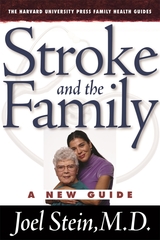
A young woman suffers a stroke; she rebuilds her career and personal life, but not before her marriage falls apart. An eighty-year-old man dies unexpectedly of stroke, leaving his grown sons to wonder whether they are genetically predisposed to stroke. A recently retired woman confronts her future with a husband suddenly disabled by stroke. How can she help her husband? Will he ever recover? How will she cope with her own emotional stress?
In Stroke and the Family: A New Guide, Joel Stein shows the many faces of stroke and the people it strikes. To the family just beginning to cope with the aftermath of a stroke, the diagnostic tests, drug regimens, rehabilitation strategies, and varied prognoses can be completely bewildering. Because stroke can affect memory, speech, and movement, the impact on everyday routines and close relationships can be especially intense. Stein has produced a book that allows general readers and nonphysicians working with stroke survivors to make sense of the confusing variety of diagnoses and treatment options, and goes on to explore challenges the recovering stroke patient and the recovering family will face during a long recuperation with an uncertain outcome. Stroke and the Family offers up-to-date information and places the current research findings in context.
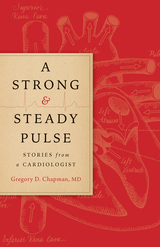
A Strong and Steady Pulse: Stories from a Cardiologist provides an insider’s perspective on the field of cardiovascular medicine told through vignettes and insights drawn from Gregory D. Chapman’s three decades as a cardiologist and professor of medicine. In twenty-six bite-sized chapters based on real-life patients and experiences, Chapman provides an overview of contemporary cardiovascular diseases and treatments, illuminating the art and science of medical practice for lay audiences and professionals alike.
With A Strong and Steady Pulse, Chapman provides medical students and general readers with a better understanding of cardiac disease and its contributing factors in modern life, and he also provides insights on the diagnostic process, medical decision making, and patient care. Each chapter presents a patient and their initial appearance, described in clear detail as Chapman gently walks us through his evaluation and the steps he and his associates take to determine the underlying problem. Chapman’s stories are about real people dealing with life and death situations—including the physicians, nurses, medical students, and other team members who try to save lives in emergent, confusing conditions.
The sometimes hard-won solutions to these medical challenges combine new technology and cutting-edge research together with insights drawn from Chapman’s past experiences as an intern and resident in Manhattan during the AIDS epidemic, as a postdoctoral fellow at Duke University in the 1990s, and in practice in Nashville, Tennessee, and Birmingham, Alabama. Conditions addressed include the recognition and management of heart attack, heart failure, arrhythmia, valvular heart disease, cardiac transplantation, broken heart syndrome, hypertension, and the depression some people experience after a heart attack, as well as related topics like statin drugs, the Apple Watch ECG feature, and oral anticoagulants. Finally, the emergence of the COVID-19 virus and its disruption of normal hospital routines as the pandemic unfolded is addressed in an epilogue.
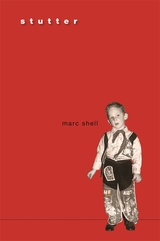
One person can't help stuttering. The other can't help laughing. And in the way one bodily betrayal of better intentions mirrors the other, we find ourselves in the gray area where mind and body connect--and, at the damnedest moments, disconnect. In a book that explores the phenomenon of stuttering from its practical and physical aspects to its historical profile to its existential implications, Marc Shell plumbs the depths of this murky region between will and flesh, intention and expression, idea and word. Looking into the difficulties encountered by people who stutter--as do fifty million worldwide--Shell shows that, however solitary stutterers may be in their quest for normalcy, they share a kinship with many other speakers, both impeded and fluent.
Stutter takes us back to a time when stuttering was believed to be "diagnosis-induced," then on to the complex mix of physical and psychological causes that were later discovered. Ranging from cartoon characters like Porky Pig to cultural icons like Marilyn Monroe, from Moses to Hamlet, Shell reveals how stuttering in literature plays a role in the formation of tone, narrative progression, and character. He considers such questions as: Why does stuttering disappear when the speaker chants? How does singing ease the verbal tics of Tourette's Syndrome? How do stutterers cope with the inexpressible, the unspeakable?
Written by someone who has himself struggled with stuttering all his life, this provocative and wide-ranging book shows that stuttering has implications for myriad types of expression and helps to define what it means to be human.
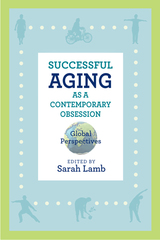
The contributors to Successful Aging as a Contemporary Obsession explore how the successful aging movement is playing out across five continents. Their chapters investigate a variety of people, including Catholic nuns in the United States; Hindu ashram dwellers; older American women seeking plastic surgery; aging African-American lesbians and gay men in the District of Columbia; Chicago home health care workers and their aging clients; Mexican men foregoing Viagra; dementia and Alzheimer sufferers in the United States and Brazil; and aging policies in Denmark, Poland, India, China, Japan, and Uganda. This book offers a fresh look at a major cultural and public health movement of our time, questioning what has become for many a taken-for-granted goal—aging in a way that almost denies aging itself.

"No eyebrows. No eyelashes. When it rains the water will run straight down into my eyes," Catherine Lord wrote before her hair fell out during chemotherapy. Propelled into an involuntary performance piece occasioned by the diagnosis of breast cancer, Lord adopted the online persona of Her Baldness—an irascible, witty, polemical presence who speaks candidly about shame and fear to her listserv audience. While Lord suffers from unwanted isolation and loss of control as her treatment progresses, Her Baldness talks back to the society that stigmatizes bald women, not to mention middle-aged lesbians with a life-threatening disease.
In this irreverent and moving memoir, Lord draws on the e-mail correspondence of Her Baldness to offer an unconventional look at life with breast cancer and the societal space occupied by the seriously ill. She photographs herself and the rooms in which she negotiates her disease. She details the clash of personalities in support groups, her ambivalence about Western medicine, her struggles to maintain her relationship with her partner, and her bemusement when she is mistaken for a "sir." She uses these experiences—common to the one-in-eight women who will be diagnosed at some point with breast cancer—to illuminate larger issues of gender signifiers, sexuality, and the construction of community.
Recounting a series of fascinating case studies, Meador shows in this book how he came to reject a strict adherence to the prevailing biomolecular model of disease and its separation of mind and body. He studied other theories and approaches—George Engel's biopsychosocial model of disease, Michael Balint's study of physicians as pharmacological agents—and adjusted his practice accordingly to treat what he called "nondisease." He had to retool, learn new and more in-depth interviewing and listening techniques, and undergo what Balint termed a "slight but significant change in personality."
In chapters like "The Woman Who Believed She Was a Man" and "The Diarrhea of Agnes," Meador reveals both the considerable harm that can result from wrong diagnoses of nonexistent diseases and the methods he developed to help patients with chronic symptoms not defined by a medical disease. Throughout the book, he recommends subsequent studies to test his observations, and he urges full application of the scientific method to the doctor-patient relationship, pointing out that few objective studies of these all-important interactions have ever been done.
READERS
Browse our collection.
PUBLISHERS
See BiblioVault's publisher services.
STUDENT SERVICES
Files for college accessibility offices.
RECENTLY PUBLISHED




UChicago Accessibility Resources
home | accessibility | search | about | contact us
BiblioVault ® 2001 - 2025
The University of Chicago Press