
 A SCHOLARLY BOOK REPOSITORY
19 start with S start with S


Contributors examine the role of the fruit fly Drosophila and nematode worms in biology, troops of baboons in primatology, box and digital simulations of the movement of the earth’s crust in geology, and meteorological models in climatology. They analyze the intensive study of the prisoner’s dilemma in game theory, ritual in anthropology, the individual case in psychoanalytic research, and Athenian democracy in political theory. The contributors illuminate the processes through which particular organisms, cases, materials, or narratives become foundational to their fields, and they examine how these foundational exemplars—from the fruit fly to Freud’s Dora—shape the knowledge produced within their disciplines.
Contributors
Rachel A. Ankeny
Angela N. H. Creager
Amy Dahan Dalmedico
John Forrester
Clifford Geertz
Carlo Ginzburg
E. Jane Albert Hubbard
Elizabeth Lunbeck
Mary S. Morgan
Josiah Ober
Naomi Oreskes
Susan Sperling
Marcel Weber
M. Norton Wise
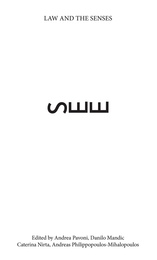
Vision traditionally occupies the height of the sensorial hierarchy. The sense of clarity and purity conveyed by vision, allows it to be explicitly associated with truth and knowledge. The law has always relied on vision and representation, from eye-witnesses to photography, to imagery and emblems. The law and its normative gaze can be understood as that which decrees what is permitted to be and become visible and what is not. Indeed, even if law’s perspectival view is bound to be betrayed by the realities of perception, it is nonetheless productive of real effects on the world.
This first title in the interdisciplinary series ‘Law and the Senses’ asks how we can develop new theoretical approaches to law and seeing that go beyond a simple critique of the legal pretension to truth. This volume aims to understand how law might see and unsee, and how in its turn is seen and unseen. It explores devices and practices of visibility, the evolution of iconology and iconography, and the relation between the gaze of the law and the blindness of justice. The contributions, all radically interdisciplinary, are drawn from photography, legal theory, philosophy, and poetry.
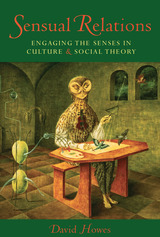
David Howes is Professor of Anthropology, Concordia University, Montreal, Quebec.

Grounded in Black feminist thought, Julia S. Jordan-Zachery looks at the functioning of scripts ascribed to Black women’s bodies in the framing of HIV/AIDS, domestic abuse, and mental illness and how such functioning renders some bodies invisible in Black politics in general and Black women’s politics specifically.
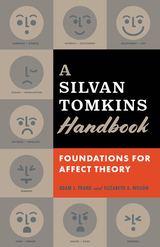
An accessible guide to the work of American psychologist and affect theorist Silvan Tomkins
The brilliant and complex theories of psychologist Silvan Tomkins (1911–1991) have inspired the turn to affect in the humanities, social sciences, and elsewhere. Nevertheless, these theories are not well understood. A Silvan Tomkins Handbook makes his theories portable across a range of interdisciplinary contexts and accessible to a wide variety of contemporary scholars and students of affect.
A Silvan Tomkins Handbook provides readers with a clear outline of Tomkins’s affect theory as he developed it in his four-volume masterwork Affect Imagery Consciousness. It shows how his key terms and conceptual innovations can be used to build robust frameworks for theorizing affect and emotion. In addition to clarifying his affect theory, the Handbook emphasizes Tomkins’s other significant contributions, from his broad theories of imagery and consciousness to more focused concepts of scenes and scripts. With their extensive experience engaging and teaching Tomkins’s work, Adam J. Frank and Elizabeth A. Wilson provide a user-friendly guide for readers who want to know more about the foundations of affect studies.
Theories of social justice are presented in an accessible fashion to encourage engagement of students, activists, and scholars with these important lines of inquiry. Issues are analyzed utilizing various theories for furthering engagement in possibilities. Struggles for justice -- from legal cases to on the ground movements -- are presented for historical context and to inform the way forward.


Since the debut of the New Archaeology in the 1960s, approaches to the science of interpreting the material past have proliferated.
Seeking to find common ground in an increasingly fractious and polarized discipline, a group of archaeological theorists representing various schools of thought gathered in a roundtable, during the fall of 1997. As organizer, Michael Schiffer sought to build bridges that might begin to span the conceptual chasms that have formed in archaeology during the past few decades. Many participants in the roundtable accepted the challenge of building bridges, but some rejected the premise that bridge building is desirable or feasible. Even so, every chapter in the resulting volume contributes something provocative or significant to the enterprise of constructing social theory in archaeology and setting the agenda for future social-theoretic research.
With contributions from every major school of thought, whether informed by evolutionary theory, feminism, chaos theory, behavioralism, or post-processualism, this volume serves as both handbook to an array of theoretical approaches and as a useful look at each school’s response to criticism.
Understood broadly as a tacit understanding "shared" by a group, the concept of a practice has a fatal difficulty, Turner argues: there is no plausible mechanism by which a "practice" is transmitted or reproduced. The historical uses of the concept, from Durkheim to Kripke's version of Wittgenstein, provide examples of the contortions that thinkers have been forced into by this problem, and show the ultimate implausibility of the idea.
Turner's conclusion sketches a picture of what happens when we do without the notion of a shared practice, and how this bears on social theory and philosophy. It explains why social theory cannot get beyond the stage of constructing fuzzy analogies, and why the standard constructions of the contemporary philosophical problem of relativism depend upon this defective notion. This first book-length critique of practice theory is sure to stir discussion and controversy in a wide range of fields, from philosophy and science studies to sociology, anthropology, literary studies, and political and legal theory.
Applying his theory of responsibility to professional ethics, May contends that current methods of professional socialization should be changed so that professionals are not expected to ignore considerations of personal well-being, family, or community. For instance, lawyers should not place client loyalty above concerns for the common good; doctors should not place the physical well-being of patients above their mental and spiritual well-being; scientists and engineers should not feel obliged to blow the whistle on fraud and corruption unless their professional groups protect them from retaliation.
This book should prove provocative reading for philosophers, political scientists, social theorists, professionals of many stripes, and ethicists.

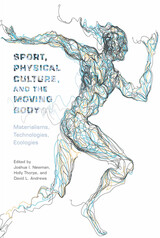
The moving body—pervasively occupied by fitness activities, intense training and dieting regimes, recreational practices, and high-profile sporting mega-events—holds a vital function in contemporary society. As the body moves—as it performs, sweats, runs, and jumps—it sets in motion an intricate web of scientific rationalities, spatial arrangements, corporate imperatives, and identity politics (i.e. politics of gender, race, social class, etc.). It represents vitality in its productive and physiological capacities, it drives a complex economy of experiences and products, and it is a meaningful site of cultural identities and politics.
Contributors to Sport, Physical Culture, and the Moving Body work from a simple premise: as it moves, the material body matters. Adding to the burgeoning fields of sport studies and body studies, the works featured here draw upon the traditions of feminist theory, posthumanism, actor network theory, and new materialism to reposition the physical, moving body as crucial to the cultural, political, environmental, and economic systems that it constitutes and within which is constituted. Once assembled, the book presents a study of bodies in motion—made to move in contexts where technique, performance, speed, strength, and vitality not only define the conduct therein, but provide the very reason for the body’s being within those economies and environments. In so doing, the contributors look to how the body moving for and about rational systems of science, medicine, markets, and geopolity shapes the social and material world in important and unexpected ways.
In Sport, Physical Culture, and the Moving Body, contributors explore the extent to which the body, when moving about both ostensibly active body spaces (i.e., the gymnasium, the ball field, exercise laboratory, the track or running trail, the beach, or the sport stadium) and those places less often connected to physical activity (i.e. the home, the street, the classroom, the automobile), is bounded to technologies of life and living; and to the political arrangements that seek to capitalize upon such frames of biological vitality. To do so, the authors problematize the rise of active body science (i.e. kinesiology, sport and exercise sciences, performance biotechnology) and the effects these scientific interventions have on embodied, lived experience.
Contributors to Sport, Physical Culture, and the Moving Body will be engaging a range of new and emerging theoretical perspectives, including new materialist, political ecology, developmental systems theory, and new material feminist approaches, to examine the actors and assemblages of movement-based material, political, and economic production. In so doing, contributors will vividly and powerfully illustrate the extent to which a focus on the fleshed body and its material conditions can bring forth new insights or ontological and epistemological innovation to the sociology of sport and physical activity. They will also explore the agency of the body as and amongst things. Such a performative materialist approach explicates how complex assemblages of sport and physical activity—bringing into association everything from muscle fibers and dietary proteins to stadium concrete or regional aquifers—are not only meaningful, but ecological.
By focusing on the confluence of agentive materialities, disciplinary technologies, vibrant assemblages, speculative realities, and vital performativities, Sport, Physical Culture, and the Moving Body promises to offer a groundbreaking departure from representationalist tendencies and orthodoxies brought about by the cultural turn in sport and physical cultural studies. It brings the moving body and its physics back into focus: recentering moving flesh and bones as locus of social order, environmental change, and the global political economy.
Focusing on the micropolitics of everyday state-making, the contributors examine the mythologies, paradoxes, and inconsistencies of the state through ethnographies of diverse postcolonial practices. They show how the authority of the state is constantly challenged from the local as well as the global and how growing demands to confer rights and recognition to ever more citizens, organizations, and institutions reveal a persistent myth of the state as a source of social order and an embodiment of popular sovereignty. Demonstrating the indispensable value of ethnographic work on the practices and the symbols of the state, States of Imagination showcases a range of studies and methods to provide insight into the diverse forms of the postcolonial state as an arena of both political and cultural struggle.
This collection will interest students and scholars of anthropology, cultural studies, sociology, political science, and history.
Contributors. Lars Buur, Mitchell Dean, Akhil Gupta, Thomas Blom Hansen, Steffen Jensen, Aletta J. Norval, David Nugent, Sarah Radcliffe, Rachel Sieder, Finn Stepputat, Martijn van Beek, Oskar Verkaaik, Fiona Wilson
Ridgeway’s research on status has important implications for our understanding of social inequality. Distinct from power or wealth, status is prized because it provides affirmation from others and affords access to valuable resources. Ridgeway demonstrates how the conferral of status inevitably contributes to differing life outcomes for individuals, with impacts on pay, wealth creation, and health and wellbeing. Status beliefs are widely held views about who is better in society than others in terms of esteem, wealth, or competence. These beliefs confer advantages which can exacerbate social inequality. Ridgeway notes that status advantages based on race, gender, and class—such as the belief that white men are more competent than others—are the most likely to increase inequality by facilitating greater social and economic opportunities.
Ridgeway argues that status beliefs greatly enhance higher status groups’ ability to maintain their advantages in resources and access to positions of power and make lower status groups less likely to challenge the status quo. Many lower status people will accept their lower status when given a baseline level of dignity and respect—being seen, for example, as poor but hardworking. She also shows that people remain willfully blind to status beliefs and their effects because recognizing them can lead to emotional discomfort. Acknowledging the insidious role of status in our lives would require many higher-status individuals to accept that they may not have succeeded based on their own merit; many lower-status individuals would have to acknowledge that they may have been discriminated against.
Ridgeway suggests that inequality need not be an inevitable consequence of our status beliefs. She shows how status beliefs can be subverted—as when we reject the idea that all racial and gender traits are fixed at birth, thus refuting the idea that women and people of color are less competent than their male and white counterparts. This important new book demonstrates the pervasive influence of status on social inequality and suggests ways to ensure that it has a less detrimental impact on our lives.

Unlike the conventional study of politics that deals with how people get the things they want through government, this book concentrates on how politics influence what they want, what they fear, and what they regard as possible. In examining politics as a symbolic form, it looks at man and politics as reflections of each other.
READERS
Browse our collection.
PUBLISHERS
See BiblioVault's publisher services.
STUDENT SERVICES
Files for college accessibility offices.
RECENTLY PUBLISHED



UChicago Accessibility Resources
home | accessibility | search | about | contact us
BiblioVault ® 2001 - 2026
The University of Chicago Press