
 A SCHOLARLY BOOK REPOSITORY
24 start with T start with T
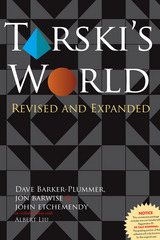
A brand new feature in this revised and expanded edition is student access to Grade Grinder, an innovative Internet-based grading service that provides accurate and timely feedback to students whenever they need it. Students can submit solutions for the program’s more than 100 exercises to the Grade Grinder for assessment, and the results are returned quickly to the students and optionally to the teacher as well. A web-based interface also allows instructors to manage assignments and grades for their classes.
Intended as a supplement to a standard logic text, Tarski’s World is an essential tool for helping students learn the language of logic.

In Technological Turf Wars, Jessica Johnston analyzes the tensions and political dilemmas that coexist in the interrelationship among science, technology and society. Illustrating how computer security is as concerned with social relationships as it is with technology, Johnston provides an illuminating ethnography that considers corporate culture and the workplace environment of the antivirus industry.
Using a qualitative, interdisciplinary approach, which combines organizational and security studies with critical and social analysis of science and technology, Johnston questions the motivations, contradictions and negotiations of antivirus professionals. She examines the tensions between the service ethics and profit motives—does the industry release viruses to generate demand for antivirus software?—and considers the dynamics within companies by looking at facets such as gender bias and power politics. Technological Turf Wars is an informed, enlightened and entertaining view of how the production of computer security technology is fraught with social issues.
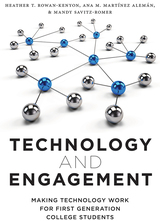
Technology and Engagement is based on a four-year study of how first generation college students use social media, aimed at improving their transition to and engagement with their university. Through web technology, including social media sites, students were better able to maintain close ties with family and friends from home, as well as engage more with social and academic programs at their university. This ‘ecology of transition’ was important in keeping the students focused on why they were in college, and helped them become more integrated into the university setting. By showing the gains in campus capital these first-generation college students obtained through social media, the authors offer concrete suggestions for how other universities and college-retention programs can utilize the findings to increase their own retention of first-generation college students.

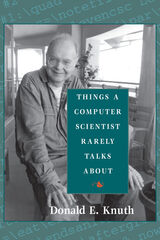
Perhaps no one is more qualified to address these questions than Donald E. Knuth, whose massive contributions to computing have led others to nickname him "The Father of Computer Science"—and whose religious faith led him to understand a fascinating analysis of the Bible called the 3:16 project. In this series of six spirited, informal lectures, Knuth explores the relationships between his vocation and his faith, revealing the unique perspective that his work with computing has lent to his understanding of God.
His starting point is the 3:16 project, an application of mathematical "random sampling" to the books of the Bible. The first lectures tell the story of the project's conception and execution, exploring its many dimensions of language translation, aesthetics, and theological history. Along the way, Knuth explains the many insights he gained from such interdisciplinary work. These theological musings culminate in a surprising final lecture tackling the ideas of infinity, free will, and some of the other big questions that lie at the juncture of theology and computation.
Things a Computer Scientist Rarely Talks About, with its charming and user-friendly format—each lecture ends with a question and answer exchange, and the book itself contains more than 100 illustrations—is a readable and intriguing approach to a crucial topic, certain to edify both those who are serious and curious about their faiths and those who look at the science of computation and wonder what it might teach them about their spiritual world.
Includes "Creativity, Spirituality, and Computer Science," a panel discussion featuring Harry Lewis, Guy L. Steele, Jr., Manuela Veloso, Donald E. Knuth, and Mitch Kapor.

A book lover today might sometimes feel like the fictional medieval friar William of Baskerville in Eco’s The Name of the Rose, watching the written word become lost to time. In This Is Not the End of the Book, that book’s author, Umberto Eco, and his fellow raconteur Jean-Claude Carriere sit down for a dazzling dialogue about memory and the pitfalls, blanks, omissions, and irredeemable losses of which it is made. Both men collect rare and precious books, and they joyously hold up books as hardy survivors, engaging in a critical, impassioned, and rollicking journey through book history, from papyrus scrolls to the e-book. Along the way, they touch upon science and subjectivity, dialectics and anecdotes, and they wear their immense learning lightly. A smiling tribute to what Marshall McLuhan called the Gutenberg Galaxy, this dialogue will be a delight for all readers and book lovers.

In one of the most current and comprehensive textbooks on the topic of ticket operations and sales management, James T. Reese and a collection of academicians and practitioners provide insight, practical tips, and first-hand accounts of what it takes to excel in this growing and ever-changing industry. Chapters cover topics such as customer service, sales, pricing, distribution, the secondary ticket market, and new ticketing technology.
"This book is the 'how to' book on ticket operations and sales management. Students utilizing this book will be prepared to sell and operate one of the most important revenue streams in sport ticketing."
—From the foreword by Rick Nichols, owner of Admissions Sport Consulting
In this probing study, Eric Freedman focuses on what images from photography, mobile communications, and the Internet reveal about looking. Exploring subjectivity by critically examining the look, he elaborates on the nature of the photographic frame and its relation to interpretive practices. Freedman scrutinizes what he calls "technobiography"—a life written through technology, and considers the movement of personal images into public spaces. He also considers authorship that situates the self as inherently engaged with and inscribed by information technology.
All of the chapters in Transient Images explore Freedman's interest in examining how media technologies activate particular notions of self and community. He provides examples that address trauma—pictures of missing children on milk cartons and episodes of the reality series Intervention—as well as the strategies behind creating and distributing personal advertisements on the Internet. Transient Images draws out the tensions that exist in images circulating in the digital era.

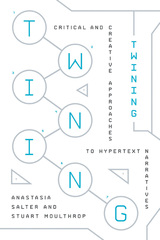
"While there have certainly been attempts to study Twine historically and theoretically... no single publication has provided such a detailed account of it. And no publication has even attempted to situate Twine amongst its many different conversations and traditions, something this book does masterfully." —James Brown, Rutgers University, Camden
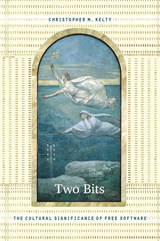
Drawing on ethnographic research that took him from an Internet healthcare start-up company in Boston to media labs in Berlin to young entrepreneurs in Bangalore, Kelty describes the technologies and the moral vision that bind together hackers, geeks, lawyers, and other Free Software advocates. In each case, he shows how their practices and way of life include not only the sharing of software source code but also ways of conceptualizing openness, writing copyright licenses, coordinating collaboration, and proselytizing. By exploring in detail how these practices came together as the Free Software movement from the 1970s to the 1990s, Kelty also considers how it is possible to understand the new movements emerging from Free Software: projects such as Creative Commons, a nonprofit organization that creates copyright licenses, and Connexions, a project to create an online scholarly textbook commons.
READERS
Browse our collection.
PUBLISHERS
See BiblioVault's publisher services.
STUDENT SERVICES
Files for college accessibility offices.
RECENTLY PUBLISHED





UChicago Accessibility Resources
home | accessibility | search | about | contact us
BiblioVault ® 2001 - 2026
The University of Chicago Press