
 A SCHOLARLY BOOK REPOSITORY
19 start with T start with T
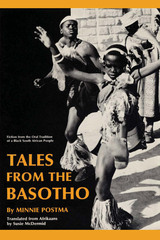
"They say that the eldest of the chief's daughters..." So begins a tale from the Basotho, unfolded by the meager light of a dung fire that burns smokily behind the reed screen sheltering the entrance of the hut. The old ones of the tribe wait until dark before telling their stories, for everyone knows horns will grow from the head of one who tells a story during daylight hours. Tales from the Basotho abounds with elements familiar to folk narrative. The heroes and heroines are the chiefs and their wives, their sons and their daughters. Fantastic creatures frequent the narratives. exhibiting their awful powers.
Rustic peace and beauty pervade the stories, as Minnie Postma amply demonstrates in her versions of the tales. Something fearful may be occurring—the dreaded Koeoko pulling the only son of the chief under water—but, at the same time, girls with babies tied to their backs are searching for edible bulbs in the veld, and an old woman dreams in the gentle sunlight in front of the huts.
These tales from the Basotho are for entertainment only. There is a tabu against telling tales while the sun shines, because daylight hours must be saved for work. The telling itself is the· reason the story exists, for the audience is already aware of the outcome of each tale. As Wm. Hugh Jansen emphasizes in his foreword, "text" and "context" are often easily interpreted and made accessible in a translation, but Tales from the Basotho is ultimately successful for its rendering of "texture." And texture is doubly hard to convey when the telling itself is of primary importance. Minnie Postma and Susie McDermid have transferred the art of the Basotho raconteur onto the printed page. All the simple, understandable formulas, exclamations, and repetitions used so skillfully by the native storyteller are present. Rhythm is an important element in the tales, and a word, a phrase, even a whole paragraph will be repeated until the rhythm satisfies the storyteller, in tum increasing the appreciation of the listeners.
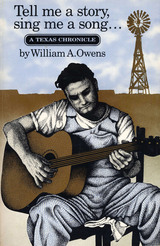
Texas, the 1930s—the years of the Great Depression. It was the Texas of great men: Dobie, Bedichek, Webb, the young Américo Paredes. And it was the Texas of May McCord and "Cocky" Thompson, the Reverend I. B. Loud, the Cajun Marcelle Comeaux, the black man they called "Grey Ghost," and all the other extraordinary "ordinary" people whom William A. Owens met in his travels.
"Up and down and sideways" across Texas, Owens traveled. His goal: to learn for himself what the diverse peoples of the state "believed in, yearned for, laughed at, fought over, as revealed in story and song." Tell me a story, sing me a song brings together both the songs he gathered—many accompanied by music—and Owens' warm reminiscences of his travels in the Texas of the Thirties and early Forties.
Hesiod describes himself as a Boeotian shepherd who heard the Muses call upon him to sing about the gods. His exact dates are unknown, but he has often been considered a younger contemporary of Homer. This volume of the new Loeb Classical Library edition offers a general introduction, a fluid translation facing an improved Greek text of Hesiod's two extant poems, and a generous selection of testimonia from a wide variety of ancient sources regarding Hesiod's life, works, and reception.
In Theogony Hesiod charts the history of the divine world, narrating the origin of the universe and the rise of the gods, from first beginnings to the triumph of Zeus, and reporting on the progeny of Zeus and of goddesses in union with mortal men. In Works and Days Hesiod shifts his attention to the world of men, delivering moral precepts and practical advice regarding agriculture, navigation, and many other matters; along the way he gives us the myths of Pandora and of the Golden, Silver, and other Races of Men.

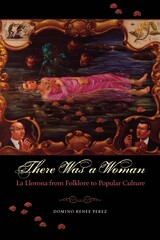
"How is it that there are so many lloronas?" A haunting figure of Mexican oral and literary traditions, La Llorona permeates the consciousness of her folk community. From a ghost who haunts the riverbank to a murderous mother condemned to wander the earth after killing her own children in an act of revenge or grief, the Weeping Woman has evolved within Chican@ imaginations across centuries, yet no truly comprehensive examination of her impact existed until now. Tracing La Llorona from ancient oral tradition to her appearance in contemporary material culture, There Was a Woman delves into the intriguing transformations of this provocative icon.
From La Llorona's roots in legend to the revisions of her story and her exaltation as a symbol of resistance, Domino Renee Perez illuminates her many permutations as seductress, hag, demon, or pitiful woman. Perez draws on more than two hundred artifacts to provide vivid representations of the ways in which these perceived identities are woven from abstract notions—such as morality or nationalism—and from concrete, often misunderstood concepts from advertising to television and literature. The result is a rich and intricate survey of a powerful figure who continues to be reconfigured.
Haunting tales from Georgia—where history lingers in every shadow.
Petrifying the Peach State, hosts of haints have beset the state of Georgia throughout its storied history. In Thirteen Georgia Ghosts and Jeffrey, best-selling folklorist Kathryn Tucker Windham, along with her trusty spectral companion Jeffrey, introduce thirteen of Georgia’s most famous ghost stories.
Windham won hearts across the nation in her regular radio broadcasts and many public appearances. The South’s most prolific raconteur of revenants, Windham, giving new meaning to the phrase “ghost-writer,” does more than tell ghost stories—she captures the true spirit of the place.
Evoking Georgia’s colonial era, “The Eternal Dinner Party” explains why the sounds of an elegant dinner soirée still waft from the grove of Savannah’s Bonaventure estate. At the onset of the Revolution, the Tattnall family abandoned Bonaventure and slipped away to England. Young Josiah Tattnall eventually returned to fight in the Revolution, restored Bonaventure, and later became Georgia’s governor. One holiday eve, when the mansion was bedecked with magnolia and holly and crowded with visitors, a fire too large to control swept through the old house. Tattnall, exhibiting his cool head and impeccable manners, ordered the massive dinner table carried out to the garden where he enjoined his holiday revelers to continue their stately meal. The melancholy strains of Tattnall’s dinner guests still echo through Bonaventure’s ancient oaks on moonlight nights.
In “The Ghost of Andersonville,” Windham takes visitors near the woebegone Confederate prisoner-of-war camp. A plaque there still recounts the tale of Swiss immigrant and Confederate captain Henry Wirz. Convicted—many thought wrongly—of war crimes, Wirz’s restless ghost still perambulates the highways of south Georgia. Writing for the Georgia Historical Commission, Miss Bessie Lewis quips in her preface to this beloved collection, “Who should be better able to tell of happenings long past than the ghosts of those who had a part in them?”
A perennial favorite, this commemorative edition restores Thirteen Georgia Ghosts and Jeffrey to the ghastly grandeur of its original 1973 edition.
A deluxe, commemorative edition of famed southern author and folklorist Kathryn Tucker Windham’s introduction to Mississippi’s thirteen most famous haunted houses and ghostly visitations.
For as long as Mississippi has existed (and then some), flocks of phantoms have haunted the mortal inhabitants of the Magnolia State. In Thirteen Mississippi Ghosts and Jeffrey, best-selling folklorist Kathryn Tucker Windham, along with her trusty spectral companion Jeffrey, introduces thirteen of the state’s most famous ghost stories.
Although stories about Mississippi’s spirits seemingly outnumber the ghosts themselves, Windham observes that “Southern ghost tales are disappearing because people no longer sit around on the porch on summer nights and tell stories. The old folks who grew up with these stories are dying now, and the stories are dying with them.”
Fortunately for us, Windham was a writer dedicated to preserving these tales in print. The veteran author spent many years tracking down these stories and chronicling the best ones. From the ghost of Mrs. McEwen still wearing her beloved cameo pin and keeping a watchful eye over Featherston Place, her home in Holly Springs, where, she swore, she would stay forever, to the ghostly visage fixed permanently on the bedroom window pane of Catherine McGehee, who searched the horizon ardently for her unrequited love to come to her as promised at Cold Spring Plantation in Pinckneyville, Windham’s stories cover the breadth and depth of Mississippi—at times more moonlight than magnolia.
An enduring classic, this commemorative edition restores Thirteen Mississippi Ghosts and Jeffrey to the ghastly grandeur of its original 1974 edition.

A deluxe, commemorative edition of famed southern author and folklorist Kathryn Tucker Windham’s introduction to the Volunteer State’s most enduring ghost stories.
In Thirteen Tennessee Ghosts and Jeffrey, beloved and best-selling folklorist Kathryn Tucker Windham presents a spine-tingling collection of Tennessee’s eeriest ghost tales. Accompanied by her faithful companion, Jeffrey, a friendly spirit who resided in her home, Windham traveled from the mysterious muds of Memphis to the haunted hollow’s of east Tennessee to collect the spookiest collection of Volunteer State revenants ever written.
In these perennial favorites, Windham captures the gentle folk humor of native Tennesseans as well as fascinating facts about the state’s rich history. In “The Dark Legend,” Windham recounts the story of explorer Merriwether Lewis, who met an untimely end on the Natchez Trace 1809 and whose spirit, it is said, still treads through Tennessee’s forests. Windham also visits central Tennessee’s Chapel Hill, where people who know the town say those who stand on the train tracks on dark, lonely nights can often see a disembodied light floating along the tracks. Neighbors say it’s the ghost of a headless flagman who returns to cavort with night-time guests.
High in Tennessee’s Appalachian mountains, Windham encounters Martin, the phantom fiddler of Johnson County. Legend has it that in life Martin’s musical skills so mesmerized the snakes of the Stone Mountains that they would slither from their dens to listen tamely to his fiddling. Intrepid visitors to the rocky tops of northeast Tennessee’s mountains say you can still hear Martin’s ghost fiddling in the hollows.
This handsome, new commemorative hardback edition returns Windham’s suspenseful classic to its original keepsake quality and includes a new afterword by the author’s children.
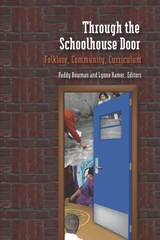
The creative traditions and expressive culture of students' families, neighborhoods, towns, religious communities, and peer groups provide opportunities to extend classrooms, sustain learning beyond school buildings, and better connect students and schools with their communities. Folklorists and educators have long worked together to expand curricula through engagement with local knowledge and informal cultural arts-folk arts in education is a familiar rubric for these programs-but the unrealized potential here, for both the folklore scholar and the teacher, is large. The value folklorists "place on the local, the vernacular, and the aesthetics of daily life does not reverberate" throughout public education, even though, in the words of Paddy Bowman and Lynne Hamer, "connecting young people to family and community members and helping them to develop self-identity are vital to civic well-being and to school success."
Through the Schoolhouse Door offers a collection of experiences from exemplary school programs and the analysis of an expert group of folklorists and educators who are dedicated not only to getting students out the door and into their communities to learn about the folk culture all around them but also to honoring the culture teachers and students bring to the classroom.
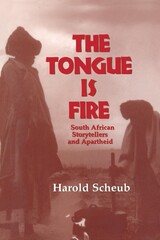
With tape-recorder and camera in hand, Scheub registered the testaments of Swati, Xhosa, Ndebele, and Zulu storytellers, farming people who lived in the remote reaches of rural South Africa. While young people fought in the streets of Soweto and South African writers made the world aware of apartheid’s evils, the rural storytellers resisted apartheid in their own way, using myth and metaphor to preserve their traditions and confront their oppressors. For more than 20 years, Scheub kept the promise he made to the storytellers to publish his translations of their stories only when freedom came to South Africa. The Tongue Is Fire presents these voices of South African oral tradition—the historians, the poets, the epic-performers, the myth-makers—documenting their enduring faith in the power of the word to sustain tradition in the face of determined efforts to distort or eliminate it. These texts are a tribute to the storytellers who have always, in periods of crisis, exercised their art to inspire their own people.
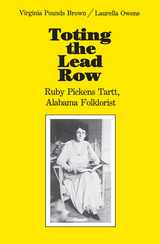
Preserving voices from the back roads—Ruby Pickens Tartt and the folklore of Alabama’s Black Belt.
“You recall the expression ‘toting the lead row’, don’t you? In chopping cotton or corn there is always a leader, one who can chop the fastest of them all. When he finishes his row, he goes back and helps the other choppers finish theirs. The one who totes the lead row takes the lead place in the next row.”—Ruby Pickens Tartt
Toting the Lead Row is a powerful biographical and cultural tribute to Ruby Pickens Tartt, a white woman from Alabama’s Black Belt who devoted her life to preserving the oral traditions of rural Black communities. Born in 1880 in Livingston, Alabama, Tartt witnessed nearly a century of social transformation and made it her mission to document the songs, stories, and life histories of her African American neighbors. She believed that the soul of Sumter County resided not in its institutions, but in its cabins, fields, and voices.
During the Great Depression, Tartt worked with the Federal Writers’ Project, collaborating with renowned folklorists such as Carl Carmer and John Lomax. Her home became a hub for cultural preservation, attracting scholars and artists who recognized the depth of her fieldwork. The book’s title refers to a Southern agricultural phrase—“toting the lead row”—symbolizing leadership and support, a role Tartt embodied in her efforts to elevate the voices of those often overlooked.
This volume is divided into two parts: the first offers a detailed biography of Tartt and her work with the WPA, while the second presents a curated selection of her collected writings, including 18 life histories and 12 slave narratives. Through these stories, Tartt preserved a vital piece of Southern history and gave voice to generations whose experiences might otherwise have been lost.
Toting the Lead Row is both a celebration of a remarkable woman and a vital contribution to the study of folklore, race, and Southern identity.
Utah State University Press’s Current Arguments in Folklore is a series of thought-provoking, short-form, digital publications made up of provocative original material and selections from foundational titles by leading thinkers in the field. Perfect for the folklore classroom as well as the professional collection, this series provides access to important introductory content as well as innovative new work intended to stimulate scholarly conversation.
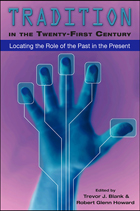
Emphasizing how tradition adapts, survives, thrives, and either mutates or remains stable in today’s modern world, the contributors pay specific attention to how traditions now resist or expedite dissemination and adoption by individuals and communities. This complex and intimate portrayal of tradition in the twenty-first century offers a comprehensive overview of the folkloristic and popular conceptualizations of tradition from the past to present and presents a thoughtful assessment and projection of how “tradition” will fare in years to come. The book will be useful to advanced undergraduate or graduate courses in folklore and will contribute significantly to the scholarly literature on tradition within the folklore discipline.
Additional Contributors: Simon Bronner, Stephen Olbrys Gencarella, Merrill Kaplan, Lynne S. McNeill, Elliott Oring, Casey R. Schmitt, and Tok Thompson

Transforming Tradition examines the phenomenon of the folk song revival, those vibrant meldings of popular and folk culture that captured public awareness in the 1950s and 1960s. We remember the folk revival as forums for performers like Joan Baez and the Kingston Trio, and as incubators for unlikely radio hits like "Tom Dooley" and "Blowin' in the Wind." But it also gave rise to a bustling and influential subculture of hootenanies, coffeehouses, and blues and bluegrass appreciation, sowing a legacy that remains a vital part of American culture.
Many of the contributors to this collection performed during the revival era. Today, their expertise in folklore, ethnomusicology, and cultural history allow them to blend insider knowledge and trained analysis to offer unique perspectives.

Scheub delves into the importance of trickster mythologies and the shifting relationships between tricksters and heroes. He examines protagonists that figure centrally in a wide range of oral narrative traditions, showing that the true hero is always to some extent a trickster as well. The trickster and hero, Scheub contends, are at the core of storytelling, and all the possibilities of life are there: we are taken apart and rebuilt, dismembered and reborn, defeated and renewed.
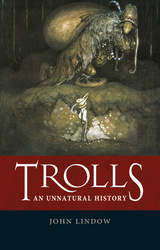
To explain why trolls still hold our interest, John Lindow goes back to their first appearances in Scandinavian folklore, where they were beings in nature living beside a preindustrial society of small-scale farming and fishing. He explores reports of actual encounters with trolls—meetings others found plausible in spite of their better judgment—and follows trolls’ natural transition from folktales to other domains in popular culture. Trolls, Lindow argues, would not continue to appeal to our imaginations today if they had not made the jump to illustrations in Nordic books and Scandinavian literature and drama. From the Moomins to Brothers Grimm and Three Billy Goats Gruff to cartoons, fantasy novels, and social media, Lindow considers the panoply of trolls that surround us and their sometimes troubling connotations in the contemporary world.
Taking readers into Norwegian music and film and even Yahoo Finance chat rooms, Trolls is a fun and fascinating book about these strange creatures.

In this innovative work, Richard and Sally Price explore the fully adult world of Saramaka "folktale-land," where animals speak, the social order is inverted, customs have been only partially worked out, and the weak and clever triumph over the strong and arrogant. Joining the Saramaka of the Suriname rain forest for two tale-telling wakes, we witness mischievous Anasi the spider matching wits with lecherous devils, the scrawny little kid rescuing his nubile sisters in distress, and the bitchy white princess being tamed by the one-sided boy. As seas dry up, books speak out loud, and elephants assume human form, we are present at a whole sequence of world-shaping happenings such as the invention of sex, the discovery of drums, and the arrival of death among humans.
Set in the more general context of tale telling by the descendants of Africans throughout the Americas and of recent scholarship in performance studies, these Saramaka tales are presented as a dramatic script. With the help of nearly forty photographs, readers become familiar not only with the characters in folktale-land, but also with the men and women who so imaginatively bring them to life. And because music complements narration in Saramaka just as it does elsewhere in Afro-America, more than fifty songs are presented here in musical notation.
Narrative, song, dance, and social interaction merge in these two evenings of multimedia entertainment, bearing witness to an Afro-American cultural tradition that remains alive and vibrant, constantly renewed but always reflecting its links with the past.
READERS
Browse our collection.
PUBLISHERS
See BiblioVault's publisher services.
STUDENT SERVICES
Files for college accessibility offices.
RECENTLY PUBLISHED


UChicago Accessibility Resources
home | accessibility | search | about | contact us
BiblioVault ® 2001 - 2025
The University of Chicago Press