
 A SCHOLARLY BOOK REPOSITORY
5 start with T start with T
Winner, John Brinckerhoff Jackson Prize, Association of American Geographers
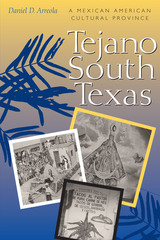
On the plains between the San Antonio River and the Rio Grande lies the heartland of what is perhaps the largest ethnic region in the United States, Tejano South Texas. In this cultural geography, Daniel Arreola charts the many ways in which Texans of Mexican ancestry have established a cultural province in this Texas-Mexico borderland that is unlike any other Mexican American region.
Arreola begins by delineating South Texas as an environmental and cultural region. He then explores who the Tejanos are, where in Mexico they originated, and how and where they settled historically in South Texas. Moving into the present, he examines many factors that make Tejano South Texas distinctive from other Mexican American regions—the physical spaces of ranchos, plazas, barrios, and colonias; the cultural life of the small towns and the cities of San Antonio and Laredo; and the foods, public celebrations, and political attitudes that characterize the region. Arreola's findings thus offer a new appreciation for the great cultural diversity that exists within the Mexican American borderlands.
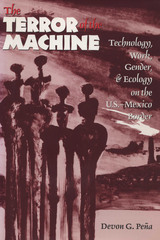
Born of thirteen years of field research, this interdisciplinary work explores the complex intersections of technology, class, gender, and ecology in the transnational milieu of Mexico's maquiladoras, foreign-owned assembly plants located along the U.S. border.
Devon Peña examines workplace and community struggles from the perspective of the women who work in the maquiladoras. He describes the workers' struggles for workplace democracy, social justice, and sustainable development. He also observes the circulation of struggle from the factory to the community, highlighting the efforts to establish worker-owned cooperatives in the border region during the 1970s and 1980s.
Female maquila workers are typically portrayed as passive, apolitical, and easily exploited. This book, however, presents an opposing view, investigating the "subaltern life of the shop floor"—the workers' informal methods of resistance to hazardous conditions, sexual harassment, and managerial tyranny. Using survey research, oral history, discourse analysis, and site ethnography, the author develops a cogent critique of labor-process theory, a critique grounded on his extensive study of actual workplace politics in the maquiladoras.
The Terror of the Machine is a trenchant analysis of the political, cultural, and environmental effects of maquila industrialization and an eloquent and persuasive call for alternatives in the direction of ecologically sustainable and culturally appropriate modes of development.
Honor-winner, 2025 Texas Institute of Letters Jean Flynn Award for Best Young Adult Book
Longlisted, REFORMA National Book Award 2024
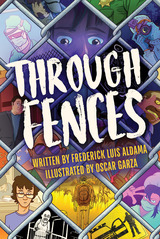
Through Fences follows the ups and downs of Latino kids and young adults in the US–Mexico borderlands: San Ysidro, Calexico, McAllen, and back and forth across the border. A young girl's journey north goes wrong, and now she is in a forbidding new place, away from her parents and brother, where she doesn't understand what the adults in green are saying even as she tries to obey their rules. Rocky, one of the few white kids in town, stands by and watches as Miguel is jumped by two of his friends. Maggie and her parents are separated at the border in a tragic accident. Alberto's son doesn't understand his Mexican father's hatred for illegals or his work as a border patrol agent. Alicia is a TikTok influencer who doesn't want to grow up to be a hospital cleaning lady like her mother, but COVID complicates things. Whatever their challenges, the kids, teens, tweens, and adults in these pages are just trying to survive their everyday lives. Vibrantly illustrated by Oscar Garza, each of these short stories brings a different perspective on the perils of living on the border while brown.
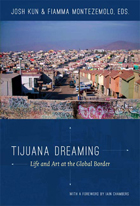
Contributors. Tito Alegría, Humberto Félix Berumen, Roberto Castillo Udiarte, Iain Chambers, Luis Humberto Crosthwaite, Teddy Cruz, Ejival, Tarek Elhaik, Guillermo Fadanelli, Néstor García Canclini, Ingrid Hernández, Jennifer Insley-Pruitt, Kathryn Kopinak, Josh Kun, Jesse Lerner, Fiamma Montezemolo, Rene Peralta, Rafa Saavedra, Lucía Sanromán, Santiago Vaquera-Vásquez, Heriberto Yépez
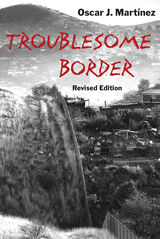
Oscar Martínez’s words may come as a surprise to those who associate the U.S. southern border with banditry, racial strife, illegal migration, drug smuggling, and official corruption—all attributed to Mexico. In Troublesome Border, now revised to reflect the dramatic changes over the last two decades, a distinguished scholar and long-time resident of the border area addresses these and other problems that have caused increasing concern to federal governments on both sides of the border.
This second edition of Troublesome Border has been updated and revised to cover dramatic developments since the book’s first publication in 1988 that have once again transformed the region in fundamental ways. Martinez includes new information on migration and drugs, including the extraordinary rise of violence traced largely to the rampant illegal drug trade; the devastating effects of U.S. Border Patrol “blockades” that have resulted in thousands of deaths; and the impact of the North American Free Trade Agreement (NAFTA).
READERS
Browse our collection.
PUBLISHERS
See BiblioVault's publisher services.
STUDENT SERVICES
Files for college accessibility offices.
RECENTLY PUBLISHED




UChicago Accessibility Resources
home | accessibility | search | about | contact us
BiblioVault ® 2001 - 2025
The University of Chicago Press