
 A SCHOLARLY BOOK REPOSITORY
9 start with T start with T
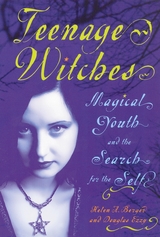
Yet, as Helen A. Berger and Douglas Ezzy show in this in-depth look into the lives of teenage Witches, the reality of their practices, beliefs, values, and motivations is very different from the sensational depictions we see in popular culture. Drawing on extensive research across three countries--the United States, England, and Australia--and interviews with young people from diverse backgrounds, what they find are highly spiritual and self-reflective young men and women attempting to make sense of a postmodern world via a religion that celebrates the earth and emphasizes self-development.
The authors trace the development of Neo-Paganism (an umbrella term used to distinguish earth-based religions from the pagan religions of ancient cultures) from its start in England during the 1940s, through its growing popularity in the decades that followed, up through its contemporary presence on the Internet. Though dispersed and disorganized, Neo-Pagan communities, virtual and real, are shown to be an important part of religious identity particularly for those seeking affirmation during the difficult years between childhood and adulthood.
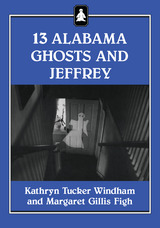
Jeffrey is the mischievous "something" that has headquarters in the Windham home in Selma, Alabama. He first made his presence known in October 1966, and since then he has continued, at irregular and infrequent intervals, to clump down the hall, slam doors, rock in a chair, frighten the family cat (now deceased, through no fault of Jeffrey), move heavy pieces of furniture, cause electronic equipment to malfunction, and hide objects. He frequently accompanies Mrs. Windham on her travels, and tales of Jeffrey's antics are widely recounted.
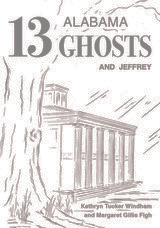
Step into Alabama’s haunted history—one story at a time.
One of the best-known and widely shared books about the South, Thirteen Alabama Ghosts and Jeffrey has haunted the imaginations of generations of delighted young readers since it was first published in 1969. Written by nationally acclaimed folklorists Kathryn Tucker Windham and Margaret Gillis Figh, the book recounts Alabama’s thirteen most ghoulish and eerie ghost legends.
Curated with loving expertise, these thirteen tales showcase both Windham and Figh’s masterful selection of stories and their artful and suspenseful writing style. In crafting stories treasured by children and adults alike, the authors tell much more than ghost tales. Embedded in each is a wealth of fact and folklore about Alabama history and the old South. “I don’t care whether you believe in ghosts,” Windham was fond of saying. “The good ghost stories do not require that you believe in ghosts.”
Millions of readers cherish memories of being chilled as teachers and parents read them unforgettable stories like “The Unquiet Ghost at Gaineswood,” about the ghost of Evelyn Carter, who fills this Demopolis antebellum mansion with midnight musical lamentations because her body wasn’t returned to her native Virginia, and “The Phantom Steamboat of the Tombigbee,” about the wreck of the steamboat Eliza Battle, which caught fire on the way to Mobile and sank one February night in 1858. People who live along the river say the flaming steamboat wreck still rises on cold nights, its cotton cargo blazing across the waves while its terrified survivors cry for help from the icy water.
The title’s “Jeffrey” refers to a friendly ghost who resides in the Windham home and who served as Windham’s unofficial collaborator in this work and the subsequent books in this popular series, all of which are now available in high-quality reproductions of their spooky originals.
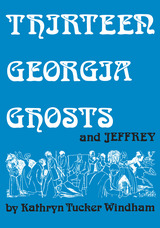
Haunting tales from Georgia—where history lingers in every shadow.
Petrifying the Peach State, hosts of haints have beset the state of Georgia throughout its storied history. In Thirteen Georgia Ghosts and Jeffrey, best-selling folklorist Kathryn Tucker Windham, along with her trusty spectral companion Jeffrey, introduce thirteen of Georgia’s most famous ghost stories.
Windham won hearts across the nation in her regular radio broadcasts and many public appearances. The South’s most prolific raconteur of revenants, Windham, giving new meaning to the phrase “ghost-writer,” does more than tell ghost stories—she captures the true spirit of the place.
Evoking Georgia’s colonial era, “The Eternal Dinner Party” explains why the sounds of an elegant dinner soirée still waft from the grove of Savannah’s Bonaventure estate. At the onset of the Revolution, the Tattnall family abandoned Bonaventure and slipped away to England. Young Josiah Tattnall eventually returned to fight in the Revolution, restored Bonaventure, and later became Georgia’s governor. One holiday eve, when the mansion was bedecked with magnolia and holly and crowded with visitors, a fire too large to control swept through the old house. Tattnall, exhibiting his cool head and impeccable manners, ordered the massive dinner table carried out to the garden where he enjoined his holiday revelers to continue their stately meal. The melancholy strains of Tattnall’s dinner guests still echo through Bonaventure’s ancient oaks on moonlight nights.
In “The Ghost of Andersonville,” Windham takes visitors near the woebegone Confederate prisoner-of-war camp. A plaque there still recounts the tale of Swiss immigrant and Confederate captain Henry Wirz. Convicted—many thought wrongly—of war crimes, Wirz’s restless ghost still perambulates the highways of south Georgia. Writing for the Georgia Historical Commission, Miss Bessie Lewis quips in her preface to this beloved collection, “Who should be better able to tell of happenings long past than the ghosts of those who had a part in them?”
A perennial favorite, this commemorative edition restores Thirteen Georgia Ghosts and Jeffrey to the ghastly grandeur of its original 1973 edition.
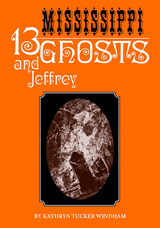
A deluxe, commemorative edition of famed southern author and folklorist Kathryn Tucker Windham’s introduction to Mississippi’s thirteen most famous haunted houses and ghostly visitations.
For as long as Mississippi has existed (and then some), flocks of phantoms have haunted the mortal inhabitants of the Magnolia State. In Thirteen Mississippi Ghosts and Jeffrey, best-selling folklorist Kathryn Tucker Windham, along with her trusty spectral companion Jeffrey, introduces thirteen of the state’s most famous ghost stories.
Although stories about Mississippi’s spirits seemingly outnumber the ghosts themselves, Windham observes that “Southern ghost tales are disappearing because people no longer sit around on the porch on summer nights and tell stories. The old folks who grew up with these stories are dying now, and the stories are dying with them.”
Fortunately for us, Windham was a writer dedicated to preserving these tales in print. The veteran author spent many years tracking down these stories and chronicling the best ones. From the ghost of Mrs. McEwen still wearing her beloved cameo pin and keeping a watchful eye over Featherston Place, her home in Holly Springs, where, she swore, she would stay forever, to the ghostly visage fixed permanently on the bedroom window pane of Catherine McGehee, who searched the horizon ardently for her unrequited love to come to her as promised at Cold Spring Plantation in Pinckneyville, Windham’s stories cover the breadth and depth of Mississippi—at times more moonlight than magnolia.
An enduring classic, this commemorative edition restores Thirteen Mississippi Ghosts and Jeffrey to the ghastly grandeur of its original 1974 edition.

A deluxe, commemorative edition of famed southern author and folklorist Kathryn Tucker Windham’s introduction to the Volunteer State’s most enduring ghost stories.
In Thirteen Tennessee Ghosts and Jeffrey, beloved and best-selling folklorist Kathryn Tucker Windham presents a spine-tingling collection of Tennessee’s eeriest ghost tales. Accompanied by her faithful companion, Jeffrey, a friendly spirit who resided in her home, Windham traveled from the mysterious muds of Memphis to the haunted hollow’s of east Tennessee to collect the spookiest collection of Volunteer State revenants ever written.
In these perennial favorites, Windham captures the gentle folk humor of native Tennesseans as well as fascinating facts about the state’s rich history. In “The Dark Legend,” Windham recounts the story of explorer Merriwether Lewis, who met an untimely end on the Natchez Trace 1809 and whose spirit, it is said, still treads through Tennessee’s forests. Windham also visits central Tennessee’s Chapel Hill, where people who know the town say those who stand on the train tracks on dark, lonely nights can often see a disembodied light floating along the tracks. Neighbors say it’s the ghost of a headless flagman who returns to cavort with night-time guests.
High in Tennessee’s Appalachian mountains, Windham encounters Martin, the phantom fiddler of Johnson County. Legend has it that in life Martin’s musical skills so mesmerized the snakes of the Stone Mountains that they would slither from their dens to listen tamely to his fiddling. Intrepid visitors to the rocky tops of northeast Tennessee’s mountains say you can still hear Martin’s ghost fiddling in the hollows.
This handsome, new commemorative hardback edition returns Windham’s suspenseful classic to its original keepsake quality and includes a new afterword by the author’s children.
"A brilliant mixture of story, philosophy, humor and wisdom, this book reminds us that---if we are open to story, dreams, imagination, and myth---we can open doors within our soul."
—Jay O’Callahan, author, storyteller, and NPR commentator
A lifetime collection of stories, wise words, assembled musings and quotations about overcoming hurdles, elusive enlightenment, personal evolution, persistence in the face of discouragement, this pastiche is designed to encourage the downhearted, lift up the strivers, and add wings to the heels of spiritual seekers.

From the experience of dying to awakening to tunnels, bright lights, unfamiliar realms, life reviews, and different levels of consciousness, Leon Rhodes takes the reader on a great adventure into the unknown. An officer in the International Association for Near-Death Studies (IANDS), Rhodes recounts the stories of near-death experiences (NDEs) that people have shared with him over the years. Chronicled as a source of inspiration are the profound changes that occurred in their lives after the discoveries they made.
In addition, the fascinating parallels between NDEs and the spiritual world described more than two hundred years ago by Emanuel Swedenborg provide many insights into the transition from this life to the next world. Rhodes’s unique Swedenborgian perspective broadens the discussion over the significance of the near-death phenomenon.
READERS
Browse our collection.
PUBLISHERS
See BiblioVault's publisher services.
STUDENT SERVICES
Files for college accessibility offices.
RECENTLY PUBLISHED



UChicago Accessibility Resources
home | accessibility | search | about | contact us
BiblioVault ® 2001 - 2026
The University of Chicago Press