
 A SCHOLARLY BOOK REPOSITORY
6 start with T start with T
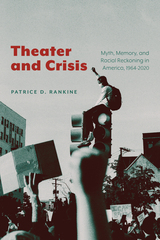
Rather than approaching the problem of racial reckoning through history, where periodization and progress are dominant narratives, Theater and Crisis argues that myth and memory allow for better theorization about recurring events from the past, their haunting, and what these apparent ghosts ask of us. Building on the study of myth as active, processual storytelling, Rankine acknowledges that it grounds and orients groups toward significant events. Theater and Crisis aligns narratives about Emmett Till, Trayvon Martin, and George Floyd, among others, with ancient, mythic figures such as Christ, Dionysus, Oedipus, and Moses. As living and verbal visitations, these stories performed on stage encode the past through their epiphanies in the present, urging audiences toward shared meaning.
Rankine traces the cyclical hauntings of race through the refiguring of mythic stories across the past 75 years in the plays of James Baldwin, Ntozake Shange, Antoinette Nwandu, and many more, and in response to flashpoints in US racial history, such as the 1955 lynching of Emmett Till, the upheavals of the 1960s and 1970s, the wars on drugs and crime, and the continued violence against and disenfranchisement of Black people into the twenty-first century. Theater and Crisis explores the appearance of myth on the American stage and showcases the ongoing response by the theatrical establishment to transform the stage into a space for racial reckoning. This timely book is essential reading for scholars of theater studies, classics, and American studies.
For two hundred years the subject of myth—its origin, function, and significance—has been addressed again and again, first by theologians and philosophers and then by anthropologists, sociologists, and psychologists. From the outset the topic has sparked intense debate, with differing opinions expressed on everything from issues of epistemology and methodology to the meaning of “myth” itself. In this collection of essays, Robert A. Segal surveys the contours of this ongoing discussion, comparing and evaluating the leading theories of myth.
Among the theorists discussed are Edward Tylor, William Robertson Smith, James Frazer, Jane Harrison, S. H. Hooke, Mircea Eliade, Rudolf Bultmann, Hans Jonas, Sigmund Freud, C. G. Jung, Joseph Campbell, Claude Lévi-Strauss, and Hans Blumenberg. Author and editor of numerous books and articles in the fields of theories of myth and theories of religion, Segal has developed a reputation as a preeminent proponent of a social-scientific approach to the study of both. The essays in this book represent some of the best of his writing on myth over the past ten years.
He begins by showing that mythos yielded to logos not as part of a (mythic) "Greek miracle," but as part of struggles over political, linguistic, and epistemological authority occasioned by expanded use of writing and the practice of Athenian democracy. Lincoln then turns his attention to the period when myth was recuperated as a privileged type of narrative, a process he locates in the political and cultural ferment of the eighteenth and nineteenth centuries. Here, he connects renewed enthusiasm for myth to the nexus of Romanticism, nationalism, and Aryan triumphalism, particularly the quest for a language and set of stories on which nation-states could be founded.
In the final section of this wide-ranging book, Lincoln advocates a fresh approach to the study of myth, providing varied case studies to support his view of myth—and scholarship on myth—as ideology in narrative form.
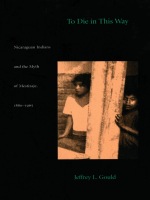
Through interviews with indigenous peoples and records of the elite discourse that suppressed the expression of cultural differences and rationalized the destruction of Indian communities, Gould tells a story of cultural loss. Land expropriation and coerced labor led to cultural alienation that shamed the indigenous population into shedding their language, religion, and dress. Beginning with the 1870s, Gould historicizes the forces that prompted a collective movement away from a strong identification with indigenous cultural heritage to an “acceptance” of a national mixed-race identity.
By recovering a significant part of Nicaraguan history that has been excised from the national memory, To Die in This Way critiques the enterprise of third world nation-building and thus marks an important step in the study of Latin American culture and history that will also interest anthropologists and students of social and cultural historians.
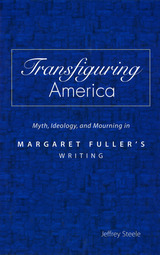
Transfiguring America is the product of more than ten years of research and numerous published articles on Margaret Fuller, arguably America's first feminist theorist and one of the most important woman writers in the nineteenth century. Focusing on Fuller's development of a powerful language that paired cultural critique with mythmaking, Steele shows why her writing had such a vital impact on the woman's rights movement and modern conceptions of gender.
This groundbreaking study pays special attention to the ways in which Fuller's feminist consciousness and social theory emerged out of her mourning for herself and others, her dialogue with Emersonian Transcendentalism, and her eclectic reading in occult and mythical sources. Transfiguring America is the first book to provide detailed analyses of all of Fuller's major texts, including her mystical Dial essays, correspondence with Emerson, Summer on the Lakes, 1844 poetry, Woman in the Nineteenth Century, and New York Tribune essays written both in New York and Europe.
Starting from her own profound sense of loss as a marginalized woman, Fuller eventually recognized the ways in which the foundational myths of American society, buttressed by conservative religious ideologies, replicated dysfunctional images of manhood and womanhood. With Woman in the Nineteenth Century, after exploring the roots of oppression in her essays and poetry, Fuller advanced the cause of woman's rights by conceptualizing a more fluid and equitable model of gender founded upon the mythical reconfiguration of human potential. But as her horizons expanded, Fuller demanded not only political equality for women, but also emotional, intellectual, and spiritual freedom for all victims of social oppression.
By the end of her career, Steele shows, Fuller had blended personal experience and cultural critique into the imaginative reconstruction of American society. Beginning with a fervent belief in personal reform, she ended her career with the apocalyptic conviction that the dominant myths both of selfhood and national identity must be transfigured. Out of the ashes of personal turmoil and political revolution, she looked for the phoenix of a revitalized society founded upon the ideal of political justice.
READERS
Browse our collection.
PUBLISHERS
See BiblioVault's publisher services.
STUDENT SERVICES
Files for college accessibility offices.
RECENTLY PUBLISHED






UChicago Accessibility Resources
home | accessibility | search | about | contact us
BiblioVault ® 2001 - 2026
The University of Chicago Press