logo for The Institution of Engineering and Technology
Tactical Missiles - From Concepts to Components
Control and guidance, Volume 2
P.K. Sinha
The Institution of Engineering and Technology, 2026
Tactical missiles target military installations or key civilian infrastructure in the vicinity of the front line. With the growth in the deployment of remotely guided UAVs, launch locations of guided missiles are getting closer to their targets. The tactical missiles covered in these 3 volumes are expected to play critical roles in the new generation of localised battlefields.
[more]

logo for The Institution of Engineering and Technology
Tactical Missiles - From Concepts to Components
Propulsion and aerodynamics, Volume 1
P.K. Sinha
The Institution of Engineering and Technology, 2026
Tactical missiles target military installations or key civilian infrastructure in the vicinity of the front line. With the growth in the deployment of remotely guided UAVs, launch locations of guided missiles are getting closer to their targets. The tactical missiles covered in these 3 volumes are expected to play critical roles in the new generation of localised battlefields.
[more]

logo for The Institution of Engineering and Technology
Tactical Missiles - From Concepts to Components
Warheads, Volume 3
P.K. Sinha
The Institution of Engineering and Technology, 2026
Tactical missiles target military installations or key civilian infrastructure in the vicinity of the front line. With the growth in the deployment of remotely guided UAVs, launch locations of guided missiles are getting closer to their targets. The tactical missiles covered in these 3 volumes are expected to play critical roles in the new generation of localised battlefields.
[more]

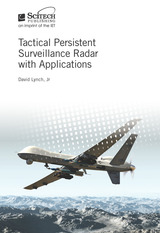
front cover of Tactical Persistent Surveillance Radar with Applications
Tactical Persistent Surveillance Radar with Applications
David Lynch Jr.
The Institution of Engineering and Technology, 2018
Tactical Persistent Surveillance Radar with Applications introduces technologists to the essential elements of persistent surveillance of tactical targets from both a hardware and software point of view, using simple Mathcad, Excel and Basic examples with real data. It is based on the type of surveillance done by drones like Scan Eagle, Predator, Reaper, Global Hawk, and manned aircraft like U-2, ASTOR, and JSTARS as well as spacecraft. The general topic is cellphone and datalink intercept, ground moving target radar, synthetic aperture radar, navigation, tracking, electronic scanning and cueing electro-optical sensors for activity based surveillance.
[more]


front cover of Target Detection by Marine Radar
Target Detection by Marine Radar
John N. Briggs
The Institution of Engineering and Technology, 2004
Radar is a legal necessity for the safe navigation of merchant ships, and within vessel traffic services is indispensable to the operation of major ports and harbours. Target Detection by Marine Radar concentrates solely on civil marine operations and explains how marine surveillance radars detect their targets. The book is fully illustrated and contains worked examples to help the reader understand the principles underlying radar operation and to quantify the importance of factors such as the technical features of specific equipment, the weather, target reflection properties, and the ability of the operator. The precision with which targets are positioned on the radar screen and with which their progress is tracked or predicted depends on how definitely they have been detected, therefore a whole chapter has been devoted to the issue of accuracy. The various international regulations governing marine radar are examined, a brief historical background is given to modern day practice and the book doses with a discussion of the ways in which marine radar may develop to meet future challenges.
[more]

logo for The Institution of Engineering and Technology
Technical History of the Beginnings of Radar
S.S. Swords
The Institution of Engineering and Technology, 1986
Radar has become an essential factor in air and sea travel, has affected all areas of military science and, most important of all perhaps, has considerably influenced the progress of electronic engineering.
[more]

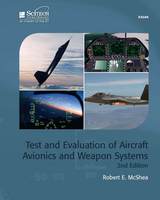
front cover of Test and Evaluation of Aircraft Avionics and Weapon Systems
Test and Evaluation of Aircraft Avionics and Weapon Systems
Robert E. McShea
The Institution of Engineering and Technology, 2014
Technology is ever-changing in the field of aircraft avionics and new systems may require a different approach to testing. The Federal Aviation Administration (FAA) revises its regulatory material as a result of system updates and therefore requirements for airworthiness testing also need to be updated.
[more]

front cover of Tracking Filter Engineering
Tracking Filter Engineering
The Gauss-Newton and polynomial filters
Norman Morrison
The Institution of Engineering and Technology, 2013
This book provides a complete discussion of the Gauss-Newton filters, including all necessary theoretical background. This book also covers the expanding and fading memory polynomial filters based on the Legendre and Laguerre orthogonal polynomials, and how these can serve as pre-filters for Gauss-Newton. Of particular interest is a new approach to the tracking of manoeuvring targets that the Gauss-Newton filters make possible. Fourteen carefully constructed computer programs demonstrate the use and power of Gauss-Newton and the polynomial filters. Two of these also include Kalman and Swerling filters in addition to Gauss-Newton, all three of which process identical data that have been pre-filtered by polynomial filters. These two programs demonstrate Kalman and Swerling instability, to which Gauss-Newton is immune, and also the fact that if an attempt is made to forestall Kalman/Swerling instability by the use of a Q matrix, then they cease to be Cramér-Rao consistent and become less accurate than the always Cramér-Rao consistent Gauss-Newton filters.
[more]


Send via email Share on Facebook Share on Twitter