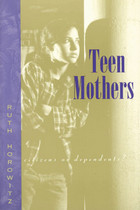
front cover of Teen Mothers--Citizens or Dependents?
Teen Mothers--Citizens or Dependents?
Ruth Horowitz
University of Chicago Press, 1994
In a book that speaks clearly and forcefully to the heart of the welfare debate in the United States, Ruth Horowitz examines one of the most critical questions of welfare policy: how can a United States government program help teen mothers—one of the most needful groups of all welfare recipients—move from welfare dependency to employment, independence, and responsible citizenship?

"Rich vignettes reveal the complexities of teenage mothers' lives, particularly the disjuncture between classroom and street identities, 'inside' and 'outside.' . . . Original and illuminating as well as timely."—Sharon Thompson, Women's Review of Books

"Horowitz offers insights that should be considered in the debate over welfare reform. . . . Teen Mothers . . . places Horowitz's results in the context of major theories about the role of welfare in the U.S. and offers a microlevel critique of the implicit assumptions and probable consequences of each theory's approach to welfare reform."—Booklist

[more]

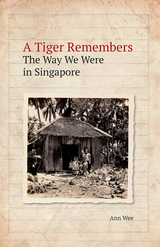
front cover of A Tiger Remembers
A Tiger Remembers
The Way We Were in Singapore
Ann Wee
National University of Singapore Press, 2017
Born in the Year of the Fire Tiger, Ann Wee moved to Singapore in 1950 to marry into a Singaporean Chinese family, entering into a new world of cultural expectations and domestic rituals. She went on to become a pioneer in Singapore’s fledging social welfare department and is often described as the founding mother of social work in Singapore. In A Tiger Remembers, she draws on her decades of experience getting to know the many shapes and forms of the Singapore family and witnessing how they transformed since the ’50s.
 
Wee’s talent is for remembering and paying homage to the things history books often deem insignificant—things that can contain some of the most illuminating details about the day to day inner workings of families from many backgrounds, such as terms of endearment; the emotional nuance in social relations; questions of hygiene; the stories of convicts; tales of ghost wives and changeling babies; anecdotes from rural clan settlements and migrant dormitories; and the migration of families from squatter settlements into public housing. Affectionately observed and wittily narrated, with a deep appreciation of how far Singapore has come, this book brings to life generations of social change through a focus on the institution of the family.
 
[more]


Send via email Share on Facebook Share on Twitter