
 A SCHOLARLY BOOK REPOSITORY
23 start with U start with U

A PDF version of this book is available for free in open access via the OAPEN Library platform, www.oapen.org It has been made available under a Creative Commons Attribution 4.0 International Public License and is part of Knowledge Unlatched.
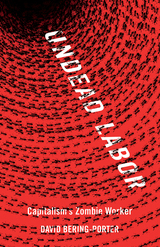
How the zombie represents capitalism’s fantasy of limitless labor
Much more than just an enduring figure of horror entertainment, the zombie is a uniquely modern symbol representing capitalism’s most brutal demands on human life. Examining the push to extract surplus value from human bodies in ways that exceed their natural limits, David Bering-Porter shows how this notion of the undead is both integral to and symptomatic of capitalism’s endless cycle of growth and consumption.
Bering-Porter demonstrates how the zombie has long been deeply intertwined with issues of race and exploitation, from its origins in the slave plantations of colonial Haiti to its traces in the continuing evolution of artificial intelligence systems, serving as capitalism’s ideal worker: one that never rests, never stops, and never dies. Featuring close readings of Marx alongside films such as I Walked with a Zombie, The Blob, and Night of the Living Dead, the book traces the concept of undead labor as it manifests across various historical epochs, providing insight into the manifold ways that capitalism has sought to transform living beings into instruments of limitless production.
As he weaves together critical race studies with an analysis of popular culture and media, Bering-Porter interrogates racialized capitalism and its fantasy of labor beyond all limits. By highlighting how the zombie is borne of the same ideology that has given rise to contemporary burnout culture and environmental collapse, Undead Labor uncovers the capitalist system’s relentless death drive with the hope that it finally may be put to rest.
Retail e-book files for this title are screen-reader friendly.

Western democracy is currently under attack by a resurgent Russia, weaponizing new technologies and social media. How to respond? During the Cold War, the West fought off similar Soviet propaganda assaults with shortwave radio broadcasts. Founded in 1949, the US-funded Radio Free Europe/Radio Liberty broadcast uncensored information to the Soviet republics in their own languages. About one-third of Soviet urban adults listened to Western radio. The broadcasts played a key role in ending the Cold War and eroding the communist empire.
R. Eugene Parta was for many years the director of Soviet Area Audience Research at RFE/RL, charged among others with gathering listener feedback. In this book he relates a remarkable Cold War operation to assess the impact of Western radio broadcasts on Soviet listeners by using a novel survey research approach. Given the impossibility of interviewing Soviet citizens in their own country, it pioneered audacious interview methods in order to fly under the radar and talk to Soviets traveling abroad, ultimately creating a database of 51,000 interviews which offered unparalleled insights into the media habits and mindset of the Soviet public. By recounting how the “impossible” mission was carried out, Under the Radar also shows how the lessons of the past can help counter the threat from a once and current adversary.


Webtoons—a form of comic that are typically published digitally in chapter form—are the latest manifestation of the Korean Wave of popular culture that has increasingly caught on across the globe, especially among youth. Originally distributed via the Internet, they are now increasingly distributed through smartphones to ravenous readers in Korea and around the world.
The rise of webtoons has fundamentally altered the Korean cultural market due to the growth of transmedia storytelling—the flow of a story from the original text to various other media platforms, such as films, television, and digital games—and the convergence of cultural content and digital technologies. Fans can enjoy this content anytime and anywhere, either purely as webtoons or as webtoon-based big-screen culture.
Understanding Korean Webtoon Culture analyzes webtoons through the lens of emerging digital cultures and discusses relevant cultural perspectives by combining two different, yet connected approaches, political economy and cultural studies. The book demonstrates the dynamics between structural forces and textual engagement in global media flows, and it illuminates snack-culture and binge-reading as two new forms of digital culture that webtoon platforms capitalize on to capture people’s shifting media consumption.

Webtoons—a form of comic that are typically published digitally in chapter form—are the latest manifestation of the Korean Wave of popular culture that has increasingly caught on across the globe, especially among youth. Originally distributed via the Internet, they are now increasingly distributed through smartphones to ravenous readers in Korea and around the world.
The rise of webtoons has fundamentally altered the Korean cultural market due to the growth of transmedia storytelling—the flow of a story from the original text to various other media platforms, such as films, television, and digital games—and the convergence of cultural content and digital technologies. Fans can enjoy this content anytime and anywhere, either purely as webtoons or as webtoon-based big-screen culture.
Understanding Korean Webtoon Culture analyzes webtoons through the lens of emerging digital cultures and discusses relevant cultural perspectives by combining two different, yet connected approaches, political economy and cultural studies. The book demonstrates the dynamics between structural forces and textual engagement in global media flows, and it illuminates snack-culture and binge-reading as two new forms of digital culture that webtoon platforms capitalize on to capture people’s shifting media consumption.
What political power do social media videos have? In what ways do they exert influence, shape public discourse, and change political life? How can participants in this field assert themselves against commercial interests, anti-democratic agitation, and authoritarian propaganda? These questions are being debated intensely as social media increasingly dominates global information flows, and videos increasingly dominate social media.
The forms, practices, and opportunities of activism depend on a media environment that is changing rapidly and profoundly in terms of its technological basis, ownership, legal regulations, and governmental control. This makes the act of understanding video activism even more relevant at a time when the internet is undergoing fundamental disruptions.

A powerful exploration of the importance and social complexity of the indie gaming sensation
On the surface, the 2015 game Undertale didn’t seem like much, supported by fan funding and with minimalist retro graphics. But despite its pixelated monsters and dated role-playing mechanics, Undertale invited fans and players to rethink their very relationship with gaming and game characters. Players encountered an extraordinary range of possible play experiences, with paths through the game’s unassuming world leading to both empathy and extreme violence, offering room for reflection and growth. Players could befriend (sometimes queer) monsters or kill them, for instance, appealing to each monster’s unique personality to negotiate survival and find community.
Contextualizing this game’s success in the wake of the Gamergate online harassment campaign and meditating on questions of violence and authenticity, writer and game scholar Anastasia Salter offers a profound exploration of this game sensation and a personal story of hope at a time when Salter was otherwise “done” with games. Undertale’s unique structure helped make it synonymous with “indie” games, built outside of the studio as a passion project and inspiring similar passion among its many fans even a decade later. But Undertale’s story also speaks to an auteur dream: What game developer Toby Fox and his collaborators accomplished on a small budget, with relatively simple tools, has left people replaying, arguing, and creating in its wake.
As we enter a cultural moment where intense interest is shifting towards flashy creativity, powered by generative artificial intelligence, Undertale reminds fans and newcomers of the power of thoughtful and intentional human design.
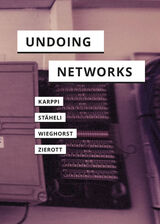
Exploring and conceptualizing practices, technologies, and politics of disconnecting
How do we think beyond the dominant images and imaginaries of connectivity? Undoing Networks enables a different connectivity: “digital detox” is a luxury for stressed urbanites wishing to lead a mindful life. Self-help books advocate “digital minimalism” to recover authentic experiences of the offline. Artists envision a world without the internet. Activists mobilize against the expansion of the 5G network.
If connectivity brought us virtual communities, information superhighways, and participatory culture, disconnection comes with privacy tools, Faraday shields, and figures of the shy. This book explores nonusage and the “right to disconnect” from work and from the excessive demands of digital capitalism.
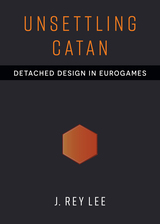
Although peaceful revolutions are usually the best kind, it’s worth questioning how these games cultivate peaceful feelings. Today, peaceful-feeling eurogames often settle into detached design—a mindset of making conflict feel peaceful by dampening conflicted feelings. Unsettling Catan questions how peaceful-feeling eurogames can make implicitly imperialist themes palatable by cultivating a detached mindset that imagines power as peaceful, neutral, and abstract. To ask the hard questions that eurogames often look away from, the book walks through each aspect of Catan’s gameplay (placing hexes, rolling the dice, robbing and trading, collecting resources, building and scoring) to explore how simple design decisions can play out, or play with, cultural ideas and ideals. As the first entry in the Tabletop Games book series, Unsettling Catan introduces key concepts for thinking about board games as a medium and offers accessible game analyses and personal reflections to help players, creators, and scholars reimagine what board games can be and become.
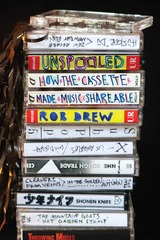

Histories of the book often move straight from the codex to the digital screen. Left out of that familiar account are nearly 150 years of audio recordings. Recounting the fascinating history of audio-recorded literature, Matthew Rubery traces the path of innovation from Edison’s recitation of “Mary Had a Little Lamb” for his tinfoil phonograph in 1877, to the first novel-length talking books made for blinded World War I veterans, to today’s billion-dollar audiobook industry.
The Untold Story of the Talking Book focuses on the social impact of audiobooks, not just the technological history, in telling a story of surprising and impassioned conflicts: from controversies over which books the Library of Congress selected to become talking books—yes to Kipling, no to Flaubert—to debates about what defines a reader. Delving into the vexed relationship between spoken and printed texts, Rubery argues that storytelling can be just as engaging with the ears as with the eyes, and that audiobooks deserve to be taken seriously. They are not mere derivatives of printed books but their own form of entertainment.
We have come a long way from the era of sound recorded on wax cylinders, when people imagined one day hearing entire novels on mini-phonographs tucked inside their hats. Rubery tells the untold story of this incredible evolution and, in doing so, breaks from convention by treating audiobooks as a distinctively modern art form that has profoundly influenced the way we read.

With over 50 original essays by leading scholars, artists, critics, and curators, this is the first book to trace the “unwatchable” across our contemporary media environment, in which viewers encounter difficult content on various screens and platforms. Appealing to a broad academic and general readership, the volume offers multidisciplinary approaches to the vast array of troubling images that circulate in global visual culture.

The agenda for transition after the demise of communism in the Western Balkans made the conversion of state radio and television into public service broadcasters a priority, converting mouthpieces of the regime into public forums in which various interests and standpoints could be shared and deliberated. There is general agreement that this endeavor has not been a success. Formally, the countries adopted the legal and institutional requirements of public service media according to European standards. The ruling political elites, however, retained their control over the public media by various means.
Can this trend be reversed? Instead of being marginalized or totally manipulated, can public service media become vehicles of genuine democratization?
A comparison of public service media in seven countries (Albania, Bosnia & Herzegovina, Croatia, Kosovo, Montenegro, North Macedonia, and Serbia) addresses these important questions.
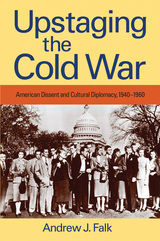
Traditional interpretations of the 1950s have emphasized how American anti-communists deployed censorship and the blacklist to silence dissent, particularly in the realm of foreign policy. Yet those efforts at repression did not always succeed. Throughout the early years of the Cold War, a significant number of writers and performers continued to express controversial views about international relations in Hollywood films, through the new medium of television, on the Broadway stage, and from behind the scenes.
By promoting superpower cooperation, decolonization, nuclear disarmament, and other taboo causes, dissident artists such as Lillian Hellman, Arthur Miller, Rod Serling, Dalton Trumbo, Reginald Rose, and Paddy Chayefsky managed both to stretch the boundaries of Cold War ideology and to undermine some of its basic assumptions. Working at times under assumed names and in some cases outside the United States, they took on the role of informal diplomats who competed with Washington in representing America to the world.
Ironically, the dissidents' international appeal eventually persuaded the U.S. foreign policy establishment that their unconventional views could be an asset in the Cold War contest for “hearts and minds,” and their artistic work an effective means to sell American values and culture abroad. By the end of the 1950s, the Eisenhower administration not only appropriated the work of these talented artists but enlisted some of them to serve as official voices of Cold War cultural diplomacy.

READERS
Browse our collection.
PUBLISHERS
See BiblioVault's publisher services.
STUDENT SERVICES
Files for college accessibility offices.
RECENTLY PUBLISHED





UChicago Accessibility Resources
home | accessibility | search | about | contact us
BiblioVault ® 2001 - 2026
The University of Chicago Press