
 A SCHOLARLY BOOK REPOSITORY
164 books about Social Theory and 3
start with U
164 books about Social Theory and 3
164 books about Social Theory
3 start with U start with U
3 start with U start with U
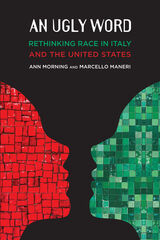
An Ugly Word
Rethinking Race in Italy and the United States
Ann Morning
Russell Sage Foundation, 2022
Scholars and politicians often assume a significant gap between the ways that Americans and Europeans think about race. According to this template, in the U.S. race is associated with physical characteristics, while in Western Europe race has disappeared, and discrimination is based on insurmountable cultural differences. However, little research has addressed how average Americans and Europeans actually think and talk about race. In An Ugly Word, sociologists Ann Morning and Marcello Maneri examine American and Italian understandings of group difference in order to determine if and how they may differ.
Morning and Maneri interviewed over 150 people across the two countries about differences among what they refer to as “descent-based groups.” Using this concept allowed them to sidestep the language of “race” and “ethnicity,” which can be unnecessarily narrow, poorly defined, or even offensive to some. Drawing on these interviews, the authors find that while ways of speaking about group difference vary considerably across the Atlantic, underlying beliefs about it do not. The similarity in American and Italian understandings of difference was particularly evident when discussing sports. Both groups relied heavily on traditional stereotypes of Black physicality to explain Black athletes’ overrepresentation in sports like U.S. football and their underrepresentation in sports like swimming – contradicting the claims that a biological notion of race is a distinctly American phenomenon.
While American and Italian concepts of difference may overlap extensively, they are not identical. Interviews in Italy were more likely to reveal beliefs about groups’ innate, unchangeable temperaments, such as friendly Senegalese and dishonest Roma. And where physical difference was seen by Italians as superficial and unimportant, cultural difference was perceived as deeply meaningful and consequential. In contrast, U.S. interviewees saw cultural difference as supremely malleable—and often ascribed the same fluidity to racial identity, which they believed stemmed from culture as well as biology. In light of their findings, Morning and Maneri propose a new approach to understanding cross-cultural beliefs about descent-based difference that includes identifying the traits people believe differentiate groups, how they believe those traits are acquired, and whether they believe these traits can change.
An Ugly Word is an illuminating, cross-national examination of the ways in which people around the world make sense of race and difference.
Morning and Maneri interviewed over 150 people across the two countries about differences among what they refer to as “descent-based groups.” Using this concept allowed them to sidestep the language of “race” and “ethnicity,” which can be unnecessarily narrow, poorly defined, or even offensive to some. Drawing on these interviews, the authors find that while ways of speaking about group difference vary considerably across the Atlantic, underlying beliefs about it do not. The similarity in American and Italian understandings of difference was particularly evident when discussing sports. Both groups relied heavily on traditional stereotypes of Black physicality to explain Black athletes’ overrepresentation in sports like U.S. football and their underrepresentation in sports like swimming – contradicting the claims that a biological notion of race is a distinctly American phenomenon.
While American and Italian concepts of difference may overlap extensively, they are not identical. Interviews in Italy were more likely to reveal beliefs about groups’ innate, unchangeable temperaments, such as friendly Senegalese and dishonest Roma. And where physical difference was seen by Italians as superficial and unimportant, cultural difference was perceived as deeply meaningful and consequential. In contrast, U.S. interviewees saw cultural difference as supremely malleable—and often ascribed the same fluidity to racial identity, which they believed stemmed from culture as well as biology. In light of their findings, Morning and Maneri propose a new approach to understanding cross-cultural beliefs about descent-based difference that includes identifying the traits people believe differentiate groups, how they believe those traits are acquired, and whether they believe these traits can change.
An Ugly Word is an illuminating, cross-national examination of the ways in which people around the world make sense of race and difference.
[more]
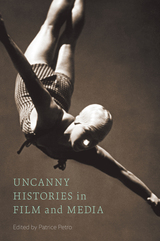
Uncanny Histories in Film and Media
Patrice Petro
Rutgers University Press, 2022
Uncanny Histories in Film and Media brings together a stellar lineup of established and emergent scholars who explore the uncanny twists and turns that are often occluded in larger accounts of film and media. Prompted by fresh archival research and new conceptual approaches, the works included here probe the uncanny as a mode of historical analysis that reveals surprising connections and unsettling continuities. The uncanny stands for what often eludes us, for what remains unfamiliar or mysterious or strange. Whether writing about film movements, individual works, or the legacies of major or forgotten critics and theorists, the contributors remind us that at the heart of the uncanny, and indeed the writing of history, is a troubling of definitions, a challenge to our inherited narratives, and a disturbance of what was once familiar in the uncanny histories of our field.
[more]
Unruly Practices
Power, Discorse, and Gender in Contemporary Social Theory
Fraser, Nancy
University of Minnesota Press, 1989
“A wonderfully rich and insightful collection of well-integrated essays on important current thinkers and social movements.” -Martin Jay
University of California, Berkeley
Unruly Practices brings together a series of widely discussed essays in feminism and social theory. Read together, they constitute a sustained critical encounter with leading European and American approaches to social theory. In addition, Nancy Fraser develops a new and original socialist-feminist critical theory that overcomes many of the limitations of current alternatives. First, in a series of critical essays, she deploys philosophical and literary techniques to sort the wheat from the chaff in the work of Michel Foucault, the French deconstructionists, Richard Rorty, and Jurgen Habermas. Then, in a group of constructive essays, she incorporates their respective strengths in a new critical theory of late-capitalist political culture.
Fraser breaks new ground methodologically by integrating the previously divergent insights of poststructuralism, critical social theory, feminist theory, and pragmatism. Thematically, she deals with varied forms of dominance and subordination in modern, industrial, late-capitalist societies - especially gender dominance and subordination; state-bureaucratic forms of organization; the institutional politics of knowledge and expertise; and the structure and function of social-welfare programs. In the last section of the book, these themes are integrated in an original theory of “the politics of need interpretation.” This concept becomes the linchpin of he socialist-feminist critical theory proposed in the last chapter.
University of California, Berkeley
Unruly Practices brings together a series of widely discussed essays in feminism and social theory. Read together, they constitute a sustained critical encounter with leading European and American approaches to social theory. In addition, Nancy Fraser develops a new and original socialist-feminist critical theory that overcomes many of the limitations of current alternatives. First, in a series of critical essays, she deploys philosophical and literary techniques to sort the wheat from the chaff in the work of Michel Foucault, the French deconstructionists, Richard Rorty, and Jurgen Habermas. Then, in a group of constructive essays, she incorporates their respective strengths in a new critical theory of late-capitalist political culture.
Fraser breaks new ground methodologically by integrating the previously divergent insights of poststructuralism, critical social theory, feminist theory, and pragmatism. Thematically, she deals with varied forms of dominance and subordination in modern, industrial, late-capitalist societies - especially gender dominance and subordination; state-bureaucratic forms of organization; the institutional politics of knowledge and expertise; and the structure and function of social-welfare programs. In the last section of the book, these themes are integrated in an original theory of “the politics of need interpretation.” This concept becomes the linchpin of he socialist-feminist critical theory proposed in the last chapter.
[more]
READERS
Browse our collection.
PUBLISHERS
See BiblioVault's publisher services.
STUDENT SERVICES
Files for college accessibility offices.
RECENTLY PUBLISHED





UChicago Accessibility Resources
home | accessibility | search | about | contact us
BiblioVault ® 2001 - 2026
The University of Chicago Press