
 A SCHOLARLY BOOK REPOSITORY
16 start with V start with V
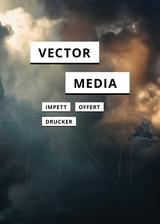
Dispelling the notion of “generative” AI
Neural networks are designed to dissolve all media into the vector space—a universal space of commensurability. In Vector Media, Leonardo Impett and Fabian Offert parse theories of automatic vision to trace contemporary artificial intelligence’s technical ideology of epistemic reduction, where sensory data is turned into abstracted forms of meaning. Under this regime, bias is not just a question of what is represented but of the logic of representation itself. Drawing on Phil Agre’s notion of a critical technical practice, Vector Media reveals how artificial intelligence systems embed new epistemologies of media beneath the surface of their architectures.
Analyzing the techniques underpinning large multimodal artificial intelligence models like DALL-E, Midjourney, Flux, or Stable Diffusion, Impett and Offert offer the concept of neural exchange value: the value cultural artifacts acquire not through meaning or context but through their capacity to function as vectors. In such a system, commensurability becomes a condition of existence: what matters is not what something is but that it can be embedded. Rather than focusing solely on datasets, Vector Media proposes a critical study of vector spaces—and the machine cultures they produce—as a necessary complement to prevailing approaches in AI critique.
Retail e-book files for this title are screen-reader friendly with images accompanied by short alt text and/or extended descriptions.
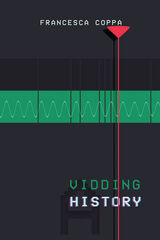
Vidding: A History emphasizes vidding as a critical, feminist form of fan practice. Working outward from interviews, VHS liner notes, convention programs, and mailing list archives, Coppa offers a rich history of vidding communities as they evolved from the 1970s through to the present. Built with the classroom in mind, the open-access electronic version of this book includes over one-hundred vids and an appendix that includes additional close readings of vids.

Together, the contributions position videogame art as an interdisciplinary mix of digital technologies and the traditional art forms. Of particular interest in this volume are machinima, game console artwork, politically oriented videogame art, and the production of digital art. This new and revised edition features an extended critical introduction from the editors and updated interviews with the foremost artists in the field. Rounding out the book is a critique of the commercial videogame industry comprising essays on the current quality and originality of videogames.
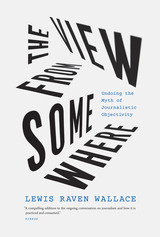
In The View from Somewhere, Lewis Raven Wallace dives deep into the history of “objectivity” in journalism and how its been used to gatekeep and silence marginalized writers as far back as Ida B. Wells. At its core, this is a book about fierce journalists who have pursued truth and transparency and sometimes been punished for it—not just by tyrannical governments but by journalistic institutions themselves. He highlights the stories of journalists who question “objectivity” with sensitivity and passion: Desmond Cole of the Toronto Star; New York Times reporter Linda Greenhouse; Pulitzer Prize-winner Rachel Kaadzi Ghansah; Peabody-winning podcaster John Biewen; Guardian correspondent Gary Younge; former Buzzfeed reporter Meredith Talusan; and many others. Wallace also shares his own experiences as a midwestern transgender journalist and activist who was fired from his job as a national reporter for public radio for speaking out against “objectivity” in coverage of Trump and white supremacy.
With insightful steps through history, Wallace stresses that journalists have never been mere passive observers. Using historical and contemporary examples—from lynching in the nineteenth century to transgender issues in the twenty-first—Wallace offers a definitive critique of “objectivity” as a catchall for accurate journalism. He calls for the dismissal of this damaging mythology in order to confront the realities of institutional power, racism, and other forms of oppression and exploitation in the news industry.
The View from Somewhere is a compelling rallying cry against journalist neutrality and for the validity of news told from distinctly subjective voices.
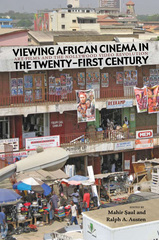
African cinema in the 1960s originated mainly from Francophone countries. It resembled the art cinema of contemporary Europe and relied on support from the French film industry and the French state. Beginning in 1969 the biennial Festival panafricain du cinéma et de la télévision de Ouagadougou (FESPACO), held in Burkina Faso, became the major showcase for these films. But since the early 1990s, a new phenomenon has come to dominate the African cinema world: mass-marketed films shot on less expensive video cameras. These “Nollywood” films, so named because many originate in southern Nigeria, are a thriving industry dominating the world of African cinema.
Viewing African Cinema in the Twenty-first Century is the first book to bring together a set of essays offering a comparison of these two main African cinema modes.
Contributors: Ralph A. Austen and Mahir Şaul, Jonathan Haynes, Onookome Okome, Birgit Meyer, Abdalla Uba Adamu, Matthias Krings, Vincent Bouchard, Laura Fair, Jane Bryce, Peter Rist, Stefan Sereda, Lindsey Green-Simms, and Cornelius Moore
An accessible and thorough introduction to Flusser’s thought, this book reveals his engagement with a wide array of disciplines, from communication studies, posthuman philosophy, media studies, and history to art and art history, migrant studies, anthropology, and film studies. The first to connect Flusser’s entire oeuvre, this volume shows how his works on media theory are just one part of a greater mosaic of writings that bring to the fore cultural and cognitive changes concerning all of us in the twenty-first century.
A theorist deeply influenced by his experiences as a privileged citizen of Prague, a Jew pursued by the Nazis, a European emigrant, a Brazilian immigrant, and a survivor keenly interested and invested in history and memory, Vilém Flusser was an outsider in a staunchly hierarchical and disciplined academic world.
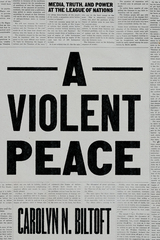
An exploration of instability in information systems, the allure of fascism, and the contradictions at the heart of a global modernity, A Violent Peace paints a rich portrait of the emergence of the age of information—and all its attendant problems.
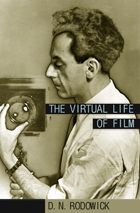
As almost (or, truly, virtually) every aspect of making and viewing movies is replaced by digital technologies, even the notion of “watching a film” is fast becoming an anachronism. With the likely disappearance of celluloid film stock as a medium, and the emergence of new media competing for an audience, what will happen to cinema—and to cinema studies? In the first of two books exploring this question, D. N. Rodowick considers the fate of film and its role in the aesthetics and culture of moviemaking and viewing in the twenty-first century.
Here Rodowick proposes and examines three different critical responses to the disappearance of film in relation to other time-based media, and to the study of contemporary visual culture. Film, he suggests, occupies a special place in the genealogy of the arts of the virtual: while film disappears, cinema persists—at least in the narrative forms imagined by Hollywood since 1915. Rodowick also observes that most so-called “new media” are fashioned upon a cinematic metaphor. His book helps us see how digital technologies are serving, like television and video before them, to perpetuate the cinematic as the mature audiovisual culture of the twentieth century—and, at the same time, how they are preparing the emergence of a new audiovisual culture whose broad outlines we are only just beginning to distinguish.
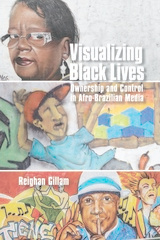
An eye-opening union of analysis and fieldwork, Visualizing Black Lives examines the alternative and activist Black media and the people creating it in today's Brazil.

Barlow, whose voice has been heard on WPFW (Washington, D.C.) for many years, brings an insider's knowledge to this account of black radio as a predominantly local and still powerful medium. Many of the broadcasters he profiles -- Jack Cooper, Paul Robeson, Richard Durham, Cathy Hughes, Al Benson, Georgie Woods, Peggy Mitchell, Hal Jackson, Jocko Henderson, Mary Mason, Wesley South, Martha Jean "the Queen" Steinberg, to name a few -- became not only celebrities but also respected members of their communities. Atlanta's Jack "the Rapper" Gibson, for instance, tells how he literally shared his microphone with Rev. Martin Luther King Jr. to announce meetings and rally listeners around a key issue. By showing the extent to which so many black broadcasters achieved the status of trusted and influential community leaders, Barlow acknowledges that their grassroots activism was an indispensable and often overlooked part of the ongoing African American civil rights movement.
Voice Over also addresses black radio's broadly significant role in entertainment and shifting race relations. Until the rock and roll revolution, audiences had largely been segregated. The African American personality jocks who introduced white teens to rhythm and blues were a revelation; their wild style and personas and the music they played changed broadcasting while it enthralled a multiracial audience. Although the stations that introduced the enormously popular music were identified as black, virtually none was black-owned or managed. The broadcasters who distanced themselves from music industry perks and payoffs proposed an ambitious agenda for change. This little-known story sets the stage for how the proliferation of black-owned stations and networks occurred and for Barlow's assessment of the instability of today's black radio scene.
Written for a broad spectrum of readers -- from nostalgic fans of Jocko and Georgie Woods to loyal listeners of surviving stations and media watchers committed to diversity in broadcasting -- Voice Over tells the whole story of the making of black radio.
READERS
Browse our collection.
PUBLISHERS
See BiblioVault's publisher services.
STUDENT SERVICES
Files for college accessibility offices.
RECENTLY PUBLISHED




UChicago Accessibility Resources
home | accessibility | search | about | contact us
BiblioVault ® 2001 - 2026
The University of Chicago Press