
 A SCHOLARLY BOOK REPOSITORY
4 start with V start with V
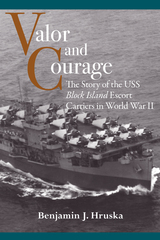
Recounts the stories of the USS Block Island CVE 21 and CVE 106 and their crews, many of whom served on both ships in the Atlantic and Pacific theatres
In Valor and Courage: The Story of the USS Block Island Escort Carriers in World War II Benjamin Hruska explores the history and commemoration of the USS Block Island—or, more properly, the Block Islands, as two escort carriers bore that name during WWII. The first, CVE 21, bears the distinction of having been the only American aircraft carrier sunk in the Atlantic Theatre after being torpedoed by a German U-boat off the coast of North Africa.
Of the CVE 21’s 957 crew members, six sailors were killed and eighteen injured in the strike, and four of the Block Island’s fighter pilots were lost later in the day searching for a safe place to land their planes. When the CVE 106 was commissioned to replace its predecessor, Captain Massie Hughes successfully persuaded the Navy to keep the CVE 21’s crew together in manning the new ship. After resurrection as the CVE 106, the Block Island was assigned to the Pacific theater where it fought until the end of the war. The saga of these two ships and the crew that navigated two very different theaters of war offers a unique lens on naval strategy and engineering as it evolved during WWII, especially as pertains to the escort carrier class—generally underappreciated both in naval studies and in public memory.
Using archival materials, dozens of oral histories, primary sources, and official records, Hruska traces the life of the Block Island from the CVE 21’s construction through its missions in the Atlantic, its work as an antisubmarine hunter, its destruction, and the lasting impact of those experiences on its crew. Hruska’s study juxtaposes traditional military history with an examination of the acts of remembrance and commemoration by veterans who served on the escort carriers, how those practices evolved over time, and how the meanings of personal wartime experiences and memories gradually shifted throughout that process.
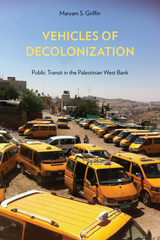
Examining the border-enclosure strategy Israel uses to impose Palestinian im/mobilization, Maryam Griffin considers the ways public transportation in the Palestinian West Bank is a constant site of social struggle. Her illuminating book, Vehicles of Decolonization, studies collective movement, resistance, and everyday life in the West Bank to show how Palestinians assert a kind of Indigenous self-determination over mobility that Israeli settler colonialism seeks to undermine.
Having immersed herself in a year of fieldwork, Griffin maps multiple engagements with the flexible bus, shared van, and private taxi services to demonstrate that the politics of mobility are shaped by ongoing settler colonialism and Indigenous struggle. Griffin uses critical border studies to look at the contested nature of mobility at the sites of transit, where Palestinians practice self-determination through routine participation, spectacular political organizing and demonstration, and artistic renderings.
Featuring a variety of street images, Vehicles of Decolonization shows that multiple registers of people power work in concert not only to resist settler colonial logics but to reinhabit the land through the practice and preservation of alternative relations of mobility.
Contributors. Ethan Blue, Maribel Casas-Cortes, Julie Y. Chu, Sebastian Cobarrubias, Glenda Garelli, Charles Heller, Sabine Hess, Bernd Kasparek, Clara Lecadet, Johan Lindquist, Renisa Mawani, Lorenzo Pezzani, Ranabir Samaddar, Amaha Senu, Martina Tazzioli, William Walters
READERS
Browse our collection.
PUBLISHERS
See BiblioVault's publisher services.
STUDENT SERVICES
Files for college accessibility offices.
RECENTLY PUBLISHED



UChicago Accessibility Resources
home | accessibility | search | about | contact us
BiblioVault ® 2001 - 2026
The University of Chicago Press