
 A SCHOLARLY BOOK REPOSITORY
5 start with V start with V
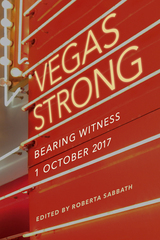
Mass shootings have been on the rise in the United States since the early 2000s, but until the heartbreak of the 1 October 2017 Route 91 Harvest Music Festival, the citizens of Las Vegas had never experienced the violence and tragedy of this now all-too-frequent occurrence. That day, fifty-eight people were shot to death on site, while another two victims later died of their injuries. The 1 October incident physically wounded nearly 900 concert-goers, but psychologically impacted countless untold victims.
As individual and institutional response to urgent requests for help came in both during and after the 1 October catastrophe, those who call Las Vegas home struggled to cope with pain and grief. Now, editor Roberta Sabbath draws together a collection of personal essays, oral histories, interviews, scholarly writings, and commentaries to remember those whose lives were lost, and to honor survivors and their loved ones. Written five years after the tragedy, each contribution offers a unique story of healing, demonstrating the wide-ranging experiences and repercussions of the event. The essays in this collection represent a broad diversity of voices from political leaders, health professionals, first responders, community members, and incident survivors. This work is dedicated to those who lost their lives on 1 October 2017, to survivors and their loved ones, and to the caregivers—both individual and institutional—all of whom continue to keep Vegas Strong.

Experience a year in Los Angeles County, in all its glitter and grit, through a unique anthology that pairs essays by acclaimed writers and historians with custom maps.
When many of us picture Los Angeles, we’re actually thinking of LA County. Home to roughly ten million people, the county alone is more populous than forty-two US states. Its eighty-eight cities include places made famous by Hollywood glamor and California dreaming—Beverly Hills, Malibu, and Santa Monica—but also working-class municipalities and the self-explanatory City of Industry. With a territory that includes the Pacific coastline, mountain ranges, and the high Mojave Desert, the county’s landscapes have been touched by earthquakes, droughts, and, of course, devastating fires. LA County is a place of extremes: progress and injustice, innovation and stagnation.
Visions of the Southland collects essays by writers, journalists, and historians to create a nuanced portrait of LA that’s grounded in the county itself—its sites, structures, and stories. Contributors—including Gustavo Arellano, Keri Blakinger, Lynell George, Christopher Hawthorne, Michael Hiltzik, Greg Hise, Carolina Miranda, Becky Nicolaides, Susan Straight, and David L. Ulin—delve into LA’s infamous air pollution, movie ranches, prisons, aqueducts, urban forests, SoCal Bohemianism, and more. A custom map by Ezra Rawitsch enriches each piece and grounds the reader in specific locations throughout the county. Unfolding over the course of a year, the book traces the rhythms of politics, sports, weather, and wildlife across this sprawling and enigmatic place.
Sweeping in its scope and gorgeous in its design, Visions of the Southland will delight Angelenos, history buffs, urbanists, and map enthusiasts alike.
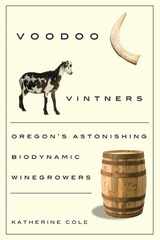
Could cow horns, vortexes, and the words of a prophet named Rudolf Steiner hold the key to producing the most alluring wines in the world—and to saving the planet?
In Voodoo Vintners, wine writer Katherine Cole reveals the mysteries of biodynamic winegrowing, tracing its practice from Paleolithic times to the finest domaines in Burgundy today. At the epicenter of the American biodynamic revolution are the Oregon winemakers who believe that this spiritual style of farming results in the truest translations of terroir and the purest pinot noirs possible.
Cole introduces these “voodoo vintners,” examining their motivations and rationalizations and explaining why the need to farm biodynamically courses through their blood. Her engaging narrative answers the call of oenophiles everywhere for more information about this “beyond organic” style of winemaking.
READERS
Browse our collection.
PUBLISHERS
See BiblioVault's publisher services.
STUDENT SERVICES
Files for college accessibility offices.
RECENTLY PUBLISHED





UChicago Accessibility Resources
home | accessibility | search | about | contact us
BiblioVault ® 2001 - 2026
The University of Chicago Press