
 A SCHOLARLY BOOK REPOSITORY
158 start with W start with W
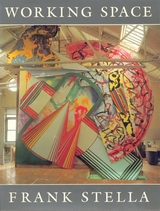
“A bombshell...this is a book that explodes many received ideas about abstraction...[It] is certainly one of the most remarkable books ever written on the subject. What makes it so remarkable, of course, is that Stella is unquestionably the most celebrated abstract painter of his generation.”—Hilton Kramer, Atlantic
Working Space affords a rare opportunity to view painting from the inside out, through the eyes of one of the world’s most prominent abstract painters. Frank Stella describes his perception of other artists’ work, as well as his own, in this handsomely illustrated volume.
Stella uses the crisis of representational art in sixteenth-century Italy to illuminate the crisis of abstraction in our time. The artists who followed Leonardo, Michelangelo, Raphael, and Titian searched for new directions to advance their work from beneath the shadow of these great painters. Caravaggio pointed the way. So today, Stella believes, the successors to Picasso, Kandinsky, and Pollock must seek a pictorial space as potent as the one Caravaggio developed at the beginning of the seventeenth century. Stella sees Caravaggio as the pivot on whom painting turns, his consummate illusionism prompting the advance of a more flexible, more “real” space that allows painting to move and breathe, to suggest extension and unrestricted motion. Following Caravaggio, Rubens’ broad vision of fullness and active volume gave painting a momentum that helped propel it into the nineteenth century, where it came to rest in the genius of Géricault and Manet, themselves the precursors of modern painting.
Unfortunately, both contemporary abstract art and figurative painting have become trapped by ambiguous pictorial space and by a misguided emphasis on materiality (pigment for pigment’s sake). Pictorial qualities have given way to illustrational techniques. Abstract art has become verbal, defensive, and critical, caught up in theology masquerading as theory. Stella asserts that painting must understand its past, make use of the lucid realism of seventeenth-century Italy, and absorb a Mediterranean physicality to reinforce the lean spirituality of northern abstraction pioneered by Mondrian and Malevich. Working Space will provoke discussion and argument, not least because Stella offers nontraditional evaluations of the works of giants such as Raphael, Titian, Michelangelo, Picasso, and Pollock, as well as lesser-known figures including Annibale Carracci, Paulus Potter, and Morris Louis. The artist’s powers of discernment and the profusion of his ideas and opinions will dazzle and engage professionals, amateurs, and students of art.

Ambitious and original, Working-Class Girls Don’t Become Artists rewrites art history from a working-class perspective.

Featuring both Greek and foreign productions from various genres and historical periods, the book ultimately works to establish connections between the various aesthetics of dominant representations of Athens.
Many iconic American classics, blockbusters, romantic comedies, and legal thrillers, as well as films examining Boston’s criminal underside, particularly in juxtaposition to the city’s elitist high society, were filmed on location in the city’s streets and back lots. World Film Locations: Boston looks in depth into a highly select group of forty-six films such as Love Story, Good Will Hunting, The Friends of Eddy Coyle, and The Social Network, among many others, presented at the intersection of critical analysis and stunning visual critique (with material from the films themselves as well as photographs of the contemporary city locations). Featuring articles and film scene reviews written by a variety of leading contemporary film writers, critics, and scholars, this book is a multimedia resource that will find a welcome audience in movie lovers in Beantown and beyond.
With World Film Locations: Chicago, critic Scott Jordan Harris takes readers on a cinematic tour of the city, featuring modern blockbusters and beloved classics. Along the way, scenes from almost fifty films made or set in the city are discussed, accompanied by full-color stills and interspersed with essays examining the city’s unique character onscreen. Among the contributors are Gordon Quinn, cofounder of Chicago’s Kartemquim Films; Elizabeth Weitzman, film critic for the New York Daily News; the BBC’s Samira Ahmed; and Steve James, director of the coming-of-age classic Hoop Dreams. For readers hoping to locate landmarks from favorite films, the book also includes detailed maps that point out key scenes.
A fun and fact-packed read, World Film Locations: Chicago will be welcomed by film fans and anyone planning a trip to the Windy City.
This new entry in the World Film Locations series offers the first-ever extended look at Cleveland on screen. Richly illustrated with images from dozens of productions, it reveals Cleveland to be usefully chameleonic, appealing to some filmmakers for its modern downtown’s ability to mimic more prominent (and more expensive) cities, to others for the way its shuttered factories and decaying docks signify contemporary urban distress. With entries on such classics as The Fortune Cookie, The Deer Hunter, A Christmas Story, and Marvel’s The Avengers, as well as lesser-known films, the volume reveals Cleveland to be a far more compelling, and far more varied, on-screen presence than even most film buffs would expect.
Like all the books in this series, World Film Locations: Cleveland is designed to appeal to cinephiles and scholars alike, while also serving as a silver screen souvenir for those who make the city their home as well as for those who visit it.
From the Duomo to the Uffizi gallery, Florence is filled with history, art, and culture. For those who crave a passport to this Tuscan capital, World Film Locations: Florence will take you there without you ever having to leave your library.
World Film Locations: Havana situates Havana as a modern city in prerevolutionary times, noting the architectural and cultural shifts evident during the revolution, and comments on recent reconfigurations of the city and its inhabitants in the wake of global forces. Among the forty-six scene reviews chosen to show the city in all its multifaceted glory, films such as Our Man in Havana, I Am Cuba, Hello Hemingway, Habana Blues and Chico and Rita are bookended by seven insightful essays. The essays look at the history of revolutionary cinema in Cuba and consider documentary films, from the Latin American Newsreel to avant-garde experimental work, including the island’s documentary tradition showcasing local faces and places that have paved the way for present-day media and audiovisual art. The essays also explore the multifaceted film culture of the capital, the cine club movement, historic cinemas and film venues around the city, the abundance of film festivals such as the International Festival of New Latin American Cinema, and film-themed cafeterias, restaurants, bookstores, and markets.
An exciting and visually focused tour of the diverse range of films shot on location in London, World Film Locations: London presents contributions spanning the Victorian era, the swinging ’60s, and the politically charged atmosphere following the 2005 subway bombings. Essays exploring key directors, themes, and historical periods are complemented by reviews of important scenes that offer particular insight into London's relationship to cinema. The book is illustrated throughout with full-color film stills and photographs of cinematic landmarks as they appear now—as well as city maps to aid those keen to investigate them.
From Terror on the Underground to Thames Tales to Richard Curtis's affectionate portrayal of the city in Love Actually, this user-friendly guide explores the diversity and distinctiveness of films shot in location in London.
World Film Locations: Moscow compares and contrasts images from the past and present, giving the forty-six carefully selected scene reviews and seven spotlight essays a historical focus. With an inside look at the city’s film studio, Mosfilm, the book is essential for all armchair travelers and cinephiles alike.
Be they period films, cult classics, or elaborate directorial love letters, New York City has played—and continues to play—a central role in the imaginations of filmmakers and moviegoers worldwide. The stomping grounds of King Kong, it is also the place where young Jakie Rabinowitz of The Jazz Singer realizes his Broadway dream. Later, it is the backdrop against which taxi driver Travis Bickle exacts a grisly revenge.
World Film Locations: Rome takes the reader on a cinematic journey through the city with stops at key locations that include the Pantheon, Piazza Navona, Via Veneto, Piazza del Popolo, Sant'Angelo Bridge and, of course, the Trevi Fountain, made famous worldwide in its appearances in Federico Fellini’s La Dolce Vita and Jean Negulesco’s Three Coins in the Fountain. A carefully selected compilation of forty-six key films set in Rome, including The Belly of an Architect, The Facts of Murder, The Bicycle Thief, Roman Holiday, and The Talented Mr. Ripley, is complemented by essays that further examine the relationship between the city and cinema to provide an engaging, colorful, and insightful page-turning journey for both travelers and film buffs alike.
Audiences across the world, as well as many of the world’s greatest film directors—including Buster Keaton, Orson Welles, George Lucas, Francis Ford Coppola, David Fincher, and Steven Soderbergh—have been seduced by San Francisco. This book is the ideal escape to the city by the bay for arm chair travelers and cinephiles alike.
With numerous essays that reflect Shanghai’s relationship to film and scene reviews of such iconic titles as Street Angel, Temptress Moon, Kung Fu Hustle, and Skyfall, World Film Locations: Shanghai is essential reading for all scholars of China’s urban culture.
Though Singapore was home to a flourishing Chinese and Malay film industry in the 1950s and 1960s, between independence in 1965 and the early 1990s, few movies were made there. A new era for cinema in the sovereign city-state started with the international recognition of Eric Khoo’s first features, followed by a New Wave comprised of graduates from local film schools. In recent years the Singapore film industry has produced commercially successful fare, such as the horror movie The Maid, as well as more artistic films like Sandcastle, the first Singaporean film to be selected for International Critic’s Week at Cannes, and Ilo Ilo, which won the Caméra d’or at Cannes in 2013. Covering the myths that surround Singaporean film and exploring the realities of the movies that come from this exciting city, World Film Locations: Singapore introduces armchair travelers to a rich, but less known, national cinema.
From Tokyo Story to Godzilla, You Only Live Twice to Enter the Void, World Film Locations: Tokyo presents a kaleidoscopic view of one of the world’s most exciting cities through the lens of cinema. Illustrated throughout with dynamic screen shots, this volume in Intellect’s World Film Locations series spotlights fifty key scenes from classic and contemporary films shot in Tokyo, accompanied by insightful essays that take us from the wooden streets of pre-nineteenth-century Edo to the sprawling “what-if” megalopolis of science fiction and fantasy anime. Important themes and players—among them Akira Kurosawa, Samuel Fuller, and Sofia Coppola—are individually considered. For the film scholar, or for all those who love Japanese cinema and want to learn more, World Film Locations: Tokyo will be an essential guide.
World Film Locations: Toronto explores and reveals the relationship between the city and cinema using a predominately visual approach. The juxtaposition of the images used in combination with insightful essays helps to demonstrate the role that the city has played in a number of hit films, including Cinderella Man, American Psycho, and X-Men and encourages the reader to frame an understanding of Toronto and the world around us. The contributors trace Toronto’s emergence as an international city and demonstrate the narrative interests that it has continued to inspire among filmmakers, both Canadian and international.
With support from experts in Canadian studies, the book’s selection of films successfully shows the many facets of Toronto and also provides insider’s access to a number of sites that are often left out of scholarship on Toronto in films, such as the Toronto International Film Festival. The 2014 release of this attractive volume will be a particularly welcome addition to the international celebrations of the city’s 180th anniversary.
Vienna appears in cinema as, among other things, a historical crossroads, a source of great music, and a site of world-famous architecture ranging from gothic cathedrals and baroque palaces to landmark modern structures. A panorama that encompasses all these perspectives, World Film Locations: Vienna sheds new light on the movies shot in the former imperial capital—and on the city itself.
This friction animates and attracts filmmakers, who use the District's landmarks as a shorthand to express and investigate contemporary ideals and concerns about American society. Films set there both celebrate and castigate the grand American experiment it symbolizes. From Frank Capra’s 1939 Mr. Smith Goes to Washington to the alien invasion blockbuster Independence Day, films set in Washington depict our most ardent hopes and bring to life our darkest fears.
World Film Locations: Washington, D.C., collects essays and articles about Washington film history and locations. Featuring explorations of carefully chosen film scenes and key historical periods, the book examines themes, directors, and depictions and is illustrated with evocative movie stills, city maps, and location photographs. Taken as a whole, this is essential reading for any cinephile who has ever wondered how a bill becomes a law.

Icons and murals depicting the biblical scene of the Last Judgment adorned many Eastern-rite churches in medieval and early modern Ukraine. Dating from the twelfth to the eighteenth centuries, these images were extraordinarily elaborate, composed of dozens of discrete elements reflecting Byzantine, Novgorodian, Moldavian, and Catholic influences, in addition to local and regional traditions. Over time, the details of the iconography evolved in response to changing cultural resources, the conditions of material life at the time, and new trends in mentality and taste.
The World to Come lists and describes more than eighty Last Judgment images from present-day Ukraine, eastern Slovakia, and southeastern Poland, making it the largest compilation of its kind. Photographs show overviews and details of the images, and most are printed in full color. The icons and murals provide a valuable source of knowledge about the culture in which they were created: what was meant by good and evil, what was prophesied for the future, and what awaited in the afterlife.
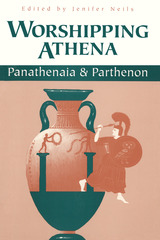
Editor Jenifer Neils and the contributors—eminent classicists, archaeologists, and art historians—explore the role of the Panathenaia in Athenian life and compare it with similar festivals held throughout the ancient Greek world. They discuss such topics as the Panathenaia’s mythical origins, the phenomenon of the festival’s valuable prizes (oil-filled amphoras, rather than the customary laurel wreath), and the architecture, sculpture, and painting related to the festival.
Worshipping Athena will provide valuable insights to scholars and students concerned with ancient religion, mythology, art, literature, and gender issues, as well as anyone with a keen interest in the ritual topography of the Athenian Acropolis and the iconography of the Parthenon frieze.

Woven from the Center presents breathtaking basketry from some of the greatest weavers in the Southwest. Each sandal and mat fragment, each bowl and jar, every water bottle and whimsy is infused with layers of aesthetic, cultural, and historical meanings. This book offers stunning photos and descriptions of woven works from Tohono O’odham, Akimel O’odham, Hopi, Western Apache, Yavapai, Navajo, Pai, Paiute, New Mexico Pueblo, Eastern Apache, Seri, Yaqui, Mayo, and Tarahumara communities.
This richly illustrated volume stands on its own as a definitive look at basketry of the Greater Southwest, including northern Mexico. It also serves as a companion to the peerless collection of U.S. Southwest and Northwest Mexican Native American basketry curated at the Arizona State Museum in Tucson, Arizona. Comprehensive in its coverage, this work is based on decades of research on weavers, collectors, and donors. It includes ample illustrations of basket weavers, past and present, bringing to life the people behind these wonderful woven treasures.
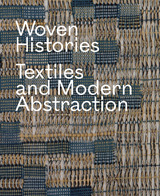
Published on the occasion of an exhibition curated by Lynne Cooke, Woven Histories offers a fresh and authoritative look at textiles—particularly weaving—as a major force in the evolution of abstraction. This richly illustrated volume features more than fifty creators whose work crosses divisions and hierarchies formerly segregating the fine arts from the applied arts and handicrafts.
Woven Histories begins in the early twentieth century, rooting the abstract art of Sophie Taeuber-Arp in the applied arts and handicrafts, then features the interdisciplinary practices of Anni Albers, Sonia Delaunay, Liubov Popova, Varvara Stepanova, and others who sought to effect social change through fabrics for furnishings and apparel. Over the century, the intersection of textiles and abstraction engaged artists from Ed Rossbach, Kay Sekimachi, Ruth Asawa, Lenore Tawney, and Sheila Hicks to Rosemarie Trockel, Ellen Lesperance, Jeffrey Gibson, Igshaan Adams, and Liz Collins, whose textile-based works continue to shape this discourse. Including essays by distinguished art historians as well as reflections from contemporary artists, this ambitious project traces the intertwined histories of textiles and abstraction as vehicles through which artists probe urgent issues of our time.
Faced with an increasingly media-saturated, globalized culture, art historians have begun to ask themselves challenging and provocative questions about the nature of their discipline. Why did the history of art come into being? Is it now in danger of slipping into obsolescence? And, if so, should we care?
In Writing Art History, Margaret Iversen and Stephen Melville address these questions by exploring some assumptions at the discipline’s foundation. Their project is to excavate the lost continuities between philosophical aesthetics, contemporary theory, and art history through close readings of figures as various as Michael Baxandall, Martin Heidegger, Jacques Lacan, and Alois Riegl. Ultimately, the authors propose that we might reframe the questions concerning art history by asking what kind of writing might help the discipline to better imagine its actual practices—and its potential futures.
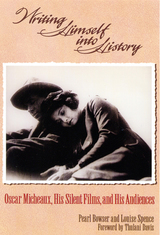
Winner of the 2001 Kraszna-Krausz Moving Image Book Awards | Winner of the Theatre Library Association Award
Writing Himself Into History is an eagerly anticipated analysis of the career and artistry surrounding the legendary Black filmmaker Oscar Micheaux. With the exception of Spike Lee, Micheaux is the most famous—and prolific—African American film director. Between 1918 and 1948 he made more than 40 “race pictures,” movies made for and about African Americans. A man of immense creativity, he also wrote seven novels.
Pearl Bowser and Louise Spence concentrate here on the first decade of Micheaux’s career, when Micheaux produced and directed more than twenty silent features and built a reputation as a controversial and maverick entrepreneur. Placing his work firmly within his social and cultural milieu, they also examine Micheaeux’s family and life. The authors provide a close textual analysis of his surviving films (including The Symbol of the Unconquered, Within Our Gates, and Body and Soul), and highlight the rivalry between studios, dilemmas of assimilation versus separatism, gender issues, and class. In Search of Oscar Micheaux also analyzes Micheaux’s career as a novelist in relation to his work as a filmmaker.
This is a much-awaited book that is especially timely as interest in Micheaux’s work increases.
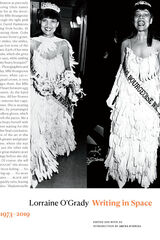
Increased public and academic interest in drawing and sketching, both traditional and digital, has allowed drawing research to emerge recently as a discipline in its own right. In light of this development, Writing on Drawing presents a collection of essays that reveal a provocative agenda for the field, analyzing the latest work on creativity, education, and thinking from a variety of perspectives. Bringing together contributions by leading artists and researchers, this volume offers consolidation, discussion, and guidance for a previously fragmented discipline. Available for the first time in paperback, it will be an essential resource for artists, scientists, designers, and engineers.
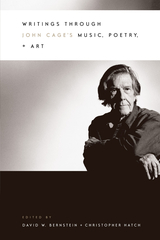
The essays in this collection grew out of a pivotal gathering during which a spectrum of participants including composers, music scholars, and visual artists, literary critics, poets, and filmmakers convened to examine Cage's extraordinary artistic legacy. Beginning with David Bernstein's introductory essay on the reception of Cage's music, the volume addresses topics ranging from Cage's reluctance to discuss his homosexuality, to his work as a performer and musician, and his forward-looking, provocative experimentation with electronic and other media. Several of the essays draw upon previously unseen sketches and other source materials. Also included are transcripts of lively panel discussions among some of Cage's former colleagues. Taken together, this collection is a much-needed contribution to the study of one of the most significant American artists of the twentieth century.
READERS
Browse our collection.
PUBLISHERS
See BiblioVault's publisher services.
STUDENT SERVICES
Files for college accessibility offices.
RECENTLY PUBLISHED



UChicago Accessibility Resources
home | accessibility | search | about | contact us
BiblioVault ® 2001 - 2026
The University of Chicago Press