
 A SCHOLARLY BOOK REPOSITORY
27 start with W start with W
A poetic culture consists of a body of shared values and conventions that shape the composition and interpretation of poetry in a given historical period. This book on Wang Anshi (1021–1086) and Song poetic culture—the first of its kind in any Western language—brings into focus a cluster of issues that are central to the understanding of both the poet and his cultural milieu. These issues include the motivations and consequences of poetic contrarianism and the pursuit of novelty, the relationship between anthology compilation and canon formation, the entanglement of poetry with partisan politics, Buddhist orientations in poetic language, and the development of the notion of late style.
Though diverse in nature and scope, the issues all bear the stamp of the period as well as Wang Anshi’s distinct personality. Conceived of largely as a series of case studies, the book’s individual chapters may be read independently of each other, but together they form a varied, if only partial, mosaic of Wang Anshi’s work and its critical reception in the larger context of Song poetic culture.


Westminster West traverses the worlds of here and beyond. Chard deNiord divines “the everydayness of the mystery . . . in which being and making poetry are the same.” From posthumous correspondence between Abelard and Heloise to such poems as “Skywriting Over The Rockies,” “With A Bone In My Heart,” and “I Call Out To You,” this collection betrays a mortal charge, bearing witness to what Emily Dickinson called “each ecstatic moment/ to which we must an anguish pay” and which Aridjis in his defiance of death calls “dust in love.”
Ambitious and masterful, deNiord renders such ancient subject matter as love, betrayal, landscape, loss, grief, aging, and ecstasy new throughout Westminster West. He transforms the echo chamber of futility, silence, and failure by aspiring to cross over to “the other,” whatever it may be, a stone or cloud or lover or garment, or cancerous lung, with a “negative capability” that allows it, no matter its identity, to speak memorably in a way that transcends simple definition and ultimately any personal connection to it.
Westminster West is divided into three sections that complement each other in their archetypal themes which range historically, mythologically, and cathectically. The poems in the first section imagine correspondences and dialogues between couples, including Heloise and Abelard, Adam and Eve, Gilgamesh and Enkidu, Odysseus and Calypso, a widower and his deceased wife in the time of Covid, and a lovesick husband in the air above the Rocky Mountains and his beloved on the ground. The second section also features love poems but focuses on more instructional and metaphysical themes that vary from metaphorical pedagogy on the topic of sex to “the harsh advice of loss” to the memory of a young couple’s transcendent, romantic walk by a river. Section three moves away from love poems to mortal and environmental themes, including elegies, pastorals, and a concluding confessional credo on the bittersweet reality of poetry’s irony and blessing.
When “I” Was Born: Women’s Autobiography in Modern China reclaims the voices of these particular writers, voices that have been misinterpreted and overlooked for decades. Tracing women writers as they move from autobiographical fiction, often self-revelatory and personal, to explicit autobiographies that focused on women’s roles in public life, Jing M. Wang reveals the factors that propelled this literary movement, the roles that liberal translators and their renditions of Western life stories played, and the way in which these women writers redefined writing and gender in the stories they told. But Wang reveals another story as well: the evolving history and identity of women in modern Chinese society. When “I” Was Born adds to a growing body of important work in Chinese history and culture, women’s studies, and autobiography in a global context.
Writers discussed include Xie Bingying, Zhang Ailing, Yu Yinzi, Fei Pu, Lu Meiyen, Feng Heyi, Ye Qian, Bai Wei, Shi Wen, Fan Xiulin, Su Xuelin, and Lu Yin.
As industrial and scientific developments in early-twentieth-century Japan transformed the meaning of “objective observation,” modern writers and poets struggled to capture what they had come to see as an evolving network of invisible relations joining people to the larger material universe. For these artists, literary modernism was a crisis of perception before it was a crisis of representation. When Our Eyes No Longer See portrays an extraordinary moment in the history of this perceptual crisis and in Japanese literature during the 1920s and 1930s.
The displacement in science of “positivist” notions of observation by a “realist” model of knowledge provided endless inspiration for Japanese writers. Gregory Golley turns a critical eye to the ideological and ecological incarnations of scientific realism in several modernist works: the photographic obsessions of Tanizaki Jun’ichiro’s Naomi, the disjunctive portraits of the imperial economy in Yokomitsu Riichi’s Shanghai, the tender depictions of astrophysical phenomena and human-wildlife relations in the children’s stories of Miyazawa Kenji.
Attending closely to the political and ethical consequences of this realist turn, this study focuses on the common struggle of science and art to reclaim the invisible as an object of representation and belief.
When the Yellow River Floods explores the relationship between environmental degradation, hydraulic engineering, and nation-building in the context of Liu E’s The Travels of Lao Can. This book provides a unique perspective on modern Chinese literary history that goes beyond conventional narratives that focus solely on political and cultural factors. The main areas covered include the role of water management in literary nation-building and the connections between the novel’s various themes, such as river engineering, medical and political discourses, national sentiment, and landscape description.
By offering a comprehensive analysis of The Travels of Lao Can, this book broadens the understanding of nation-building in early twentieth-century China, highlighting the impact of environmental crises and hydraulics on the formation of national literature and consciousness. When the Yellow River Floods provides a new perspective on the environmental roots of modern Chinese literature, making it an essential read for those seeking to understand the complex interplay between literature, the environment, and national identity in China. This book will be of interest to scholars and students of Chinese literature, history, and environmental studies.
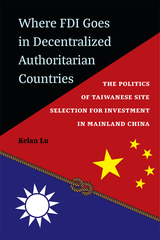
Among all the decentralized authoritarian countries, China is distinctive not only because of its emergence as one of the largest foreign direct investment (FDI) recipient countries with one of the highest levels of fiscal decentralization, but also because of the combination of its fiscal decentralization and the cadre promotion system as incentive institutions for attracting FDI inflows. China is an important case to empirically investigate the impact of fiscal autonomy on adversarial investment because it has become the largest investment destination of its long-term adversary, Taiwan, with Taiwanese FDI being among the largest FDI in mainland China. Given the special role played by local Chinese governments in attracting and hosting Taiwanese FDI, it is important to study the differences between where Taiwanese FDI and other FDI goes.
Given the uniqueness of the China case and that of Taiwanese investment in mainland China, this book explores the following questions. What determines where FDI goes in authoritarian countries like China? Fiscal decentralization has been argued to be a driving force of skyrocketing FDI inflows in China due to its impact on local governments’ incentives. However, is the impact of fiscal autonomy on FDI monolithic with the dynamically changing levels of FDI inflows at the lower administrative levels in China, especially with its special cadre management system? Does the impact of fiscal decentralization on FDI strengthen or weaken or stay the same when attracting FDI inflows from adversarial states? And what are the implications of such adversarial investment—especially as it diffuses from coastal cities to the interior regions, or from key cities to peripheral regions—of decentralized authoritarian countries targeted by this investment?
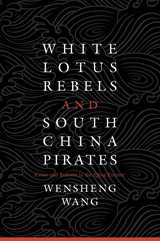
The reign of Emperor Jiaqing (1796–1820 CE) has long occupied an awkward position in studies of China’s last dynasty, the Qing (1644–1911 CE). Conveniently marking a watershed between the prosperous eighteenth century and the tragic post–Opium War era, this quarter century has nevertheless been glossed over as an unremarkable interlude separating two well-studied epochs of great transformation. White Lotus Rebels and South China Pirates presents a major reassessment of this misunderstood period by examining how the emperors, bureaucrats, and foreigners responded to the two crises that shaped the transition from the Qianlong to the Jiaqing reign.
Wensheng Wang argues that the dramatic combination of internal uprising and transnational piracy, rather than being a hallmark of inexorable dynastic decline, propelled the Manchu court to reorganize itself through a series of modifications in policymaking and bureaucratic structure. The resulting Jiaqing reforms initiated a process of state retreat that pulled the Qing Empire out of a cycle of aggressive overextension and resistance, and back onto a more sustainable track of development. Although this pragmatic striving for political sustainability was unable to save the dynasty from ultimate collapse, it represented a durable and constructive approach to the compounding problems facing the late Qing regime and helped sustain it for another century. As one of the most comprehensive accounts of the Jiaqing reign, White Lotus Rebels and South China Pirates provides a fresh understanding of this significant turning point in China’s long imperial history.
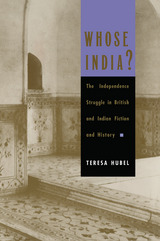
Hubel collapses the boundary between literature and history by emphasizing the selected nature of the “facts” that comprise historical texts, and by demonstrating the historicity of fiction. In analyzing the orthodox construction of the British/Indian encounter, Hubel calls into question assumptions about the end of nationalism implicit in mainstream histories and fiction, which generally describe a battleground on which only ruling-class Indians and British meet. Marginalized texts by women, untouchables, and overt imperialists alike are, therefore, examined alongside the well-known work of figures such as Rudyard Kipling, Jawaharlal Nehru, E. M. Forster, and Mahatma Gandhi.
In Whose India? discursive ownership and resistance to ownership are mutually constructing categories. As a result, the account of Indian nationalism and British imperialism that emerges is much more complicated, multivocal, and even more contradictory than previous studies have imagined. Of interest to students and scholars engaged in literary, historical, colonial/postcolonial, subaltern, and Indian studies, Whose India? will also attract readers concerned with gender issues and the canonization of texts.
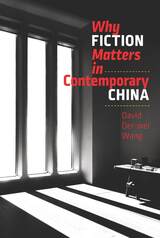
Contemporary discussions of China tend to focus on politics and economics, giving Chinese culture little if any attention. Why Fiction Matters in Contemporary China offers a corrective, revealing the crucial role that fiction plays in helping contemporary Chinese citizens understand themselves and their nation. Where history fails to address the consequences of man-made and natural atrocities, David Der-Wei Wang argues, fiction arises to bear witness to the immemorial and unforeseeable.
Beginning by examining President Xi Jinping’s call in 2013 to “tell the good China story,” Wang illuminates how contemporary Chinese cultural politics have taken a “fictional turn,” which can trace its genealogy to early modern times. He does so by addressing a series of discourses by critics within China, including Liang Qichao, Lu Xun, and Shen Congwen, as well as critics from the West such as Arendt, Benjamin, and Deleuze. Wang highlights the variety and vitality of fictional works from China as well as the larger Sinophone world, ranging from science fiction to political allegory, erotic escapade to utopia and dystopia. The result is an insightful account of contemporary China, one that affords countless new insights and avenues for understanding.
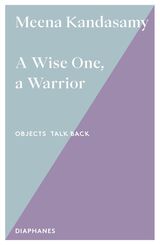
Meena Kandasamy writes about the Mithuna couple, a seventeenth-century ivory sculpture from Tamil Nadu, India, depicting lovers. Kandasamy unfurls a multi-layered, multi-directional narrative built from images, questions, and contradictions evoked by the sculpture. “How can we look at this work and not talk about who produced it?” Kandasamy asks and then examines how caste and class are carved into the object as indelibly as its physical details. Such knowledge complicates easy associations of love that may be evoked by the couple.
Refusing any impulse to idealize or exoticize, Kandasamy connects the carving to personal and political stories that expose painful realities of who gets to love whom, and how. She sets the intimate alongside the institutional to interrogate terms such as decolonize, restitution, and preservation. Through an astonishing stylistic mix, including Twitter, academic discourse, poetry, and memoir, she talks back, forward, and sideways with the object.
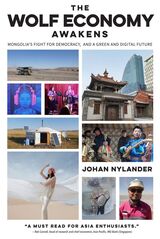
Mongolia, a vibrant democracy landlocked between Russia and China, stands on the edge of becoming Asia’s next boom nation—one of the richest countries per capita in the region. Referred to as the “wolf economy” for its vast natural resources (copper, gold, and rare earth metals), it is also home to a growing number of cutting-edge tech startups and international lifestyle brands. Its vast steppe landscape lends itself not only to herding and tourism but also to renewable energy production and filmmaking.
The Wolf Economy Awakens is about the individuals who are fighting to strengthen the country’s democracy and diversify its economy. It is about innovators aiming to realize Mongolia’s promise as a hub for green energy, tech and lifestyle entrepreneurs who are shaking up traditional industries, and go-getters who have left jobs on Wall Street to return to the country they love and help move it forward. Asia correspondent and award-winning author Johan Nylander travels across Mongolia to speak to the country’s leaders and innovators—not to mention a cast of digital nomads, jazz musicians, and ordinary families—and finds a nation ready to grasp a better future. Unlocking a country’s potential is never easy, but Mongolia stands every chance of becoming Asia’s next success story.
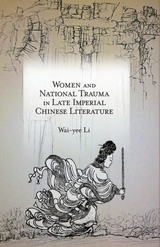
The Ming–Qing dynastic transition in seventeenth-century China was an epochal event that reverberated in Qing writings and beyond; political disorder was bound up with vibrant literary and cultural production. Women and National Trauma in Late Imperial Chinese Literature focuses on the discursive and imaginative space commanded by women. Encompassing writings by women and by men writing in a feminine voice or assuming a female identity, as well as writings that turn women into a signifier through which authors convey their lamentation, nostalgia, or moral questions for the fallen Ming, the book delves into the mentality of those who remembered or reflected on the dynastic transition, as well as those who reinvented its significance in later periods. It shows how history and literature intersect, how conceptions of gender mediate the experience and expression of political disorder.
Why and how are variations on themes related to gender boundaries, female virtues, vices, agency, and ethical dilemmas used to allegorize national destiny? In pursuing answers to these questions, Wai-yee Li explores how this multivalent presence of women in different genres provides a window into the emotional and psychological turmoil of the Ming–Qing transition and of subsequent moments of national trauma.

In this study of the Japanese jeweled pagoda mandalas, Halle O’Neal reveals the entangled realms of sacred body, beauty, and salvation. Much of the previous scholarship on these paintings concentrates on formal analysis and iconographic study of their narrative vignettes. This has marginalized the intriguing interplay of text and image at their heart, precluding a holistic understanding of the mandalas and diluting their full import in Buddhist visual culture. Word Embodied offers an alternative methodology, developing interdisciplinary insights into the social, religious, and artistic implications of this provocative entwining of word and image.
O’Neal unpacks the paintings’ revolutionary use of text as picture to show how this visual conflation mirrors important conceptual indivisibilities in medieval Japan. The textual pagoda projects the complex constellation of relics, reliquaries, scripture, and body in religious doctrine, practice, and art. Word Embodied also expands our thinking about the demands of viewing, recasting the audience as active producers of meaning and offering a novel perspective on disciplinary discussions of word and image that often presuppose an ontological divide between them. This examination of the jeweled pagoda mandalas, therefore, recovers crucial dynamics underlying Japanese Buddhist art, including invisibility, performative viewing, and the spectacular visualizations of embodiment.

Conceived during the 2020 COVID-19 lockdown and the accompanying rise in anti-Asian bigotry, Word of Mouth: Asian American Artists Sharing Recipes is an artists’ cookbook featuring stories and artwork from twenty-three Asian American and Asian diaspora artists from across the United States, with contributions that range from Los Angeles–based performance artist Kristina Wong’s “Recipe for Political Action” to New Orleans–based painter Francis Wong’s family recipe for stir-fried Szechuan alligator.
Word of Mouth was first published as an online exhibition through the Virtual Asian American Art Museum. This print version features a new introduction by art historian Michelle Yee, expanded essays, and brand-new recipes. Each contribution is accompanied by an original illustration and enriched by the artist’s reflections on how their cuisine has been impacted by histories of war, migration, relocation, labor, or mixing.
A pandemic project turned illustrated cookbook, this unique collection disrupts genre expectations to celebrate how artists use food to nurture and sustain their diverse communities and artistic practices as well as to build connection during times of isolation, grief, and loss.

Many poems in the Chinese tradition come to us embedded in narratives purporting to tell the circumstances of their composition and performance. "Poetic competence" is demonstrated in these narratives through a person's ability to influence the attitudes and behavior of others with poetic discourse. Such competence can be apprehended only in the context of a narrative, which sets forth a representation of the conditions of a poem's production, performance, and reception. These narratives are not so much faithful historical records as ideal accounts of the operation of poetry. Such stories both fulfill and deny wishes for poetry and for the self; it is these wishes that merit our careful attention.
As traced in Words Well Put, the vision of poetic competence evolved for over a millennium from calculated performances of inherited words to sincere passionate outbursts to displays of verbal wit combining calculation with the appearance of spontaneity. By the seventh century, calculation, passion, and wit had converged to produce a multivalent concept of competence as a repertoire of competencies to use as the occasion demanded. This book tells the story of the development of poetic competence to uncover the complexity of the concept and to identify the sources and exemplars of that complexity.
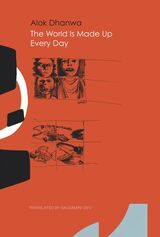
A voice of the marginalized and a staunch critic of the establishment, Alok Dhanwa brilliantly captures the ethos of a turbulent era in India through his poetry. Born in 1948, in Munger, Bihar, he witnessed the rise and fall of political movements and wrote against the backdrop of the Maoist and Naxalite struggles. This collection, the first book-length translation of his work into English, brings a glimpse of a volatile nation coming to grips with its own existence to new readers.
His poetry highlights the ongoing fight for justice and identity in an ever-changing state that remains starkly relevant to the contemporary Indian polity. Dhanwa’s writing is a beacon for the working class, a testament to resistance, and a reminder that the struggle for a better world is both eternal and essential. In his universe, love, rebellion, armed resistance, and the everyday coexist. With World Is Made Up Every Day, he paints a vivid portrait of rural India’s landscapes and humanity’s capacity to defy power in all its forms. This book is not just a collection of poems; it is a call to keep the spirit of resistance alive and to live meaningfully in a world that constantly evolves but often remains unchanged.

In seventeenth-century China, as formerly disparate social spheres grew closer, the theater began to occupy an important ideological niche among traditional cultural elites, and notions of performance and spectatorship came to animate diverse aspects of literati cultural production. In this study of late-imperial Chinese theater, Sophie Volpp offers fresh readings of major texts such as Tang Xianzu’s Peony Pavilion (Mudan ting) and Kong Shangren’s Peach Blossom Fan (Taohua shan), and unveils lesser-known materials such as Wang Jide’s play The Male Queen (Nan wanghou). In doing so, Volpp sheds new light on the capacity of seventeenth-century drama to comment on the cultural politics of the age.
Worldly Stage arrives at a conception of theatricality particular to the classical Chinese theater and informed by historical stage practices. The transience of worldly phenomena and the vanity of reputation had long informed the Chinese conception of theatricality. But in the seventeenth century, these notions acquired a new verbalization, as theatrical models of spectatorship were now applied to the contemporary urban social spectacle in which the theater itself was deeply implicated.
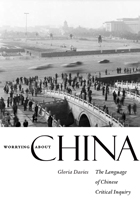

Speaking about Chinese writing entails thinking about how writing speaks through various media. In the guises of the written character and its imprints, traces, or ruins, writing is more than textuality. The goal of this volume is to consider the relationship of writing to materiality in China’s literary history and to ponder the physical aspects of the production and circulation of writing. To speak of the thing-ness of writing is to understand it as a thing in constant motion, transported from one place or time to another, one genre or medium to another, one person or public to another.
Thinking about writing as the material product of a culture shifts the emphasis from the author as the creator and ultimate arbiter of a text’s meaning to the editors, publishers, collectors, and readers through whose hands a text is reshaped, disseminated, and given new meanings. By yoking writing and materiality, the contributors to this volume aim to bypass the tendency to oppose form and content, words and things, documents and artifacts, to rethink key issues in the interpretation of Chinese literary and visual culture.
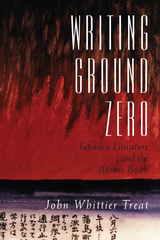
Treat recounts the controversial history of Japanese public discourse around Hiroshima and Nagasaki—a discourse alternatively celebrated and censored—from August 6, 1945, to the present day. He includes works from the earliest survivor writers, including Hara Tamiki and Ota Yoko, to such important Japanese intellectuals today as Oe Kenzaburo and Oda Makoto. Treat argues that the insights of Japanese writers into the lessons of modern atrocity share much in common with those of Holocaust writers in Europe and the practitioners of recent poststructuralist nuclear criticism in America. In chapters that take up writers as diverse as Hiroshima poets, Tokyo critics, and Nagasaki women novelists, he explores the implications of these works for critical, literary, and cultural theory.
Treat summarizes the Japanese contribution to such ongoing international debates as the crisis of modern ethics, the relationship of experience to memory, and the possibility of writing history. This Japanese perspective, Treat shows, both confirms and amends many of the assertions made in the West on the shift that the death camps and nuclear weapons have jointly signaled for the modern world and for the future.
Writing Ground Zero will be read not only by students of Japan, but by all readers concerned with the fate of culture after the fact of nuclear war in our time.
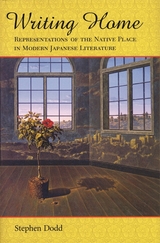
This book examines the development of Japanese literature depicting the native place (furusato) from the mid-Meiji period through the late 1930s as a way of articulating the uprootedness and sense of loss many experienced as Japan modernized. The 1890s witnessed the appearance of fictional works describing a city dweller who returns to his native place, where he reflects on the evils of urban life and the idyllic past of his childhood home. The book concentrates on four authors who typify this trend: Kunikida Doppo, Shimazaki Tōson, Satō Haruo, and Shiga Naoya.
All four writers may be understood as trying to make sense of contemporary Japan. Their works reflect their engagement with the social, intellectual, economic, and technological discourses that created a network of shared experience among people of a similar age. This common experience allows the author to chart how these writers’ works contributed to the general debate over Japanese national identity in this period. By exploring the links between furusato literature and the theme of national identity, he shows that the debate over a common language that might “transparently” express the modern experience helped shape a variety of literary forms used to present the native place as a distinctly Japanese experience.

In texts from the mid-Heian to the early Kamakura periods, certain figures appear to be “marginal” or removed from “centers” of power. But why do we see these figures in this way?
This study first seeks to answer this question by examining the details of the marginalizing discourse found in these texts. Who is portraying whom as marginal? For what reason? Is the discourse consistent? The author next considers these texts in terms of the predilection of modern scholarship, both Japanese and Western, to label certain figures “marginal.” She then poses the question: Is this predilection a helpful tool or does it inscribe modern biases and misconceptions onto these texts?
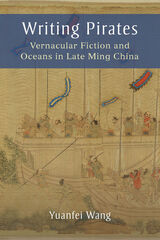
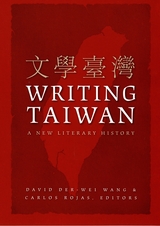
Because the island of Taiwan spent the first half of the century as a colony of Japan and the second half in an umbilical relationship to China, its literature challenges basic assumptions about what constitutes a “national literature.” Several contributors directly address the methodological and epistemological issues involved in writing about “Taiwan literature.” Other contributors investigate the cultural and political grounds from which specific genres and literary movements emerged. Still others explore themes of history and memory in Taiwan literature and tropes of space and geography, looking at representations of boundaries as well as the boundary-crossing global flows of commodities and capital. Like Taiwan’s history, modern Taiwan literature is rife with conflicting legacies and impulses. Writing Taiwan reveals a sense of its richness and diversity to English-language readers.
Contributors. Yomi Braester, Sung-sheng Yvonne Chang, Fangming Chen, Lingchei Letty Chen, Chaoyang Liao, Ping-hui Liao, Joyce C. H. Liu, Kim-chu Ng, Carlos Rojas, Xiaobing Tang, Ban Wang, David Der-wei Wang, Gang Gary Xu, Michelle Yeh, Fenghuang Ying
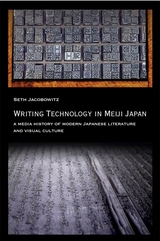
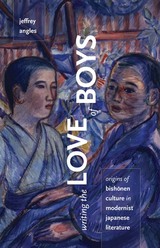
Jeffrey Angles focuses on key writers, examining how they experimented with new language, genres, and ideas to find fresh ways to represent love and desire between men. He traces the personal and literary relationships between contemporaries such as the poet Murayama Kaita, the mystery writers Edogawa Ranpo and Hamao Shiro, the anthropologist Iwata Jun’ichi, and the avant-garde innovator Inagaki Taruho.
Writing the Love of Boys shows how these authors interjected the subject of male–male desire into discussions of modern art, aesthetics, and perversity. It also explores the impact of their efforts on contemporary Japanese culture, including the development of the tropes of male homoeroticism that recur so often in Japanese girls’ manga about bishonen love.
READERS
Browse our collection.
PUBLISHERS
See BiblioVault's publisher services.
STUDENT SERVICES
Files for college accessibility offices.
RECENTLY PUBLISHED



UChicago Accessibility Resources
home | accessibility | search | about | contact us
BiblioVault ® 2001 - 2026
The University of Chicago Press