
 A SCHOLARLY BOOK REPOSITORY
9 start with W start with W

A close associate of Chico Mendes, Gomercindo Rodrigues witnessed the struggle between Brazil's rubber tappers and local ranchers—a struggle that led to the murder of Mendes. Rodrigues's memoir of his years with Mendes has never before been translated into English from the Portuguese. Now, Walking the Forest with Chico Mendes makes this important work available to new audiences, capturing the events and trends that shaped the lives of both men and the fragile system of public security and justice within which they lived and worked.
In a rare primary account of the celebrated labor organizer, Rodrigues chronicles Mendes's innovative proposals as the Amazon faced wholesale deforestation. As a labor unionist and an environmentalist, Mendes believed that rain forests could be preserved without ruining the lives of workers, and that destroying forests to make way for cattle pastures threatened humanity in the long run. Walking the Forest with Chico Mendes also brings to light the unexplained and uninvestigated events surrounding Mendes's murder.
Although many historians have written about the plantation systems of nineteenth-century Brazil, few eyewitnesses have captured the rich rural history of the twentieth century with such an intricate knowledge of history and folklore as Rodrigues.

In this memoir, translated from the Portuguese, Barbosa recounts the most significant regional and global issues that arose, alongside the domestic political conflicts within a divided North American society. Barbosa provides sophisticated analysis of economic relations during these changing times, and also explores the many US misconceptions about Brazil and the Latin American region.
From the privileged post of observation that an ambassadorship in the American capital represents, Barbosa had the exceptional opportunity over a considerable length of time to closely follow relations between Brazil and the United States. He witnessed relations evolve under two governments as they developed distinct foreign policies, which at times led to a breakdown in understanding between the two countries.
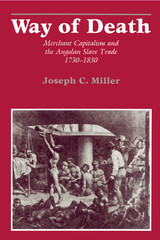
This acclaimed history of Portuguese and Brazilian slaving in the southern Atlantic is now available in paperback.
With extraordinary skill, Joseph C. Miller explores the complex relationships among the separate economies of Africa, Europe, and the South Atlantic that collectively supported the slave trade. He places the grim history of the trade itself within the context of the rise of merchant capitalism in the eighteenth century. Throughout, Miller illuminates the experiences of the slaves themselves, reconstructing what can be known of their sufferings at the hands of their buyers and sellers.
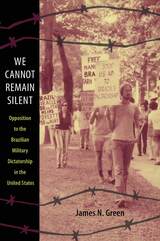
Green interviewed many of the activists who educated journalists, government officials, and the public about the abuses taking place under the Brazilian dictatorship. Drawing on those interviews and archival research from Brazil and the United States, he describes the creation of a network of activists with international connections, the documentation of systematic torture and repression, and the cultivation of Congressional allies and the press. Those efforts helped to expose the terror of the dictatorship and undermine U.S. support for the regime. Against the background of the political and social changes of the 1960s and 1970s, Green tells the story of a decentralized, international grassroots movement that effectively challenged U.S. foreign policy.
Three months to live.
José Maria, a contemplative engineer in late middle age, and now a victim of leukemia, has received a death sentence from his doctor. His life has been a frustrating nonfulfillment of his early hopes, and his musings are many and varied as his life wanes.
The Brazilian writer Corção's remarkable novel is the diary of this thoughtful man facing the imminent prospect of death and trying to find the meaning of life—and of death—while evaluating his own existence.
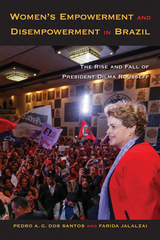
In 2010, Dilma Rousseff was the first woman to be elected President in Brazil. She was re-elected in 2014 before being impeached in 2016 for breaking budget laws. Her popularity and controversy both energized and polarized the country. In Women’s Empowerment and Disempowerment in Brazil, dos Santos and Jalalzai examine Rousseff’s presidency and what it means for a woman to hold (and lose) the country’s highest power.
The authors examine the ways Rousseff exercised dominant authority and enhanced women’s political empowerment. They also investigate the extent her gender played a role in the events of her presidency, including the political and economic crises and her ensuing impeachment. Emphasizing women’s political empowerment rather than representation, the authors assess the effects of women executives to more directly impact female constituencies—how they can empower women by appointing them to government positions; make policies that advance women’s equality; and, through visibility, create greater support for female politicians despite rampant sexism.
Women’s Empowerment and Disempowerment in Brazil uses Rousseff’s presidency as a case study to focus on the ways she succeeded and failed in using her authority to empower women. The authors’ findings have implications throughout the world.
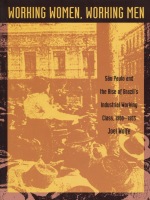
Drawing on a diverse range of sources—oral histories along with union, industry, and government archival materials—Wolfe's account focuses not only on labor leaders and formal Left groups, but considers the impact of grassroots workers' movements as well. He pays particular attention to the role of gender in the often-contested relations between leadership groups and thee rank and file. Wolfe's analysis illuminates how various class and gender ideologies influenced the development of unions, industrialists' strategies, and rank-and-file organizing and protest activities.
This study reveals how workers in Sào Paulo maintained a local grassroots social movement that, by the mid–1950s, succeeded in seizing control of Brazil's state-run official unions. By examining the actions of these workers in their rise to political prominence in the 1940s and 1950s, this book provides a new understanding of the sources and development of populist politics in Brazil.

READERS
Browse our collection.
PUBLISHERS
See BiblioVault's publisher services.
STUDENT SERVICES
Files for college accessibility offices.
RECENTLY PUBLISHED






UChicago Accessibility Resources
home | accessibility | search | about | contact us
BiblioVault ® 2001 - 2026
The University of Chicago Press