
 A SCHOLARLY BOOK REPOSITORY
5 start with W start with W
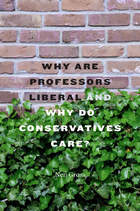
Some observers see American academia as a bastion of leftist groupthink that indoctrinates students and silences conservative voices. Others see a protected enclave that naturally produces free-thinking, progressive intellectuals. Both views are self-serving, says Neil Gross, but neither is correct. Why Are Professors Liberal and Why Do Conservatives Care? explains how academic liberalism became a self-reproducing phenomenon, and why Americans on both the left and right should take notice.
Academia employs a higher percentage of liberals than nearly any other profession. But the usual explanations—hiring bias against conservatives, correlations of liberal ideology with high intelligence—do not hold up to scrutiny. Drawing on a range of original research, statistics, and interviews, Gross argues that “political typing” plays an overlooked role in shaping academic liberalism. For historical reasons, the professoriate developed a reputation for liberal politics early in the twentieth century. As this perception spread, it exerted a self-selecting influence on bright young liberals, while deterring equally promising conservatives. Most professors’ political views formed well before they stepped behind the lectern for the first time.
Why Are Professors Liberal and Why Do Conservatives Care? shows how studying the political sympathies of professors and their critics can shed light not only on academic life but on American politics, where the modern conservative movement was built in no small part around opposition to the “liberal elite” in higher education. This divide between academic liberals and nonacademic conservatives makes accord on issues as diverse as climate change, immigration, and foreign policy more difficult.

If there’s one thing most Americans can agree on, it’s that everyone hates white liberals. Conservatives hate them for being culturally tolerant and threatening to usher in communism. Libertarians hate them for believing in the power of the state. Socialists hate them for serving as capitalism’s beard. Even liberals hate liberals—either because they can’t manage to overcome their own prejudices, or precisely because they’re so self-hating.
This is the starting point for Kevin M. Schultz’s lively new history of white liberals in the United States. He efficiently lays out the array of objections to liberals—ineffective, spineless, judgmental, authoritarian, and more—in a historical frame that shows how protean the concept has been throughout the past hundred years. It turns out, he declares, that how you define a “white liberal” is less a reflection of reality and more a Rorschach test revealing your own anxieties.
Sharply assessing how decades of attacks on liberals and liberalism have steadily hollowed out the center of American political life, Schultz also explains precisely what needs to be done to avoid digging ourselves even further into the hole of polarization. The ultimate goal, he argues, is to achieve political fragmentation that will fuel the rise of a true multiparty system, where ideology will matter more, not less.
With a tight command of postwar American history and a spirited voice, Why Everyone Hates White Liberals (Including White Liberals) is a must-read for anyone wishing to understand—and envision a way forward in—the complicated landscape of American politics.
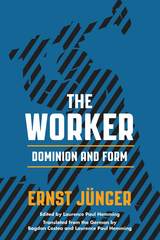
Martin Heidegger considered Jünger “the only genuine follower of Nietzsche,” singularly providing “an interpretation which took shape in the domain of that metaphysics which already determines our epoch, even against our knowledge; this metaphysics is Nietzsche's doctrine of the ‘will to power.’” In The Worker, Jünger examines some of the defining questions of that epoch: the nature of individuality, society, and the state; morality, justice, and law; and the relationships between freedom and power and between technology and nature.
This work, appearing in its entirety in English translation for the first time, is an important contribution to debates on work, technology, and politics by one of the most controversial German intellectuals of the twentieth century. Not merely of historical interest, The Worker carries a vital message for contemporary debates about world economy, political stability, and equality in our own age, one marked by unsettling parallels to the 1930s.

Named One of "Six Books for Insight on a Trump Presidency" by the Washington Post
As far as members of the hugely controversial John Birch Society were concerned, the Cold War revealed in stark clarity the loyalties and disloyalties of numerous important Americans, including Dwight Eisenhower, John Kennedy, and Earl Warren. Founded in 1958 as a force for conservative political advocacy, the Society espoused the dangers of enemies foreign and domestic, including the Soviet Union, organizers of the US civil rights movement, and government officials who were deemed "soft" on communism in both the Republican and Democratic parties. Sound familiar? In The World of the John Birch Society, author D. J. Mulloy reveals the tactics of the Society in a way they've never been understood before, allowing the reader to make the connections to contemporary American politics, up to and including the Tea Party. These tactics included organized dissemination of broad-based accusations and innuendo, political brinksmanship within the Republican Party, and frequent doomsday predictions regarding world events. At the heart of the organization was Robert Welch, a charismatic writer and organizer who is revealed to have been the lifeblood of the Society's efforts.
The Society has seen its influence recede from the high-water mark of 1970s, but the organization still exists today. Throughout The World of the John Birch Society, the reader sees the very tenets and practices in play that make the contemporary Tea Party so effective on a local level. Indeed, without the John Birch Society paving the way, the Tea Party may have encountered a dramatically different political terrain on its path to power.

Named One of "Six Books for Insight on a Trump Presidency" by the Washington Post
As far as members of the hugely controversial John Birch Society were concerned, the Cold War revealed in stark clarity the loyalties and disloyalties of numerous important Americans, including Dwight Eisenhower, John Kennedy, and Earl Warren. Founded in 1958 as a force for conservative political advocacy, the Society espoused the dangers of enemies foreign and domestic, including the Soviet Union, organizers of the US civil rights movement, and government officials who were deemed "soft" on communism in both the Republican and Democratic parties. Sound familiar? In The World of the John Birch Society, author D. J. Mulloy reveals the tactics of the Society in a way they've never been understood before, allowing the reader to make the connections to contemporary American politics, up to and including the Tea Party. These tactics included organized dissemination of broad-based accusations and innuendo, political brinksmanship within the Republican Party, and frequent doomsday predictions regarding world events. At the heart of the organization was Robert Welch, a charismatic writer and organizer who is revealed to have been the lifeblood of the Society's efforts.
The Society has seen its influence recede from the high-water mark of 1970s, but the organization still exists today. Throughout The World of the John Birch Society, the reader sees the very tenets and practices in play that make the contemporary Tea Party so effective on a local level. Indeed, without the John Birch Society paving the way, the Tea Party may have encountered a dramatically different political terrain on its path to power.
READERS
Browse our collection.
PUBLISHERS
See BiblioVault's publisher services.
STUDENT SERVICES
Files for college accessibility offices.
RECENTLY PUBLISHED




UChicago Accessibility Resources
home | accessibility | search | about | contact us
BiblioVault ® 2001 - 2026
The University of Chicago Press