
 A SCHOLARLY BOOK REPOSITORY
13 start with W start with W
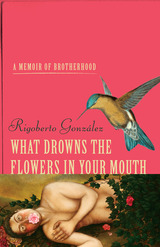
Descending into a dark emotional space that compromises their mental and physical health, the brothers eventually find hope in aiding each other. This is an honest and revealing window into the complexities of Latino masculinity, the private lives of men, and the ways they build strength under the weight of grief, loss, and despair.
Best of Show Award, Society for Technical Communication International
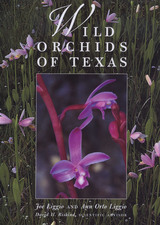
From the East Texas swamps and forests to the Edwards Plateau canyons and the Trans-Pecos mountains, Texas hosts a surprising number of native orchids. Their exquisite beauty endears them to everyone from wildflower lovers to professional botanists and conservationists.
This beautifully illustrated book presents all 54 wild orchids of Texas. The species descriptions that accompany Joe Liggio's lovely color photos discuss the plant's flowers, blooming season, pollinators, typical habitats, and range (also shown by map), including its distribution within and beyond Texas. The species are grouped by genus and also listed by color, county, and habitat for easy reference.
In addition to the species accounts, the authors offer a general natural history of Texas orchids that discusses such topics as pollination and reproduction, special growing requirements, and threats to orchids from loss of habitats and careless collecting. They also describe the many orchid habitats in Texas and the species that grow in each. This wide variety of information, which has never before been collected in one volume for a general readership, makes this book the essential guide to Texas' wild orchids.
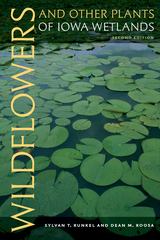
In clear and accessible prose, authors Sylvan Runkel and Dean Roosa provide common, scientific, and family names; the Latin or Greek meaning of the scientific names; habitat and blooming times; and a complete description. Plants are presented by habitat (terrestrial or aquatic), then refined by habit (e.g., emergent, floating, or submerged) or taxonomic group (e.g., ferns and allies or trees, shrubs, and vines). Particularly interesting is the information on the many ways in which Native Americans and early pioneers used these plants for everything from pain relief to tonics to soup and the ways that wildlife today use them for food and shelter. Each of the more than 150 species accounts is accompanied by a brilliant full-page color photograph by botanist Thomas Rosburg, who has also updated the nomenclature and descriptions for certain species.
After decades of being considered an enemy of the settler, the farmer, and the citizen, Iowa’s wetlands have come into their own. We are finally caring for these important habitats. Runkel and Roosa’s updated field companion will be a valuable guide to today’s preservation and restoration initiatives.
Winner, Carroll Abbott Memorial Award, Native Plant Society of Texas, 2002
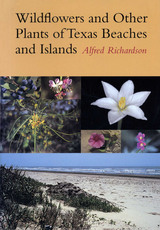
Many visitors to Texas beaches see only the sands between the surf and the first low dunes. Because few plants grow there, it's easy to get the impression that Texas beaches consist mostly of barren sand—while just the opposite is true. Beyond the dunes grow an amazing variety and abundance of native plants. Many of them, like Indian Blanket, Goldenrod, and Seaside Gerardia, produce great splashes of flowering color. Others display more modest flowers or are interesting for their growing habits. In all, over seven hundred species of flowering plants grow on Texas beaches and islands.
This handy field guide will aid you in identifying some 275 common and/or noteworthy flowering plants of the Texas beaches and islands from the Rio Grande to the Louisiana border. Each plant is illustrated by a color photograph, accompanied by a description of its appearance, habitat, and blooming time. The plants are grouped by families, which in turn are arranged according to relationships and similarities for easy reference. An introduction to beach habitats and plant life, references for further reading, and a glossary of terms make this book fully useful for everyone who wants a good, general understanding of beach plant life and wildflowers.

Featuring 125 families and more than 400 species, Wildflowers of Alabama combines natural history, cultural history, and more than 500 color photographs highlighting the beauty, grace, and intricate details of each plant in an accessible, up-to-date guide representing each significant group of flowering plants found in the state’s diverse range of ecosystems and habitats.
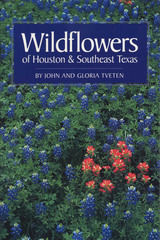
You'll find them throughout the year in Houston—lyre-leaf sage, Drummond skullcap, silver-leaf nightshade, snow-on-the-prairie, lemon beebalm, scarlet pimpernel, plains wild indigo, spring ladies'-tresses, deer pea vetch.
These wildflowers and hundreds of other species flourish in this part of Texas, but until this book was published in 1993 no guide had focused exclusively on the Houston area. John and Gloria Tveten spent years seeking out both the common and the rare flowers. They describe here more than 200 plants. A color photograph of each one will make identification easy.
The guide is arranged by color, with each entry tracing the history and lore of a species. Many plants—for example, prairie Indian plantain and self-heal—were used by Native Americans for medicinal purposes. Others, like poke-weed and wapato, are edible. Southern dewberry and giant ragweed are used as natural dyes. And some, like rattlebush and milkweed, are poisonous.
At the end of each species account is a list of key identifying characteristics for quick reference in the field. Summaries of plant families are also included, as well as tips on where and when to look for wildflowers.
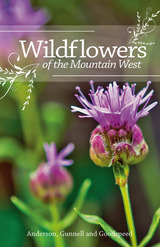
Many recreational hikers have stopped along the trail to admire a wildflower only to wonder what, exactly, they are looking at. Wildflowers of the Mountain West is a useful field guide that makes flower identification easy for the general outdoor enthusiast.
Many available plant guides are too technical or cumbersome for non-specialists to embrace. Covering New Mexico, Colorado, Wyoming, Idaho, Utah, Nevada and Oregon, this book is perfect for the enthusiasts who has little botanical knowledge but would like to know more about the wildflowers they are seeing. Organized by flower color for easy reference, plant records include the common and scientific names, a description of typical characteristics, habitat information and distribution maps, look-alike species, color photographs, and informative commentary. In addition, the book provides a useful introduction to the Mountain West region, along with line drawings to illustrate basic flower parts, shapes, and arrangements; a glossary of common botanical terms; a quick search key; and an index.
The book is spiral-bound, making it easy to bring along while hiking, backpacking, or biking, and stunning full color photographs make visual confirmation of flower type simple and straightforward.
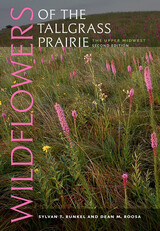
This classic of midwestern natural history is back in print with a new format and new photographs. Originally published in 1989, Wildflowers of the Tallgrass Prairie introduced many naturalists to the beauty and diversity of the native plants of the huge grasslands that once stretched from Manitoba to Texas. Now redesigned with updated names and all-new photographs, this reliable field companion will introduce tallgrass prairie wildflowers to a new generation of outdoor enthusiasts in the Upper Midwest.
Each species account is accompanied by a brilliant full-page color photograph by botanist Thomas Rosburg. In clear, straightforward, and accessible prose, authors Sylvan Runkel and Dean Roosa provide common, scientific, and family names; the Latin or Greek meaning of the scientific names; habitat and blooming times; and a complete description of plant, flower, and fruit. Particularly interesting is the information on the many ways in which Native Americans and early pioneers used these plants for everything from pain relief to dyes to hairbrushes.
Runkel and Roosa say that prairies can be among the most peaceful places on earth; certainly they are among the most beleaguered. Wildflowers of the Tallgrass Prairie will inspire both amateurs and professionals with the desire to learn more about the wonders of the prairie landscape.
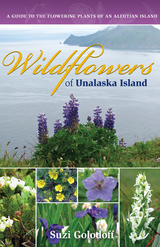
Each species is introduced and clearly defined and is accompanied by a photograph and line drawings. Many of these plants occur across a wide range of coastal Alaska; others are unique to the Aleutians. The introduction includes background on the unique geologic history, climate, and habitats of the archipelago to fully round out the user’s appreciation of the dramatic environment in which these hardy plants thrive.
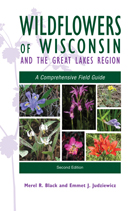
• more than 1,100 species from 459 genera in 100 families
• many rare and previously overlooked species
• 2,100 color photographs and 300 drawings
• Wisconsin distribution maps for almost all plants
• brief descriptions including distinguishing characteristics of the species
• Wisconsin status levels for each species of wildflower (native, invasive, endangered, etc.)
• derivation of Latin names.
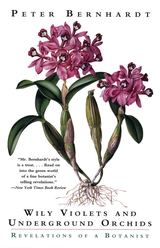
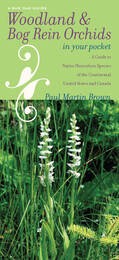
Native orchids are increasingly threatened by pressure from population growth and development but, nonetheless, still present a welcome surprise to observant hikers in every state and province. Compiled and illustrated by long-time orchid specialist Paul Martin Brown, this pocket guide to the woodland and bog rein orchids forms part of a series that will cover all the wild orchids of the continental United States and Canada.
Brown provides a description, general distributional information, time of flowering, and habitat requirements for each species as well as a complete list of hybrids and the many different growth and color forms that can make identifying orchids so challenging. For the woodland and bog rein orchids, which make up some of the most delicate and subtly colored of all wild orchids, he includes information on nineteen species, four subspecies and varieties, and seven hybrids.
The genus Platanthera is the largest genus of orchids to be found in North America north of Mexico; the woodland and bog rein orchids comprise a significant group of species found throughout much of temperate U.S. and Canada. The luminously green rein orchids, so-called because of the resemblance of some of the flowers to the reins used on horses, are especially abundant in rich woodlands, wetlands, and bogs in the more northerly and cooler habitats. Most are easy to identify based upon their general appearance, range, and time of flowering. Answering three simple questions—when, where, and how does it grow?—and comparing the living plants with the striking photos in this backpack-friendly laminated guide and the information in the simple key should enable both professional and amateur naturalists to achieve the satisfaction of identifying a specific orchid.
READERS
Browse our collection.
PUBLISHERS
See BiblioVault's publisher services.
STUDENT SERVICES
Files for college accessibility offices.
RECENTLY PUBLISHED







UChicago Accessibility Resources
home | accessibility | search | about | contact us
BiblioVault ® 2001 - 2026
The University of Chicago Press