logo for Society of American Archivists
Waldo Gifford Leland and the Origins of the American Archival Profession
Peter J. Wosh
Society of American Archivists, 2011
The professional accomplishments of Waldo Gifford Leland (1879-1966) are legendary: historian, surveyor of archival repositories in America and in France, father of the American Historical Association's Conference of Archivists, archival theorist, J. Franklin Jameson's key lieutenant in the battle for the establishment of the National Archives, second president of the Society of American Archivists, and long time head of the American Council of Learned Societies. This splendid classic brings together Leland's most significant writings concerning archives and archival methods, concentrating on the period from 1908 to 1920, when Leland was most involved in helping to create the American archives profession.
[more]

front cover of The War in Ukraine’s Donbas
The War in Ukraine’s Donbas
Origins, Contexts, and the Future
David R. Marples
Central European University Press, 2022

This collective work analyzes the ongoing conflict in Ukraine, providing a coherent picture of Ukraine and Eastern Europe in the period 2013–2020. Giving voice to different social groups, scholarly communities and agencies relevant to Ukraine’s recent history, The War in Ukraine's Donbas goes beyond simplistic media interpretations that limit the analysis to Vladimir Putin and Russian aims to annex Ukraine. Instead, the authors identify the deeper roots linked to the autonomy and history of Donbas as a region. The contributions explore local society and traditions and the alienation from Ukraine caused by the events of Euromaidan, which saw the removal of the Donetsk-based president Viktor Yanukovych. Other chapters address the refugee crisis, the Minsk Accords in 2014 and the impact of the new president Volodymyr Zelensky and his efforts to bring the war to an end by negotiations among Russia, Ukraine, France, and Germany.

The book concludes with four proposals for a durable peace in Donbas: territorial power-sharing; the conversion of rebels into legitimate political parties; amnesty for all participants of the armed conflict; and a transitional period of several years until political institutions are fully re-established.
[more]

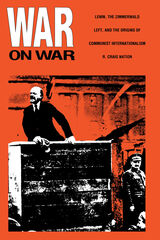
front cover of War on War
War on War
Lenin, the Zimmerwald Left, and the Origins of Communist Internationalism
R. Craig Nation
Duke University Press, 1989
The outbreak of World War I precipitated a schism in the international socialist movement that endures today. Heeding calls for "rational defense," the leading European socialist democratic parties abandoned their vision of peace and internationalism as an integral part of the struggle for social justice and set aside their view of interstate war as the clearest example of the irrational essence of competitive capitalism. Only the Zimmerwald Left, led by Lenin, continued to speak out for internationalism. R. Craig Nation utilizes sources in Dutch, French, German, Italian, Russian, and Swedish to provide the first comprehensive history of the Zimmerwald Left as an international political tendency.
[more]

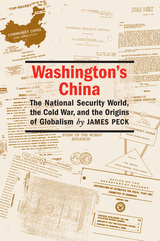
front cover of Washington's China
Washington's China
The National Security World, the Cold War, and the Origins of Globalism
James L. Peck
University of Massachusetts Press, 2006

This book addresses a central question about the Cold War that has never been adequately resolved. Why did the United States go to such lengths not merely to “contain” the People's Republic of China but to isolate it from all diplomatic, cultural, and economic ties to other nations? Why, in other words, was American policy more hostile to China than to the Soviet Union, at least until President Nixon visited China in 1972?

The answer, as set out here, lies in the fear of China's emergence as a power capable of challenging the new Asian order the United States sought to shape in the wake of World War II. To meet this threat, American policymakers fashioned an ideology that was not simply or exclusively anticommunist, but one that aimed at creating an integrated, cooperative world capitalism under U.S. leadership—an ideology, in short, designed to outlive the Cold War.

In building his argument, James Peck draws on a wide variety of little-known documents from the archives of the National Security Council and the CIA. He shows how American officials initially viewed China as a “puppet” of the Soviet Union, then as “independent junior partner” in a Sino-Soviet bloc, and finally as “revolutionary model” and sponsor of social upheaval in the Third World. Each of these constructs revealed more about U.S. perceptions and strategic priorities than about actual shifts in Chinese thought and conduct. All were based on the assumption that China posed a direct threat not just to specific U.S. interests and objectives abroad but to the larger vision of a new global order dominated by American economic and military power. Although the nature of “Washington's China” may have changed over the years, Peck contends that the ideology behind it remains unchanged, even today.
[more]

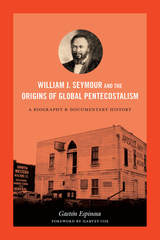
front cover of William J. Seymour and the Origins of Global Pentecostalism
William J. Seymour and the Origins of Global Pentecostalism
A Biography and Documentary History
Gastón Espinosa
Duke University Press, 2014
In 1906, William J. Seymour (1870–1922) preached Pentecostal revival at the Azusa Street mission in Los Angeles. From these and other humble origins the movement has blossomed to 631 million people around the world. Gastón Espinosa provides new insight into the life and ministry of Seymour, the Azusa Street revival, and Seymour's influence on global Pentecostal origins. After defining key terms and concepts, he surveys the changing interpretations of Seymour over the past 100 years, critically engages them in a biography, and then provides an unparalleled collection of primary sources, all in a single volume. He pays particular attention to race relations, Seymour's paradigmatic global influence from 1906 to 1912, and the break between Seymour and Charles Parham, another founder of Pentecostalism. Espinosa's fragmentation thesis argues that the Pentecostal propensity to invoke direct unmediated experiences with the Holy Spirit empowers ordinary people to break the bottle of denominationalism and to rapidly indigenize and spread their message.

The 104 primary sources include all of Seymour's extant writings in full and without alteration and some of Parham's theological, social, and racial writings, which help explain why the two parted company. To capture the revival's diversity and global influence, this book includes Black, Latino, Swedish, and Irish testimonies, along with those of missionaries and leaders who spread Seymour's vision of Pentecostalism globally.
[more]

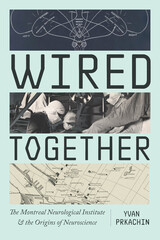
front cover of Wired Together
Wired Together
The Montreal Neurological Institute and the Origins of Neuroscience
Yvan Prkachin
University of Chicago Press, 2026
Examines the role of an influential neurological institute in shaping a new, interdisciplinary science—neuroscience—and advancing it worldwide.
 
Wired Together explains the rise of neuroscience by tracing the history of the Montreal Neurological Institute (MNI) and the men and women who transformed it into neuroscience’s most innovative and productive research site. Opened by neurosurgeon Wilder Penfield in 1934, the MNI pioneered the surgical treatment of epilepsy and transformed the operating theater into a new kind of scientific laboratory for investigating the functions of the brain. But more than that, the MNI became a crucial site for forming new interdisciplinary practices. These involved, as Yvan Prkachin puts it, wiring together new assemblies of physicians, surgeons, and scientists into a growing network that made possible the emergence of an interdisciplinary science of the brain.
 
Wired Together also traces how the MNI and its network of scientists spread this new interdisciplinary neuroscience to the rest of the world. Prkachin uncovers the surprising history of some of the most important neuroscientific organizations, discoveries, theories, and instruments from their beginnings in Montreal through the complex international networks of the post-war sciences. In doing so, he tells the stories of the most crucial and least understood characters from early neuroscience—such as Brenda Milner, Donald Hebb, Herbert Jasper, Molly Harrower, and David Hubel—as well as the surprising origins of scientific practices and ideas like sensory deprivation, multiple forms of memory, and artificial neural networks.
[more]

front cover of Women Lawyers and the Origins of Professional Identity in America
Women Lawyers and the Origins of Professional Identity in America
The Letters of the Equity Club, 1886 to 1890
Virginia G. Drachman
University of Michigan Press, 1993
The first women lawyers in America, like many of their twentieth-century counterparts, had to reconcile the traditional roles assigned to women with their roles as lawyers. In 1886, a group of women students and recent alumnae of the University of Michigan Law School founded the Equity Club, a correspondence club for women lawyers and law students across the country who were trying to overcome geographic isolation. The Equity Club became the first organization in the United States to forge professional links between women lawyers, and its founding marks the origins of a collective identity among these new professionals. The letters reprinted in Women Lawyers and the Origins of Professional Identity in America reveal the challenges the first women lawyers faced and reflect the diverse opinions they held on the common issues confronting them. Some contended that women should be lawyers on the same terms as men, while others argued that they could bring something special to the profession—like morality, purity, ethics, and humanity—in contrast to the purely business and commercial qualities of law as practiced by men. The discovery and publication of these letters fill a void in the documentary history of the legal profession and the history of women in America. The introductory essay and the biographical information provided about the lives of the members of the Equity Club help to place the letters in the larger contexts of those histories. Women Lawyers and the Origins of Professional Identity in America will prove enlightening to practicing lawyers, who will find that even a hundred years later, many of the letters have remarkable relevance. Scholars and students in women's history, American studies, sociology, and legal history will also find it a valuable resource.
[more]


Send via email Share on Facebook Share on Twitter