
 A SCHOLARLY BOOK REPOSITORY
6 start with W start with W

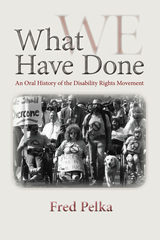
“Nothing about us without us” has been a core principle of American disability rights activists for more than half a century. It represents a response by people with disabilities to being treated with scorn and abuse or as objects of pity, and to having the most fundamental decisions relating to their lives—where they would live; if and how they would be educated; if they would be allowed to marry or have families; indeed, if they would be permitted to live at all—made by those who were, in the parlance of the movement, “temporarily able-bodied.”
In What We Have Done: An Oral History of the Disability Rights Movement, Fred Pelka takes that slogan at face value. He presents the voices of disability rights activists who, in the period from 1950 to 1990, transformed how society views people with disabilities, and recounts how the various streams of the movement came together to push through the Americans with Disabilities Act of 1990, the most sweeping civil rights legislation since passage of the Civil Rights Act of 1964. Beginning with the stories of those who grew up with disabilities in the 1940s and '50s, the book traces how disability came to be seen as a political issue, and how people with disabilities—often isolated, institutionalized, and marginalized—forged a movement analogous to the civil rights, women's rights, and gay rights movements, and fought for full and equal participation in American society.
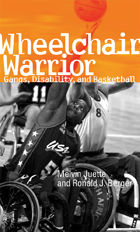
Melvin Juette has said that becoming paralyzed in a gang-related shooting was “both the worst and best thing that happened” to him. The incident, he believes, surely spared the then sixteen year-old African American from prison and/or an early death. It transformed him in other ways, too. He attended college and made wheelchair basketball his passion—ultimately becoming a star athlete and playing on the U.S. National Wheelchair Basketball Team.
In Wheelchair Warrior, Juette reconstructs the defining moments of his life with the assistance of sociologist Ronald Berger. His poignant memoir is bracketed by Berger’s thoughtful introduction and conclusion, which places this narrative of race, class, masculinity and identity into proper sociological context, showing how larger social structural forces defined his experiences. While Juette’s story never gives into despair, it does challenge the idea of the “supercrip.”
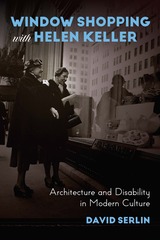
Window Shopping with Helen Keller recovers a series of influential moments when architects and designers engaged the embodied experiences of people with disabilities. David Serlin reveals how people with sensory and physical impairments navigated urban spaces and helped to shape modern culture. Through four case studies—the lives of Joseph Merrick (aka “The Elephant Man”) and Helen Keller, the projects of the Works Progress Administration, and the design of the Illinois Regional Library for the Blind and Physically Handicapped—Serlin offers a new history of modernity’s entanglements with disability.
READERS
Browse our collection.
PUBLISHERS
See BiblioVault's publisher services.
STUDENT SERVICES
Files for college accessibility offices.
RECENTLY PUBLISHED





UChicago Accessibility Resources
home | accessibility | search | about | contact us
BiblioVault ® 2001 - 2026
The University of Chicago Press