
 A SCHOLARLY BOOK REPOSITORY
9 start with W start with W
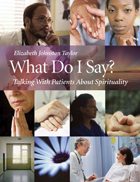
•How do I answer a "why" question?
•What do I say to a patient who believes a miracle will happen to cure them?
•What if I'm not religious? How can I talk about it?
In When Sickness Heals, Dr. Siroj Sorajjakool draws on more than ten years of studies on health benefits in relation to spirituality, especially focusing on the function of "meaning." He expounds on his theory that healing is primarily the function of meaning, and meaning transcends sickness and even death itself. He concludes that what people ultimately seek in life is the healing of their souls.
Sorajjakool brings many Eastern and Western resources to his conversation on health, meaning, and healing. He incorporates the perspectives of theologians and philosophers like Paul Tillich, Carl Jung, Søren Kierkegaard, Raimundo Panikkar, Dietrich Bonhoeffer, and John Macquarrie; as well as references to religious texts, including yin and yang, and alchemy.
A clear, distinct understanding of spirituality in clinical contexts is presented, with an argument for the role of meaning in the healing process, based on evidence that there may be healing even in the face of death. Sorajjakool identifies the transitional processes people may go through as they seek to make sense of their experiences during a health crisis. He suggests an alternative approach to spiritual assessment and provides methods of spiritual care that speak to the soul.
Defining religion over the past century has, ironically, led to theories that exclude belief in God, proposing that all systems of thought concerning the meaning of life are religions. Of course, this makes it impossible to distinguish the village priest from the village atheist, or Communism from Catholicism. Worse yet, it makes all religious behavior irrational, presuming that, for example, people knowingly pray to an empty sky.
Renowned sociologist of religion Rodney Stark offers a comprehensive, decisive, God-centered theory of religion in his book, Why God: Explaining Religious Phenomena. While his intent is not to insist that God exists, Stark limits religions to systems of thought based on belief in supernatural beings—to Gods. With this God-focused theory, Stark explores the entire range of religious topics, including the rise of monotheism, the discovery of sin, causes of religious hostility and conflict, and the role of revelations.
Each chapter of Why God? builds a comprehensive framework, starting with the foundations of human motivations and ending with an explanation of why most people are religious. Stark ultimately settles what religion is, what it does, and why it is a universal feature of human societies.
Why God? is a much needed guide for anyone who wants a thorough understanding of religion and our relationship to it, as well as a firm refutation to those who think religion can exist without the divine.
Kristina K. Groover, in examining this question, finds that books by American women writers offer alternative patterns for seeking revelation—patterns which emphasize not solitary journeys, but the sacredness of everyday life. Drawing on the work of feminist theorists and theologians, including Carol Gilligan, Naomi Goldenberg, and Rosemary Ruether, Groover explores the spiritual nature and force of domesticity, community, storytelling, and the garden in the works of such writers as Toni Morrison, Katherine Anne Porter, Kaye Gibbons, and Alice Walker. Ordinary, personal experience in these works becomes a source for spiritual revelation. Wisdom is gained, lessons are learned, and lives are healed not in spite of home and communal ties, but because of them.
Thus, American women writers, Groover argues, make alternative literary and spiritual paradigms possible. Similarly, Kristina K. Groover, in this lucid and groundbreaking work, opens up new fields of exploration for any reader interested in women’s spirituality or in the rich, diverse field of American literature.

Maparyan organizes the contributions around five key ideas. The first section looks at womanist self-care as a life-saving strategy. The second examines healing the Earth as a prerequisite to healing ourselves. In Part Three, the essays illuminate how womanism’s politics of invitation provides a strategy for enlarging humanity’s circle of inclusion, while Part Four considers womanism as both a challenge and antidote to dehumanization. The final section delves into womanism’s potential for constructing worlds and futures. In addition, Maparyan includes a section of works by womanist visual artists.
Defiant and far-sighted, Womanism Rising takes readers on a journey into a new generation of concepts, ideas, and strategies for womanist studies.
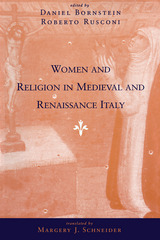
These essays explore the involvement of women in religious life throughout northern and central Italy and trace the evolution of communities of pious women as they tried to achieve their devotional goals despite the strictures of the ecclesiastical hierarchy. The contributors examine relations between holy women, their devout followers, and society at large.
Including contributions from leading figures in a new generation of Italian historians of religion, this book shows how women were able to carve out broad areas of influence by carefully exploiting the institutional church and by astutely manipulating religious percepts.
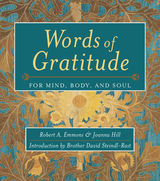
"The test of all happiness,” said G.K. Chesterton, “is gratitude."
Learning to experience gratitude involves being grateful as an attitude, not as a reaction when good things occur. To be grateful, one does not need to wait until things are perfect. In fact, practicing gratitude makes one receptive to life's blessings, and these blessings continue as we continue to be thankful.
In one study, described by author Robert Emmons, participants who wrote about five things for which they were grateful experienced more positive emotional states and were more likely to help others over a period of ten weeks than were participants who wrote about the hassles and stressors they experienced during the same time.
"Love wholeheartedly,” says Brother David Steindl-Rast, “be surprised, give thanks and praise—then you will discover the fullness of your life."
Gratitude provides gifts to both the giver and the receiver, and this illuminating book will inspire readers to recognize just how truly blessed we are.
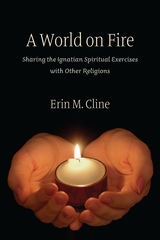
Erin Cline examines why this ought to be done, for whom, and what the aims of such an adaptation would be, including the different theological justifications for this practice. She concludes that there are compelling reasons for sharing the Exercises with members of other religions and that doing so coheres with the central mission of the Jesuits. A World on Fire goes on to examine the question of how the Exercises can be faithfully adapted for members of other religions. In outlining adaptations for the Hindu, Buddhist, and Confucian traditions that draw upon the traditional content of the Exercises supplemented by the texts of these religious traditions, Cline shows how Ignatian spirituality can help point the way to a different kind of inter-religious dialogue – one that is not bound up in technical terminology or confined to conversations between theologians and religious leaders. Rather, in making the Spriitual Exercises accessible to members of other faith traditions, we are as Pope Francis puts it, “living on a frontier, one in which the Gospel meets the needs of the people to whom it should be proclaimed in an understandable and meaningful way.”
A World on Fire will be of interest to comparative theologians and scholars working on inter-religious dialogue, religious pluralism, contemplative studies, and spirituality, as well as Jesuit priests and other practitioners who employ the Spiritual Exercises in their ministry.

Worldwide Laws of Life is full of wisdom drawn from the major sacred Scriptures of the world and various schools of philosophical thought, as well as from scientists, artists, historians, and others. Its aim is to assist people of all ages to learn more about the universal truths of life that transcend modern times or particular cultures.
READERS
Browse our collection.
PUBLISHERS
See BiblioVault's publisher services.
STUDENT SERVICES
Files for college accessibility offices.
RECENTLY PUBLISHED




UChicago Accessibility Resources
home | accessibility | search | about | contact us
BiblioVault ® 2001 - 2025
The University of Chicago Press