
 A SCHOLARLY BOOK REPOSITORY
26 start with W start with W
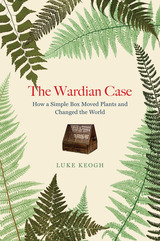
Roses, jasmine, fuchsia, chrysanthemums, and rhododendrons bloom in gardens across the world, and yet many of the most common varieties have roots in Asia. How is this global flowering possible? In 1829, surgeon and amateur naturalist Nathaniel Bagshaw Ward placed soil, dried leaves, and the pupa of a sphinx moth into a sealed glass bottle, intending to observe the moth hatch. But when a fern and meadow grass sprouted from the soil, he accidentally discovered that plants enclosed in glass containers could survive for long periods without watering. After four years of experimentation in his London home, Ward created traveling glazed cases that would be able to transport plants around the world. Following a test run from London to Sydney, Ward was proven correct: the Wardian case was born, and the botanical makeup of the world’s flora was forever changed.
In our technologically advanced and globalized contemporary world, it is easy to forget that not long ago it was extremely difficult to transfer plants from place to place, as they often died from mishandling, cold weather, and ocean salt spray. In this first book on the Wardian case, Luke Keogh leads us across centuries and seas to show that Ward’s invention spurred a revolution in the movement of plants—and that many of the repercussions of that revolution are still with us, from new industries to invasive plant species. From the early days of rubber, banana, tea, and cinchona cultivation—the last used in the production of the malaria drug quinine—to the collecting of beautiful and exotic flora like orchids in the first great greenhouses of the United States Botanic Garden in Washington, DC, and England’s Royal Botanic Gardens, Kew, the Wardian case transformed the world’s plant communities, fueled the commercial nursery trade and late nineteenth-century imperialism, and forever altered the global environment.
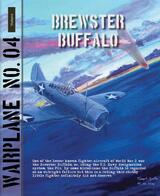
This book presents an overview of the development and operational use of the Buffalo with many photos including a number not published before.
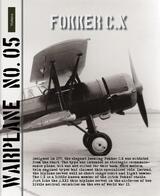
The C.X is a little-known member of the Dutch Fokker stable. Just like the D.XXI this biplane served in the air forces of two little neutral countries on the eve of World War II. Both fought gallantly in a war of David versus Goliath proportions, and the complete operational history of the type spans a total of 25 years. In retrospect, the C.X was the last fighting biplane type built by Fokker and the company's last pre-war military type to survive.
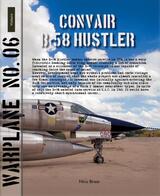
However, problems occurred during the development process and costs risings went so out of control that the whole project was almost cancelled a few times. Strategic Air Command was initially against ordering the B-58 for service, not only because of its complexity but also since they saw no advantage of a Mach 2 bomber over other types. Despite this the B-58 entered service at S.A.C. in 1960. It would have a relatively short operational career.
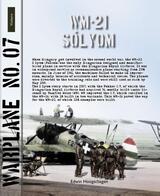
The Sólyom story starts in 1927, with the Fokker C.V, of which the Hungarian Royal Airforce had acquired 76, mostly built under license by Manfred Weiss (WM). WM improved the C.V, which resulted in the WM-16, with 18 built in two variants. This WM-16 paved the way for the WM-21, of which 128 examples were built.
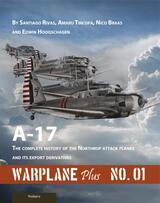
This book offers an overview of an iconic aeroplane. The authors, all specialists in their field, have compiled a comprehensive story and gathered more than 350 photographs, colour profiles and maps, thus offering a fascinating view at an aircraft type linking the ‘Golden Age of aviation’ days with the dark years of World War Two.
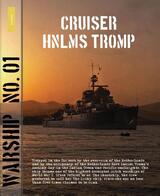
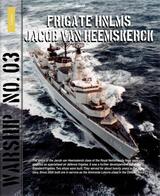
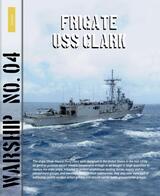
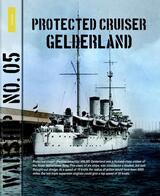
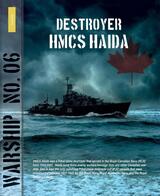
Nowadays she is the only surviving Tribal-class destroyer out of 27 units that were constructed between 1937-1945 for the Royal Navy, Royal Australian Navy, and the Royal Canadian Navy.
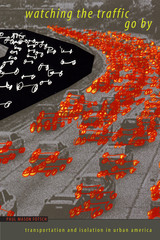
2007 — Jane Jacobs Urban Communication Publication Award – Urban Communication Foundation
As twentieth-century city planners invested in new transportation systems to deal with urban growth, they ensured that the automobile rather than mass transit would dominate transportation. Combining an exploration of planning documents, sociological studies, and popular culture, Paul Fotsch shows how our urban infrastructure developed and how it has shaped American culture ever since.
Watching the Traffic Go By emphasizes the narratives underlying our perceptions of innovations in transportation by looking at the stories we have built around these innovations. Fotsch finds such stories in the General Motors "Futurama" exhibit at the 1939 World's Fair, debates in Munsey's magazine, films such as Double Indemnity, and even in footage of the O. J. Simpson chase along Los Angeles freeways.
Juxtaposed with contemporaneous critiques by Lewis Mumford, Theodor Adorno, and Max Horkheimer, Fotsch argues that these narratives celebrated new technologies that fostered stability for business and the white middle class. At the same time, transportation became another system of excluding women and the poor, especially African Americans, by isolating them in homes and urban ghettos.
A timely, interdisciplinary analysis, Watching the Traffic Go By exposes the ugly side of transportation politics through the seldom-used lens of popular culture.
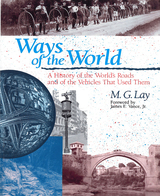
This is the first comprehensive history of the world's roads, highways, bridges, and the people and vehicles that traverse them, from prehistoric times to the present. Encyclopedic in its scope, fascinating in its details, Ways of the World is a unique work for reference and browsing. Maxwell Lay considers the myriad aspects of roads and their users: the earliest pathways, the rise of wheeled vehicles and animals to pull them, the development of surfaced roads, the motives for road and bridge building, and the rise of cars and their influence on roads, cities, and society. The work is amply illustrated, well indexed and cross-referenced, and includes a chronology of road history and a full bibliography.
It is indispensable for anyone interested in travel, history, geography, transportation, cars, or the history of technology.
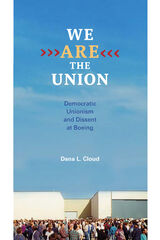
We Are the Union is grounded in on-site research and interviews and focuses on the efforts by Unionists for Democratic Change to reform unions from within. Incorporating theory and methods from the fields of organizational communication as well as labor studies, Cloud methodically uncovers and analyzes the goals, strategies, and dilemmas of the dissidents who, while wanting to uphold the ideas and ideals of the union, took up the gauntlet to make it more responsive to workers and less conciliatory toward management, especially in times of economic stress or crisis. Cloud calls for a revival of militant unionism as a response to union leaders' embracing of management and training programs that put workers in the same camp as management, arguing that reform groups should look to the emergence of powerful industrial unions in the United States for guidance on revolutionizing existing institutions and building new ones that truly accommodate workers' needs.

The Sólyom story starts in 1927, with the Fokker C.V, of which the Hungarian Royal Airforce had acquired 76, mostly built under license by Manfred Weiss (WM). WM improved the C.V, which resulted in the WM-16, with 18 built in two variants. This WM-16 paved the way for the WM-21, of which 128 examples were built.
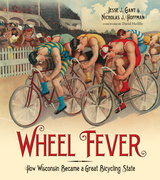
Many early riders embraced the bicycle as a solution to the age-old problem of how to get from here to there in the quickest and easiest way possible. Yet for every supporter of the “poor man’s horse,” there were others who wanted to keep the rights and privileges of riding to an elite set. Women, the working class, and people of color were often left behind as middle- and upper-class white men benefitted from the “masculine” sport and all-male clubs and racing events began to shape the scene. Even as bikes became more affordable and accessible, a culture defined by inequality helped create bicycling in its own image, and these limitations continue to haunt the sport today.
Wheel Fever is about the origins of bicycling in Wisconsin and why those origins still matter, but it is also about our continuing fascination with all things bicycle. From “boneshakers” to high-wheels, standard models to racing bikes, tandems to tricycles, the book is lushly illustrated with never-before-seen images of early cycling, and the people who rode them: bloomer girls, bicycle jockeys, young urbanites, and unionized workers.
Laying the foundations for a much-beloved recreation, Wheel Fever challenges us to imagine anew the democratic possibilities that animated cycling’s early debates.
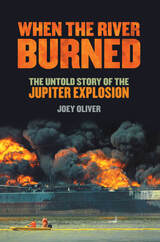
On September 16, 1990, the tanker ship Jupiter exploded while unloading gasoline at a Bay City pier on the Saginaw River. The blast killed one worker, injured eleven others, and triggered what the U.S. Coast Guard later described as an unprecedented crisis on the Great Lakes. For weeks, the disaster commanded national attention as officials worked to contain the damage and investigate the cause. Then, like so many industrial accidents, the story faded from public memory.
When the River Burned tells the story of this overlooked chapter in Great Lakes maritime history. Drawing on newspaper archives, Coast Guard investigations, and eyewitness accounts, Joey Oliver reconstructs how a series of small oversights—in equipment, procedure, and human judgment—aligned to produce catastrophe.
The book places the Jupiter explosion within a broader history of the Saginaw River, tracing its evolution into a vital artery of Michigan industry. Oliver examines the fragile interdependence of ships, piers, and river traffic, revealing how disasters emerge not from single causes but from the breakdown of complex systems. When the River Burned is not only the account of a deadly tanker explosion; it is a reflection on what caused it, on the safety changes that followed, and on changes that never came.
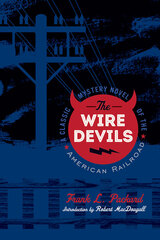
Best known for his Jimmie Dale series of books, which have sold more than 3 million copies worldwide, Frank L. Packard first published The Wire Devils in 1918. A “wire thriller” that uses the booming railroads and telegraph lines of the old West as its backdrop for fast-paced adventure, The Wire Devils follows a criminal gang of the same name who hijack a railroad’s telegraph lines to glean information about profitable shipments. But foiling them again and again is the Hawk, the outlaw hero who robs from the robbers and is ultimately on the side of law and order.
Combining elements from dime-store novels and Packard’s own experience on the rails, The Wire Devils is at once a hybrid western and a thriller still worth reading nearly a century after it was written.

For better or worse, the view through a car’s windshield has redefined how we see the world around us. In some cases, such as the American parkway, the view from the road was the be-all and end-all of the highway; in others, such as the Italian autostrada, the view of a fast, efficient transportation machine celebrating either Fascism or its absence was the goal. These varied environments are neither necessary nor accidental but the outcomes of historical negotiations, and whether we abhor them or take delight in them, they have become part of the fabric of human existence.
The World beyond the Windshield: Roads and Landscapes in the United States and Europe is the first systematic, comparative look at these landscapes. By looking at examples from the United States and Europe, the chapters in this volume explore the relationship between the road and the landscape thatit traverses, cuts through, defines, despoils, and enhances. The authors analyze the Washington Beltway and the Blue Ridge Parkway, as well as iconic roads in Italy, Nazi Germany, East Germany, and Great Britain. This is a story of the transatlantic exchange of ideas about environment and technology and of the national and nationalistic appropriations of such landscaping.
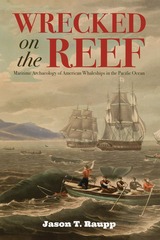
Take to the sea on this maritime archaeological exploration of nineteenth-century American whaling ships
American whaleships of the early nineteenth century were more than ocean-going vessels—they were complex workplaces, designed for long-term voyages, round-the-clock labor, and the large-scale extraction of marine resources. In Wrecked on the Reef, maritime archaeologist Jason T. Raupp presents a pioneering study of these ships as mobile production platforms, rooted in the logic of industrial capitalism operating far from land.
Drawing on shipwreck sites from the central Pacific region, Raupp offers a rare archaeological look at everyday life aboard nineteenth-century whaling vessels during the so-called “Golden Age” of whaling. He examines the tools used to hunt and process whales, the strict labor hierarchies onboard, and the physical evidence of diverse, often vulnerable crews who lived and worked under demanding conditions. By combining maritime and industrial archaeology, Raupp reveals how these ships functioned not just as transportation, but as full-scale factories at sea.
Chapters trace the rise of Pacific whaling, the importance of Hawaii as a supply and repair hub, the design and mechanics of whaleships, and the dangerous work crews performed in extreme isolation. Raupp shows how these ships were not only technological marvels of their time, but also part of a much larger system of labor, risk, and ocean-based resource extraction that fueled American expansion into the Pacific.
By exploring whaleships as floating work sites, Raupp offers readers a deeper understanding of maritime labor, capitalism, and imperialism in the nineteenth century. Wrecked on the Reef charts a new course in the study of labor and landscape at sea, providing significant contributions to maritime archaeology, industrial history, and environmental humanities.
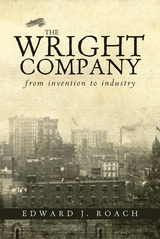
Fresh from successful flights before royalty in Europe, and soon after thrilling hundreds of thousands of people by flying around the Statue of Liberty, in the fall of 1909 Wilbur and Orville Wright decided the time was right to begin manufacturing their airplanes for sale. Backed by Wall Street tycoons, including August Belmont, Cornelius Vanderbilt III, and Andrew Freedman, the brothers formed the Wright Company. The Wright Company trained hundreds of early aviators at its flight schools, including Roy Brown, the Canadian pilot credited with shooting down Manfred von Richtofen—the “Red Baron”—during the First World War; and Hap Arnold, the commander of the U.S. Army Air Forces during the Second World War. Pilots with the company’s exhibition department thrilled crowds at events from Winnipeg to Boston, Corpus Christi to Colorado Springs. Cal Rodgers flew a Wright Company airplane in pursuit of the $50,000 Hearst Aviation Prize in 1911.
But all was not well in Dayton, a city that hummed with industry, producing cash registers, railroad cars, and many other products. The brothers found it hard to transition from running their own bicycle business to being corporate executives responsible for other people’s money. Their dogged pursuit of enforcement of their 1906 patent—especially against Glenn Curtiss and his company—helped hold back the development of the U.S. aviation industry. When Orville Wright sold the company in 1915, more than three years after his brother’s death, he was a comfortable man—but his company had built only 120 airplanes at its Dayton factory and Wright Company products were not in the U.S. arsenal as war continued in Europe.
Edward Roach provides a fascinating window into the legendary Wright Company, its place in Dayton, its management struggles, and its effects on early U.S. aviation.

But all was not well in Dayton, a city that hummed with industry, producing cash registers, railroad cars, and many other products. The brothers found it hard to transition from running their own bicycle business to being corporate executives responsible for other people’s money. Their dogged pursuit of enforcement of their 1906 patent — especially against Glenn Curtiss and his company — helped hold back the development of the U.S. aviation industry. When Orville Wright sold the company in 1915, more than three years after his brother’s death, he was a comfortable man — but his company had built only 120 airplanes at its Dayton factory and Wright Company products were not in the U.S. arsenal as war continued in Europe.
Edward Roach provides a fascinating window into the legendary Wright Company, its place in Dayton, its management struggles, and its effects on early U.S. aviation.
READERS
Browse our collection.
PUBLISHERS
See BiblioVault's publisher services.
STUDENT SERVICES
Files for college accessibility offices.
RECENTLY PUBLISHED






UChicago Accessibility Resources
home | accessibility | search | about | contact us
BiblioVault ® 2001 - 2026
The University of Chicago Press