
 A SCHOLARLY BOOK REPOSITORY
6 start with Y start with Y
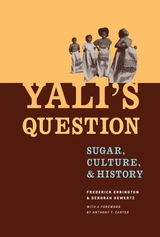
To understand the creation of such a startling place, Frederick Errington and Deborah Gewertz explore the perspectives of the diverse participants that had a hand in its creation. In examining these views, they also consider those of Yali, a local Papua New Guinean political leader. Significantly, Yali features not only in the story of RSL, but also in Jared Diamond's Pulitzer Prize winning world history Guns, Germs, and Steel—a history probed through its contrast with RSL's. The authors' disagreement with Diamond stems, not from the generality of his focus and the specificity of theirs, but from a difference in view about how history is made—and from an insistence that those with power be held accountable for affecting history.
Harouna and Stoller would meet in Harlem, at a bustling African market where Harouna built a life as an African art trader and Stoller was conducting research. Moving from Belayara in Niger to Silver Spring, Maryland, and from the Peace Corps to fieldwork to New York, Stoller recounts their separate lives and how the threat posed by cancer brought them a new, profound, and shared sense of meaning. Combining memoir, ethnography, and philosophy through a series of interconnected narratives, he tells a story of remarkable friendship and the quest for well-being. It’s a story of difference and unity, of illness and health, a lyrical reflection on human resiliency and the shoulders we lean on.

Let's face it--it's a tough economic world today and there's cutthroat competition. Dive into Adubato's book and get ready to turn a powerful page in life.
Steve Adubato's entire professional life has been about branding--learning it, living it, making mistakes at it, teaching it at several universities, while discovering how to find the fine line between shameless self-promotion and smart, strategic branding--first for himself, then for others, and now for readers interested in an honest analysis of the good and bad in practiced branding.
So, what's really in this book for you? Adubato profiles the brands of more than thirty people and companies and skillfully analyzes and dissects their strategies. His sage advice and on-target approach will help readers who:
- Feel they have something of value to offer,
- Are in a market-driven or aggressive environment in which their name, reputation, and persona hold the keys to their success,
- Want their customers to buy products and services again and again,
- Feel unappreciated in their current job,
- Have recently lost a job or are seeking their first job out of college,
- Are trying to get back into the workforce after years of being "out of it."
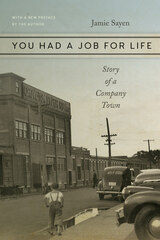
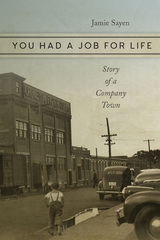
Absentee owners. Single-minded concern for the bottom line. Friction between workers and management. Hostile takeovers at the hands of avaricious and unaccountable multinational interests. The story of America’s industrial decline is all too familiar—and yet, somehow, still hard to fathom. Jamie Sayen spent years interviewing residents of Groveton, New Hampshire, about the century-long saga of their company town. The community’s paper mill had been its economic engine since the early twentieth century. Purchased and revived by local owners in the postwar decades, the mill merged with Diamond International in 1968. It fell victim to Anglo-French financier James Goldsmith’s hostile takeover in 1982, then suffered through a series of owners with no roots in the community until its eventual demise in 2007. Drawing on conversations with scores of former mill workers, Sayen reconstructs the mill’s human history: the smells of pulp and wood, the injuries and deaths, the struggles of women for equal pay and fair treatment, and the devastating impact of global capitalism on a small New England town. This is a heartbreaking story of the decimation of industrial America.
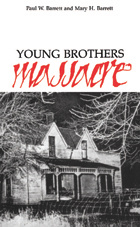
On January 2, 1932, near Springfield, Missouri, ten poorly armed law enforcement officers set out to arrest two local farm boys for auto theft. A few minutes later, six of the officers lay dead and three were wounded, setting a record that stands to this day for the greatest number of police officers killed in one incident in the history of the United States. This is the story of how it happened and of the unlikely people whose lives were forever changed.
The two killers, Jennings and Harry Young, were from a peaceful, tiny community named Brookline in central Greene County, Missouri. The "massacre" itself took place at the quiet orderly farm home of the J. D. Young family. Paul and Mary Barrett trace the personalities of those involved in the incident, describe the events of the fateful day, and examine the aftermath of the killings, detailing what was called "the greatest man hunt in the history of Texas," which culminated in the brothers' deaths in Houston.
READERS
Browse our collection.
PUBLISHERS
See BiblioVault's publisher services.
STUDENT SERVICES
Files for college accessibility offices.
RECENTLY PUBLISHED







UChicago Accessibility Resources
home | accessibility | search | about | contact us
BiblioVault ® 2001 - 2026
The University of Chicago Press