logo for Rutgers University Press
¿Y Yo También?
Latinas Respond to #MeToo
Melissa Castillo-Garsow
Rutgers University Press, 2027

¿Y Yo También? brings together a diverse range of Latina voices to address the under-representation of Latinx voices in the #MeToo movement and discussions of sexual violence. Through scholarly analysis of literature, media, podcasting, film, art, and testimonio alongside memoir, poetry, a short play, and personal essays, the authors address varied Latina experiences of sexual assault and harassment. These authors grapple with these traumas alongside their intersectional contexts including US imperialism in Puerto Rico, race, sexuality, indigeneity, religion, the publication landscape and more. Ultimately, each contribution sheds light on the lack of scholarly and media attention to the realities of Latinas and sexual assault but also chart pathways toward individual and community healing. This is a volume that is intellectually rigorous yet deeply accessible—suited for academics, college-level students, creatives, performers, practitioners, activists, and general readers alike.


[more]

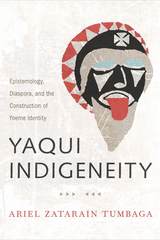
front cover of Yaqui Indigeneity
Yaqui Indigeneity
Epistemology, Diaspora, and the Construction of Yoeme Identity
Ariel Zatarain Tumbaga
University of Arizona Press, 2018
The Yaqui warrior is a persistent trope of the Mexican nation. But using fresh eyes to examine Yoeme indigeneity constructs, appropriations, and efforts at reclamation in twentieth- and twenty-first-century Mexican and Chicana/o literature provides important and vivid new opportunities for understanding. In Yaqui Indigeneity, Ariel Zatarain Tumbaga offers an interdisciplinary approach to examining representations of the transborder Yaqui nation as interpreted through the Mexican and Chicana/o imaginary.

Tumbaga examines colonial documents and nineteenth-century political literature that produce a Yaqui warrior mystique and reexamines the Mexican Revolution through indigenous culture. He delves into literary depictions of Yaqui battalions by writers like Martín Luis Guzmán and Carlos Fuentes and concludes that they conceal Yaqui politics and stigmatize Yaqui warriorhood, as well as misrepresent frequently performed deer dances as isolated exotic events.

Yaqui Indigeneity draws attention to a community of Chicana/o writers of Yaqui descent: Chicano-Yaqui authors such as Luis Valdez, Alma Luz Villanueva, Miguel Méndez, Alfredo Véa Jr., and Michael Nava, who possess a diaspora-based indigenous identity. Their writings rebut prior colonial and Mexican depictions of Yaquis—in particular, Véa’s La Maravilla exemplifies the new literary tradition that looks to indigenous oral tradition, religion, and history to address questions of cultural memory and immigration.

Using indigenous forms of knowledge, Tumbaga shows the important and growing body of literary work on Yaqui culture and history that demonstrates the historical and contemporary importance of the Yaqui nation in Mexican and Chicana/o history, politics, and culture.
[more]


Send via email Share on Facebook Share on Twitter