front cover of Negative Originals
Negative Originals
Race and Early Photography in Colombia
Juanita Solano Roa
Duke University Press, 2025
In Negative Originals, Juanita Solano Roa explores race and identity through photographic practices in late nineteenth-century Medellín, Colombia. Focusing on the photographic studios of Fotografía Rodríguez and Benjamín de la Calle, Solano Roa examines the visual construction and dissemination of racial ideologies and the linkage of race to progress. She studies both positive and negative prints to highlight the juxtaposition of traditional portraiture, which reinforced prevailing racial ideologies, and subversive depictions of often excluded individuals such as cross-dressers, peasants, the poor, and Afro-Colombians. In redefining photography’s role, Solano Roa shifts the critic’s eye from traditional positive prints to negatives, exposing the form’s material, symbolic, and spatial significance. In doing so, she simultaneously uncovers new perspectives on the medium and challenges hegemonic histories. Engaging one of Latin America’s most important photographic archives, Solano Roa addresses urgent gaps in the history of Colombian and Latin American photography, particularly at the intersection of race, gender, and the construction of whiteness.
[more]

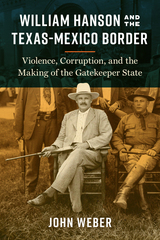
front cover of William Hanson and the Texas-Mexico Border
William Hanson and the Texas-Mexico Border
Violence, Corruption, and the Making of the Gatekeeper State
John Weber
University of Texas Press, 2024

An examination of the career of Texas Ranger and immigration official William Hanson illustrating the intersections of corruption, state-building, and racial violence in early twentieth century Texas.

At the Texas-Mexico border in the 1910s and 1920s, William Hanson was a witness to, and an active agent of, history. As a Texas Ranger captain and then a top official in the Immigration Service, he helped shape how US policymakers understood the border, its residents, and the movement of goods and people across the international boundary. An associate of powerful politicians and oil company executives, he also used his positions to further his and his patrons' personal interests, financial and political, often through threats and extralegal methods.

Hanson’s career illustrates the ways in which legal exclusion, white-supremacist violence, and official corruption overlapped and were essential building blocks of a growing state presence along the border in the early twentieth century. In this book, John Weber reveals Hanson’s cynical efforts to use state and federal power to proclaim the border region inherently dangerous and traces the origins of current nativist politics that seek to demonize the border population. In doing so, he provides insight into how a minor political appointee, motivated by his own ambitions, had lasting impacts on how the border was experienced by immigrants and seen by the nation.


[more]


Send via email Share on Facebook Share on Twitter