
 A SCHOLARLY BOOK REPOSITORY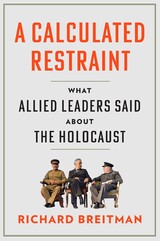
An eminent historian of the Holocaust examines why Churchill, Roosevelt, and Stalin, though faced with mounting evidence of the Nazi extermination of Jews, were reluctant to speak out against the atrocities.
The Allied leaders rarely spoke directly about the Holocaust in public. When Churchill and Stalin alluded to Nazi mass murder of civilians in early speeches, they said much less than they knew. Not until December 1942 did Allied governments issue a joint statement about Nazi Germany’s policy of exterminating the Jews of Europe. Roosevelt deferred his own public statement until March 1944. Why didn’t these leaders speak up sooner?
Through close readings of public and private statements, Richard Breitman pieces together the competing motivations that drove each leader’s response to the atrocities. All three knew that their reactions would be politically sensitive, as Nazi propagandists frequently alleged that the Allies were fighting on behalf of Jews, and that Jews were the puppet masters behind their governments. At a time of globally prevalent antisemitism, these calumnies had force. After the German invasion of the USSR, moreover, Stalin clearly wanted to focus on the threat to the Soviet state and people. At the same time, Churchill and Roosevelt realized that complete silence would prompt accusations of willful blindness. They usually finessed this dilemma by denouncing Nazi atrocities in general, prioritizing wartime constraints over moral considerations.
Timely and incisive, A Calculated Restraint sheds new light on the relationship between World War II and the Holocaust. Ultimately, the Allied leaders’ responses cannot be reduced to a matter of character. What they said—and chose not to say—about the Holocaust must be understood in light of the political and military exigencies that drove their decision-making.

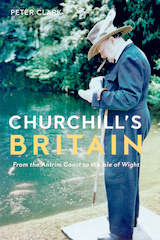
More than half a century after his death, Winston Churchill, the most significant British statesman of the twentieth century, continues to intrigue us. Peter Clark’s book, however, is not merely another Churchill biography. Churchill’s Britain takes us on a geographical journey through Churchill’s life, leading us in Churchill’s footsteps through locations in Britain and Ireland that are tied to key aspects of his biography. Some are familiar–Blenheim Palace, where he was born; Chartwell, his beloved house in the country; and the Cabinet War Rooms, where he planned the campaigns of World War II. But we also are taken to his schools, his parliamentary constituencies, locations of famous speeches, the place where he started to paint, the tobacco shop where he bought his cigars, and the graves of his family and close friends.
Clark brings us close to the statesman Churchill by visiting sites that were important to the story of his long life, from the site where his father proposed to his American mother on the Isle of Wight to his grave in a country churchyard in Oxfordshire. Designed as a gazetteer with helpful regional maps, Churchill’s Britain can be dipped into, consulted by the traveler on a Churchill tour of Britain, or read straight through—and no matter how it’s read, it will deliver fresh insights into this extraordinary man.
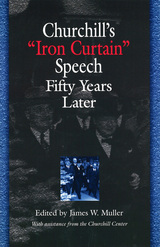
Winston Churchill's visit to Fulton, Missouri, on March 5, 1946, marked the first public recognition of the cold war that was to follow World War II. Churchill delivered his most famous speech, "The Sinews of Peace," which became best known by the phrase he used to describe the cold-war division of Europe, the "iron curtain."
In the United States and Britain, wartime alliances had fostered favorable feelings toward the Soviet Union. By 1946 democratic citizens on both sides of the Atlantic had begun to consider communist Russia a friend. In his speech at Fulton, Churchill exhibited breathtaking flexibility and a clear recognition of the main threat as he reminded the public that true friendship must be reserved for countries sharing a common love of liberty. The "Iron Curtain" speech defined postwar relations with the Soviet Union for citizens of Western democracies. Although it initially provoked intense controversy in the United States and Britain, criticism soon gave way to wide public agreement to oppose Soviet imperialism.
Opening with the full text of the address Churchill delivered in Fulton and concluding with Margaret Thatcher's fiftieth-anniversary address surveying the challenges facing Western democracies in this post-cold war climate, the book brings together essays that reflect on the past fifty years, recognizing Churchill's speech as a carefully conceived herald of the cold war for the Western democracies. These powerful essays offer a fresh appreciation of the speech's political, historical, diplomatic, and rhetorical significance.
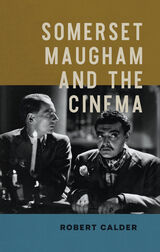
This study of the famous author explores the relationship between literature and film, what is involved in adaptation, and how best to judge films based on celebrated books. Robert Calder, the world’s leading scholar of Maugham’s work, offers fascinating production histories, insight into both fortunate and misguided casting decisions, shrewd analyses of performances and film techniques, and summaries of public and critical responses. Maugham’s characters were often conflicted, iconoclastic, and morally out of step with their times, which may have accounted for the popularity of his fiction. Most of Maugham’s works could be adapted to satisfy the tastes of moviegoers and the demands of the Hays Office censors, if not the expectations of their author.
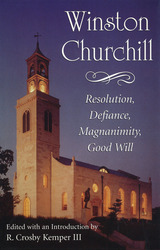
In 1946 Winston Churchill shook the world with his famous "Iron Curtain" speech on the campus of Westminster College in Fulton, Missouri, now the site of the Winston Churchill Memorial and Library. Inscribed on the pediment of his statue at the memorial is the epigraph from Churchill's History of the Second World War:
In War: Resolution
In Defeat: DefianceIn Victory: MagnanimityIn Peace: Good WillNo other words provide so poignant a summary of the principles that sustained Churchill's life's work.
Under the auspices of the Winston Churchill Memorial and Library, the Crosby Kemper Lectureship was established in 1979 by the Enid and Crosby Kemper Foundation of Kansas City, Missouri. Lectures have been delivered annually, or biennially, at the Winston Churchill Memorial and Library on the campus of Westminster College by authorities on British history and on Sir Winston Churchill. The essays included in this volume constitute the first dozen Crosby Kemper lectures, most by individuals who were personally acquainted with Churchill and all by individuals who had studied his life and his work.
Lord Robert Blake discusses Churchill's ambivalence toward the Conservative party during his political career. Philip S. Ziegler, Earl Mountbatten's biographer, examines whether Britain should have granted independence to India in 1947, taking as his departure Churchill's unequivocal belief that Britain's imperial rule there was a sacred trust not to be betrayed. Martin Gilbert, Churchill's biographer, carefully examines the origins of the Cold War and the famous Iron Curtain speech. Sir Michael Howard, Lovett Professor and Naval Historian at Yale University, further examines Churchill's role during the Cold War and the formulation of his "two-track" strategy that pushed for military strength while persistently striving for peace with the Soviets. Sir John Colville, Churchill's private secretary, ponders the extent to which great men are made by circumstances, citing Churchill's peccadilloes and strengths. Churchill's daughter Mary Soames and granddaughter, the sculptor Edwina Sandys, also give moving portraits of a much-loved family man.
All bring this illustrious leader to life in the process of interpreting his political actions, reviewing his historical contributions, and sharing anecdotes about his personal life.
READERS
Browse our collection.
PUBLISHERS
See BiblioVault's publisher services.
STUDENT SERVICES
Files for college accessibility offices.
RECENTLY PUBLISHED



UChicago Accessibility Resources
home | accessibility | search | about | contact us
BiblioVault ® 2001 - 2025
The University of Chicago Press