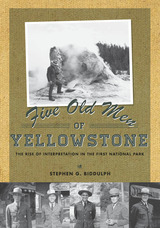
front cover of Five Old Men of Yellowstone
Five Old Men of Yellowstone
The Rise of Interpretation in the First National
Stephen Biddulph
University of Utah Press, 2013
Yellowstone has undergone a number of transitions in the 140 years since its national park designation in 1872. The period from the late 1930s through the early 1970s marked one of the most significant as the Park Service shifted focus from public recreation to interpretation and education. The vast wilderness and numerous awe-inspiring natural spectacles of the park became less objects of passive enjoyment and more subjects to be engaged, interpreted, and understood by visitors. The park was transformed from a playground into a classroom where active learning processes could take place. Charged with instituting these interpretive interactions were five remarkable ranger naturalists who served as both protectors and educators. Stephen Biddulph tells the story of the five men, his own father amongst them, tasked with inspiring a generation of visitors to the park.

Biddulph’s masterfully woven narrative—part biography, part historical narrative—offers both fascinating factual details about Yellowstone and charming colloquial story telling. The interpretive initiatives of the rangers—nature walks, campfire programs, game stalks, and auto caravans—are enlivened by the colorful personalities of the five men who conducted them. Historians will find that Five Old Men of Yellowstone provides a missing link in the park’s extensive literature, while its humor and sentiment make for an accessible book that will be enjoyed by park history buffs and curious visitors alike.
[more]

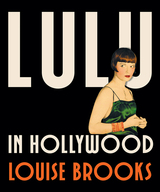
front cover of Lulu In Hollywood
Lulu In Hollywood
Expanded Edition
Louise Brooks
University of Minnesota Press, 2000

Essential writings by this icon of the silent era—rereleased in print and now available as an e-book 100 years after Louise Brooks arrived in Hollywood

Lulu in Hollywood is an intimate collection of eight autobiographical essays by Louise Brooks, silent film darling and icon of the flapper era. Ranging from her childhood in Kansas and her early days as a Denishawn and Ziegfeld Follies dancer to her friendships with Martha Graham, Charles Chaplin, W. C. Fields, Humphrey Bogart, William Paley, G. W. Pabst, and others, Brooks’s writing offers a rare glimpse into her extraordinary life. Including her revelatory “Why I Will Never Write My Memoirs,” Lulu in Hollywood also features Kenneth Tynan’s 1979 essay “The Girl in the Black Helmet,” which revived interest in Brooks’s work and was the best discussion of her film work to appear in her lifetime.


[more]


Send via email Share on Facebook Share on Twitter