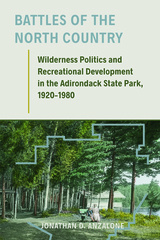
front cover of Battles of the North Country
Battles of the North Country
Wilderness Politics and Recreational Development in the Adirondack State Park, 1920-1980
Jonathan D. Anzalone
University of Massachusetts Press, 2018
The Adirondack region is trapped in a cycle of conflict. Nature lovers advocate for the preservation of wilderness, while sports enthusiasts demand infrastructure for recreation. Local residents seek economic opportunities, while environmentalists fight industrial or real estate growth. These clashes have played out over the course of the twentieth century and continue into the twenty-first.

Through a series of case studies, historian Jonathan D. Anzalone highlights the role of public and private interests in the region and shows how partnerships frayed and realigned in the course of several key developments: the rise of camping in the 1920s and 1930s; the 1932 Lake Placid Olympics; the construction of a highway to the top of Whiteface Mountain; the postwar rise of downhill skiing; the completion of I-87 and the resulting demand for second homes; and the 1980 Lake Placid Olympics. Battles of the North Country reveals how class, economic self-interest, state power, and a wide range of environmental concerns have shaped modern politics in the Adirondacks and beyond.
[more]

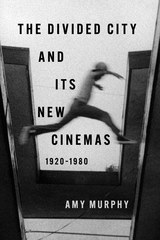
front cover of The Divided City and Its New Cinemas, 1920-1980
The Divided City and Its New Cinemas, 1920-1980
Amy Murphy
University of Illinois Press, 2026
Film offers a powerful witness to the historical effects of segregation. Twentieth-century American urban policy favored “white flight” to the suburbs while confining other racial and ethnic groups in urban cores. Mainstream cinema, in turn, perpetuated racial stereotypes that justified this confinement. Amy Murphy revisits this history via six independent films, each mapping a distinct urban geography at a particular moment in the century. Murphy’s analysis reveals that certain veins of postwar independent filmmaking grew out of specific policy failures of the American city. With increased access to media production, such filmmakers created new cinemas from within the segregated city that expanded avenues for self-representation. Informed and insightful, The Divided City and Its New Cinemas, 1920–1980 examines how often-raw independent films pioneered cinematic exploration of identities impacted by space and time, and by geography and history.

[more]


Send via email Share on Facebook Share on Twitter