Results by title
3 books match the query '1922-2015'
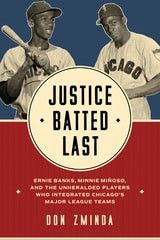
Justice Batted Last
Ernie Banks, Minnie Miñoso, and the Unheralded Players Who Integrated Chicago's Major League TeamsDon Zminda
University of Illinois Press, 2025
Don Zminda’s account looks at these interconnected events alongside the little-known chronicle of Chicago’s slow track to integrating major league baseball. By the early 1950s, the Cubs and White Sox organizations had become rich in Black and Afro-Latino stars and talented prospects. Unlike Miñoso and Banks, however, most of these minor leaguers never advanced to the majors or, if they did, it was for little more than a cup of coffee. Zminda also profiles these players, from Charles Pope, the Cubs’ first Black signee, to larger-than-life fireballer Blood Burns.
Essential and dramatic, Justice Batted Last uses the lives and careers of two Chicago legends to tell a story of integration on and off the diamond.
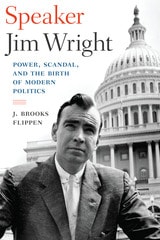
Speaker Jim Wright
Power, Scandal, and the Birth of Modern PoliticsBy J. Brooks Flippen
University of Texas Press, 2018
Honorable Mention, Ramirez Family Award for Most Significant Scholarly Book, Texas Institute of Letters, 2019
Jim Wright made his mark on virtually every major public policy issue in the later twentieth century—energy, education, taxes, transportation, environmental protection, civil rights, criminal justice, and foreign relations, among them. He played a significant role in peace initiatives in Central America and in the Camp David Accords, and he was the first American politician to speak live on Soviet television. A Democrat representing Texas’s twelfth district (Fort Worth), Wright served in the US House of Representatives from the Eisenhower administration to the presidency of George H. W. Bush, including twelve years (1977–1989) as majority leader and speaker. His long congressional ascension and sudden fall in a highly partisan ethics scandal spearheaded by Newt Gingrich mirrored the evolution of Congress as an institution.
Speaker Jim Wright traces the congressman’s long life and career in a highly readable narrative grounded in extensive interviews with Wright and access to his personal diaries. A skilled connector who bridged the conservative and liberal wings of the Democratic party while forging alliances with Republicans to pass legislation, Wright ultimately fell victim to a new era of political infighting, as well as to his own hubris and mistakes. J. Brooks Flippen shows how Wright’s career shaped the political culture of Congress, from its internal rules and power structure to its growing partisanship, even as those new dynamics eventually contributed to his political demise. To understand Jim Wright in all his complexity is to understand the story of modern American politics.
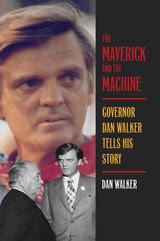
The Maverick and the Machine
Governor Dan Walker Tells His StoryDan Walker
Southern Illinois University Press, 2007
Best Memoir of 2008, San Diego Book Awards
Illinois State Historical Society Certificate of Excellence, 2008