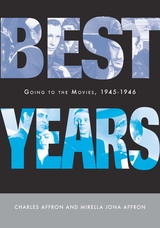
front cover of Best Years
Best Years
Going to the Movies, 1945-1946
Charles Affron and Mirella Jona Affron
Rutgers University Press, 2009
Americans flocked to the movies in 1945 and 1946ùthe center point of the three-decade heyday of the studio system's sound era. Why?

Best Years is a panoramic study, shining light on this critical juncture in American historyand the history of American cinemaùthe end of World War II (1945) and a year of unprecedented success in Hollywood's "Golden Age" (1946). This unique time, the last year of war and the first full year of peace, provides a rich blend of cinema genres and typesùfrom the battlefront to the home front, the peace film to the woman's film, psychological drama, and the period's provocative new style, film noir.

Best Years focuses on films that were famous, infamous, forgotten, and unforgettable. Big budget A-films, road shows, and familiar series share the spotlight. From Bergman and Grant in Notorious to Abbott and Costello in Lost in a Harem, Charles Affron and Mirella Jona Affron examine why the bond between screen and viewer was perhaps never tighter. Paying special attention to the movie-going public in key cities--Atlanta, New York, Boston, Honolulu, and Chicago--this ambitious work takes us on a cinematic journey to recapture a magical time.


[more]

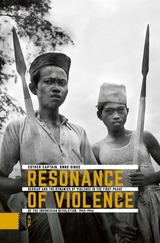
front cover of Resonance of Violence
Resonance of Violence
Bersiap and the Dynamics of Violence in the First Phase of the Indonesian Revolution, 1945-1946
Esther Captain
Amsterdam University Press, 2026
The battle cry ‘Bersiap!’ resounded in numerous cities and towns across Indonesia during the first months following the declaration of independence on August 17, 1945. Heard from all sides, this call to ‘stand by’ for the young nation’s fight for freedom marked the start of the Indonesian national revolution, heralding a period of extreme violence. These acts of violence were aimed primarily against civilians and served no military purpose. Resonance of Violence outlines the dynamics of this extreme violence in which Indonesian groups took up arms against Indo-Europeans, Moluccans, Dutch and Chinese, but also against Japanese civilians and both Japanese and British (or British Indian) soldiers.

The authors expressly situate this terrifying period within the wider context of mutual Indonesian violence and the use of violence by the Japanese, British and Dutch against Indonesian citizens. Java, Sumatra, and other islands are discussed in the book, as well as the complex issue of the number of victims. Finally, they discuss the development of the term "bersiap" over the past 75 years, which grew into a key concept in the Netherlands to describe the earliest phase of the Indonesian War of Independence.
[more]


Send via email Share on Facebook Share on Twitter