
 A SCHOLARLY BOOK REPOSITORY
11 start with D start with D
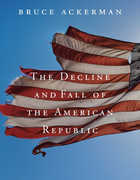
Bruce Ackerman shows how the institutional dynamics of the last half-century have transformed the American presidency into a potential platform for political extremism and lawlessness. Watergate, Iran-Contra, and the War on Terror are only symptoms of deeper pathologies. Ackerman points to a series of developments that have previously been treated independently of one another—from the rise of presidential primaries, to the role of pollsters and media gurus, to the centralization of power in White House czars, to the politicization of the military, to the manipulation of constitutional doctrine to justify presidential power-grabs. He shows how these different transformations can interact to generate profound constitutional crises in the twenty-first century—and then proposes a series of reforms that will minimize, if not eliminate, the risks going forward.
The book aims to begin a new constitutional debate. Americans should not suppose that Barack Obama’s centrism and constitutionalism will typify the presidencies of the twenty-first century. We should seize the present opportunity to confront deeper institutional pathologies before it is too late.


"The major theme of Chapter 12, new to this edition, is the missed opportunities for the parties in the 1996 elections. The year started with a highly visible confrontation over the budget that could have revitalized the party coalitions if the issues had been carried over to the election. However, the candidate-centered campaign of 1996 ultimately did little to resolve these issues or to reinvigorate partisanship in the electorate. In spite of the opportunities for getting new voters to the polls created by the Motor Voter Act, voter turnout in 1996 was the lowest since 1924. Turning out the vote is one of the most crucial functions of political parties, and their inability to mobalize more than half of the eligible electorate strongly indicates their future decline in importance to voters. Until citizens support the parties more by showing up to cast votes for their candidates, the decline of American political parties must be considered to be an ongoing phenomenon."
--From the preface
Brian Urquhart's remarkable career in the United Nations began when the UN was founded in 1945 and ended in 1986 after a twelve-year tenure as Under Secretary-General for Special Political Affairs—the equivalent of commander of UN peacekeeping operations. Among the many revolutions he observed during that period was the process of decolonization, which completely changed the geopolitical map of the world and the conditions under which governments seek to assure world peace. In Decolonization and World Peace, he charts the rapid progress of decolonization in Africa, the Middle East, and other areas of the Third World and describes some of its repercussions.
One of the most serious repercussions has been the chain of regional conflicts arising from the creation of postcolonial power vacuums in various parts of the world. Attributing the difficulty in resolving many of these conflicts—including the Palestine conflict and the Iran-Iraq War—to the climate of Cold War that paralyzed UN authority from the 1960s through the early 1980s, Urquhart is encouraged by what he calls a "new summer of international relations" brought on by the warming of relations between the US and the USSR.
The four chapters of Decolonization and World Peace are based on the Tom Slick World Peace lectures that Urquhart delivered at the Lyndon B. Johnson School of Public Affairs of the University of Texas at Austin in 1988. The appendices offer further insights into the peacekeeping potential of the UN. Included are his remarks at the Nobel Prize Banquet in Norway, on the occasion of the award of the 1988 Nobel Peace Prize to UN peacekeeping forces.

Following World War II, the American Occupation created Western style democratic institutions in Japan and sought to develop a society and culture that would support a democratic political system. Now, after four decades, the successes and failures of Japanese democracy can be assessed. How equal are Japan’s citizens? To what extent are their views represented in the legislature? How does Japan handle dissent and protest? How stable is its democracy?
In closely related and readable essays, thirteen leading experts consider three main components of democracy in Japan - political, social, and economic. The editors’ introduction provides historical background, making this book accessible and valuable for students, the general reader interested in Japan, as well as the specialist.

In redefining détente as a process, rather than a code of conduct, Van Oudenaren looks to its origins in Soviet policy earlier than previously identified and analyzes both its history and character. His study explores the restoration of four-power negotiations in Germany and Austria in the mid-1950s, their subsequent breakdown in the Berlin crisis, their unexpected revival in 1990 in the form of “two plus four” talks on German unity, and the future of the Soviet Union as a European power.
Among the key elements of détente discussed are diplomacy, particularly the role of summit conferences; cooperation among parliaments, political parties, and trade unions; arms control; economic relations; and links among cultural institutions, churches, and peace movements.
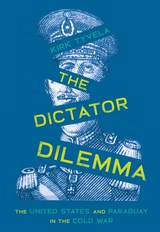

This study will interest social scientists interested in the domestic politics of international security, comparative foreign policy, or the study of domestic institutions. It will interest those concerned with the exercise of U.S. leadership in the next century, the use of force by democracies, and the future behavior of democratizing nations.
David P. Auerswald is Assistant Professor of Political Science and International Affairs, George Washington University.

READERS
Browse our collection.
PUBLISHERS
See BiblioVault's publisher services.
STUDENT SERVICES
Files for college accessibility offices.
RECENTLY PUBLISHED
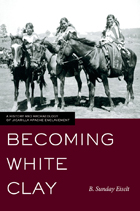




UChicago Accessibility Resources
home | accessibility | search | about | contact us
BiblioVault ® 2001 - 2024
The University of Chicago Press