
 A SCHOLARLY BOOK REPOSITORY
7 start with A start with A
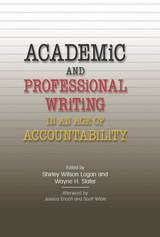
The first two essays in the book provide a history of the academic and professional writing program at the University of Maryland. Subsequent essays explore successes and challenges in the establishment and development of writing programs at four other major institutions, identify the features of language that facilitate academic and professional communication, look at the ways digital practices in academic and professional writing have shaped how writers compose and respond to texts, and examine the role of assessment in curriculum and pedagogy. An afterword by distinguished rhetoric and composition scholars Jessica Enoch and Scott Wible offers perspectives on the future of academic and professional writing.
This collection takes stock of the historical, rhetorical, linguistic, digital, and evaluative aspects of the teaching of writing in higher education. Among the critical issues addressed are how university writing programs were first established and what early challenges they faced, where writing programs were housed and who administered them, how the language backgrounds of composition students inform the way writing is taught, the ways in which current writing technologies create new digital environments, and how student learning and programmatic outcomes should be assessed.
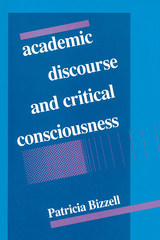
Bizzell begins from the assumption that democratic education requires us to attempt to educate all students, including those whose social or ethnic backgrounds may have offered them little experience with academic discourse. Over the ten-year period chronicled in these essays, she has seen herself primarily as an advocate for such students, sometimes called “basic writers.”
Bizzell’s views on education for “critical consciousness,” widely discussed in the writing field, are represented in most of the essays in this volume. But in the last few chapters, and in the intellectual autobiography written as the introduction to the volume, she calls her previous work into question on the grounds that her self-appointment as an advocate for basic writers may have been presumptous, and her hopes for the politically liberating effects of academic discourse misplaced. She concludes by calling for a theory of discourse that acknowledges the need to argue for values and pedagogy that can assist these arguements to proceed more inclusively than ever before.
The essays in this volume constitute the main body of work in which Bizzell developed her influential and often cited ideas. Organized chronologically, they present a picture of how she has grappled with major issues in composition studies over the past decade. In the process, she sketches a trajectory for the development of composition studies as an academic discipline.
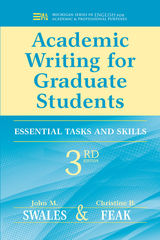
Among the many changes in the third edition:
*newer, longer, and more authentic texts and examples
*greater discipline variety in texts (added texts from hard sciences and engineering)
*more in-depth treatment of research articles
*greater emphasis on vocabulary issues
*revised flow-of-ideas section
*additional tasks that require students to do their own research
*more corpus-informed content
*binding that allows the book to lay flat when open.
The Commentary (teacher's notes and key) (978-0-472-03506-9) has been revised expanded.
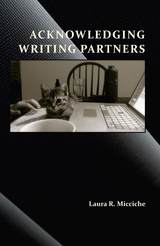
From the author of Stylish Academic Writing comes an essential new guide for writers aspiring to become more productive and take greater pleasure in their craft. Helen Sword interviewed one hundred academics worldwide about their writing background and practices. Relatively few were trained as writers, she found, and yet all have developed strategies to thrive in their publish-or-perish environment.
So how do these successful academics write, and where do they find the “air and light and time and space,” in the words of poet Charles Bukowski, to get their writing done? What are their formative experiences, their daily routines, their habits of mind? How do they summon up the courage to take intellectual risks and the resilience to deal with rejection?
Sword identifies four cornerstones that anchor any successful writing practice: Behavioral habits of discipline and persistence; Artisanal habits of craftsmanship and care; Social habits of collegiality and collaboration; and Emotional habits of positivity and pleasure. Building on this “BASE,” she illuminates the emotional complexity of the writing process and exposes the lack of writing support typically available to early-career academics. She also lays to rest the myth that academics must produce safe, conventional prose or risk professional failure. The successful writers profiled here tell stories of intellectual passions indulged, disciplinary conventions subverted, and risk-taking rewarded. Grounded in empirical research and focused on sustainable change, Air & Light & Time & Space offers a customizable blueprint for refreshing personal habits and creating a collegial environment where all writers can flourish.
In Authentic Writing, Jeff Rice uses this question to trace a position regarding critique, the role of the scholar, the role of the personal in scholarship, the banal as subject matter, and the idea of authenticity. He explores authenticity as a writing issue, a rhetorical issue, a consumption issue, a culture issue, and an ideological issue. Rather than arguing for a more authentic state or practice, Rice examines the rhetorical features of authenticity in order to expand the focus of scholarship.
READERS
Browse our collection.
PUBLISHERS
See BiblioVault's publisher services.
STUDENT SERVICES
Files for college accessibility offices.
RECENTLY PUBLISHED



UChicago Accessibility Resources
home | accessibility | search | about | contact us
BiblioVault ® 2001 - 2024
The University of Chicago Press