Before the Civil War, slaveholders made themselves into the most powerful, most deeply rooted, and best organized private interest group within the United States. Not only did slavery represent the national economy's second largest capital investment, exceeded only by investment in real estate, but guarantees of its perpetuation were studded throughout the U.S. Constitution. The vast majority of white Americans, in North and South, accepted the institution, and pro-slavery presidents and congressmen consistently promoted its interests.
In Abolitionist Politics and the Coming of the Civil War, James Brewer Stewart explains how a small group of radical activists, the abolitionist movement, played a pivotal role in turning American politics against this formidable system. He examines what influence the movement had in creating the political crises that led to civil war and evaluates the extent to which a small number of zealous reformers made a truly significant political difference when demanding that their nation face up to its most excruciating moral problem. In making these assessments, Stewart addresses a series of more specific questions: What were the abolitionists actually up against when seeking the overthrow of slavery and white supremacy? What motivated and sustained them during their long and difficult struggles? What larger historical contexts (religious, social, economic, cultural, and political) influenced their choices and determined their behavior? What roles did extraordinary leaders play in shaping the movement, and what were the contributions of abolitionism's unheralded “foot soldiers”? What factors ultimately determined, for better or worse, the abolitionists' impact on American politics and the realization of their equalitarian goals?
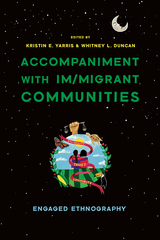
This collection brings together the experiences and voices of anthropologists whose engaged work with im/migrant communities pushes the boundaries of ethnography toward a feminist, care-based, decolonial mode of ethnographic engagement called “accompaniment.”
Accompaniment as anthropological research and praxis troubles the boundaries of researcher-participant, scholar-activist, and academic-community to explicitly address issues of power, inequality, and the broader social purpose of the work. More than two dozen contributors show how accompaniment is not merely a mode of knowledge production but an ethical commitment that calls researchers to action in solidarity with those whose lives we seek to understand. The volume stands as a collective conversation about possibilities for caring and decolonial forms of ethnographic engagement with im/migrant communities.
This volume is ideal for scholars, students, immigrant activists, instructors, and those interested in social justice work.
Contributors
Carolina Alonso Bejarano
Anna Aziza Grewe
Alaska Burdette
Whitney L. Duncan
Carlos Escalante Villagran
Christina M. Getrich
Tobin Hansen
Lauren Heidbrink
Dan Heiman
Josiah Heyman
Sarah Horton
Nolan Kline
Alana M. W. LeBrón
Lupe López
William D. Lopez
Aida López Huinil
Mirian A. Mijangos García
Nicole L. Novak
Mariela Nuñez-Janes
Ana Ortez-Rivera
Juan Edwin Pacay Mendoza
Salvador Brandon Pacay Mendoza
María Engracia Robles Robles
Delmis Umanzor
Erika Vargas Reyes
Kristin E. Yarris
A collection of intimate writings first published by Literary Hub in the Letters From Minnesota series that recounts the lived community experience of facing—and resisting—ICE violence during Operation Metro Surge
The history of America is a history of occupations. But what happens when an imperial nation, defined by endless expansion, runs out of frontier? It turns inward. It occupies itself.
American Occupation is an urgent compilation of reflections and accounts that emerged during the shocking, months-long ICE operation in Minnesota. In December 2025, the Department of Homeland Security launched Operation Metro Surge, and thousands of ICE and border patrol agents in paramilitary costumes descended on the Twin Cities. Their brutal, unconstitutional campaign resulted in the terrorization and disappearance of countless US citizens and immigrants, the murders of legal observers Renee Good and Alex Pretti, and the mobilization of vast, intricate mutual aid networks, massive protests, and staggering acts of courage during one of the coldest Minnesota winters in a decade.
Two days after Alex Pretti was killed on January 24, 2026, Literary Hub published the first of forty-four Letters From Minnesota, an online rapid response series that invited novelists, journalists, poets, and memoirists to document their experiences under occupation. An immigrant mother makes a plan with her young children in case she’s detained by ICE. A Powderhorn Park resident witnesses the traumatic abduction of two neighbors at a bus stop. A professor chronicles the relentless federal violence throughout her family’s journey from Mexico to California to Minnesota, among other harrowing stories and accounts.
With twelve new contributions, American Occupation offers a mosaic of deeply personal and defiant testimonies detailing the creative solidarity and resolve of Minnesotans confronting fascist cruelty. Contextualized in the history of the US government’s abuse of power against its own civilians, American Occupation reveals the grim reality of yet another American administration in thrall to its own mythologies—and the long arc of resistance and compassion of ordinary people.
Contributors: Angela Ajayi, Anonymous, Charles Baxter, Victoria Blanco, Jennifer Eli Bowen, Katherine Packert Burke, Zeke Caligiuri, David Aiona Chang, Dana Chiueh, Heid E. Erdrich, Nick Estes, Nimo Farah, V. V. Ganeshananthan, Shannon Gibney, Dobby Gibson, Sarah Green, Molly Beth Griffin, Dara Moskowitz Grumdahl, Marian Hassan, Hedgiee, Laurie Hertzel, Carolyn Holbrook, Siri Hustvedt, Đenise Hạnh Huỳnh, Andrea Jenkins, Michael Kleber-Diggs, Ed Bok Lee, Josina Manu Maltzman, Will McGrath, Jim Moore, David Mura, Nia Navarro, Sahra Noor, Kara Olson, Peter Pearson, Angela Pelster, Bao Phi, Kaia Preus, Susan Raffo, Marcie Rendon, Kate Romero and Gustavo Romero, Sean Sherman, Sun Yung Shin, Gabriela Spears-Rico, Michael Torres, Kawai Strong Washburn, Sana Wazwaz, chaun webster, Diane Wilson, A. E. Wynter, Kao Kalia Yang, Ahmed Ismail Yusuf, Michelle Zamanian.
Retail e-book files for this title are screen-reader friendly.
AnticapitalistTechnology Design uses a political-economic frame to explore how the teaching, learning, and administration of writing in higher education is a site for equity work via analytic technology. Using an approach that combines classical Marxist ideas about political economy with contemporary advances in social justice theory, it presents an intersectional approach to conducting anticapitalist work in rhetoric and composition around technology use.
Author Angela Glotfelter explores this work through the lens of anticapitalist technology design, a method that considers how ideology is rhetorically encoded into new technologies and perpetuated through their usage. These case studies of writing program administrators and their surprising encounters with analytics illustrate the exigence for teachers and researchers of writing to engage with these technologies.
Anticapitalist Technology Design brings together work from across the Marxist tradition, critical race theory, user experience, and transnational feminism and will resonate with scholars, students, and teachers who want to navigate new technologies in economically and socially just ways.
Arijana Lekić-Fridrih: All Art is a Political Statement introduces audiences to the work of Croatian artist Arijana Lekić-Fridrih and, in particular, to her Silent Mass, a performance resisting the “Be Manly” movement, a series of mass prayer events held in Croatian public squares by a battalion of men who pray for the abolition of women’s rights, for women’s “chastity,” and for men’s “masculine authority.” All Art is a Political Statement links the erosion of women’s rights across intercontinental boundaries and offers Lekić-Fridrih’s multimedia art as a guide for activism against retrograde restrictions on the freedom of women.
Arijana Lekić-Fridrih: Svaka umjetnost je politička izjava upoznaje publiku s radom hrvatske umjetnice Arijane Lekić-Fridrih, a posebno s njezinom Tihom misom, performansom otpora pokretu “Budi muško”, nizu masovnih molitvenih događanja koje na hrvatskim javnim trgovima održava bataljun muškaraca moleći za ukidanje ženskih prava, za žensku “čednost”, a za muškarce “muški autoritet”. Svaka umjetnost je politička izjava spaja eroziju ženskih prava preko interkontinentalnih granica i nudi multimedijsku umjetnost Lekić-Fridrih kao vodič za aktivizam protiv nazadnih ograničenja slobode žena.
READERS
Browse our collection.
PUBLISHERS
See BiblioVault's publisher services.
STUDENT SERVICES
Files for college accessibility offices.
UChicago Accessibility Resources
home | accessibility | search | about | contact us
BiblioVault ® 2001 - 2026
The University of Chicago Press